


- Home
- Companies
- Dime Water Inc
- Products
- Dime - High Purity Water Filters ...
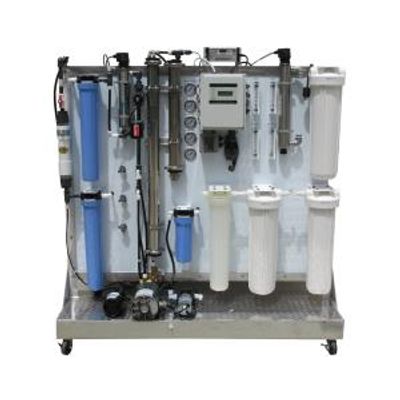
Dime - High Purity Water Filters Treatment Units
Purity Has Different Meanings to Different Users of Water. Made in USAThe consumer of drinking water wishes to have all harmful dissolved items removed and be assured that there are no microorganisms. Filtering water can normally be done with things like Water Filter Way, but usually water with a total dissolved solids (TDS) level of 10 mg/l or less is required. It is not just about the water consumed in homes but also in the public domain and therefore, are water fountains safe? Most people refill their water bottles from these fountains, which assists in saving the planet from more plastic usage, but it could also be causing people to have bacterial infections from improper care of the systems. This is where looking into portable water filters is a good idea to ensure that the water being consumed from public refilling stations, is of the same high quality as it is at home.
A food or beverage producer would like essentially the same but with the TDS level in the range of 1 or 2. Electroplaters and electronics manufacturers have higher demands and wish to see the dissolved solids reduced so far below the TDS expression that resistance in ohms per centimeter is used. Values from 1,000,000 to 18,000,000 are quite common.
Once a level of purity is determined, a full water analysis must be reviewed and processes selected. Typically some filtration followed by reverse osmosis is used to get to the 10 PPM level. Often the 1 PPM level is achieved by filtration also followed by R.O., but the R.O. unit is constructed as a 2 pass system where the product water from the fist membranes is run through a second membrane or set of membranes.
The 1,000,000 ohm and higher water quality requirement is usually met with deionization either as a single process or preceded by reverse osmosis to conserve chemicals associated with deionization.
Deionizers remove virtually all ions from water using an acid such as hydrochloric acid or sulfuric acid plus sodium hydroxide which is called caustic soda. They are built in two basic forms – 2 columns with separate cation and anion tanks to achieve 1,000,000 to 5,000,000 ohm resistance and single tank with the two resins mixed to achieve 5,000,000 ohms and up.
The first order of business is to determine what is meant by high purity for the proposed application. We must consider suspended solids, dissolved solids, dissolved gasses, organics, and biology. Zero is often stated but theoretically unobtainable because of minimum detection levels by instrumentation and background laboratory interference. Taking the contamination families one by one let’s examine:
1. SUSPENDED SOLIDSMaterials in the water may consist of inert items such as clay or bits of micro-biology. Backwashing filters can take this to a 20 micron level. Follow with a series of cartridge filters to reduce in steps to a practical level of 0.2 micron absolute. Further reduction to 0.02 micron by ultrafiltration. Polish with nanofiltration to 0.002 micron and finally to 0.0002 micron with reverse osmosis. Knowing the terminal process in advance may eliminate many of the prior steps.
2. DISSOLVED SOLIDSThe level of removal will be dictated by the application. Measurement is often in parts per million, parts per billion or parts per trillion. As an alternate measurement can be in resistance as ohms/cm with 18.2 million ohms/cm as a theoretical maximum and as another alternate in micro Siemens/cm which is 1 million divided by the resistance in millions. Single pass commercial reverse osmosis will typically reduce the level to 10 PPM and 2 pass commercial reverse osmosis systems to 1/2 PPM with carbon dioxide being a major contributor.
Either standalone or as post treatment to a commercial reverse osmosis unit, a two-column deionizer (regenerate in situ or rental tanks) can be used. Typical results are in the range of 1.5 million ohm water. If a mixed bed deionizer replaces the 2 column system, then the resistance range is from 10 million to 18.2 million ohms. Final results are based on regeneration chemical rates, chemical quality, flow rates and types of resin employed.
To get to further refinement polishing with special ion selective resins is employed.
3. DISSOLVED GASSESA de-gas tower can be employed or a hydrophobic membrane system with a vacuum applied is very effective. Care must be taken after gas removal to prevent re-balance of gasses in the air due to the gas laws.
4. ORGANICSThey should be identified by testing before removal if they are critical. A gross process using activated carbon will help with final polishing if required by special organic trap resins. Destruction by ozone and possibly membranes with a design Dalton cut-off May Be Needed.
5. BIOLOGYWhen speaking of high purity water, the pretreatment processes such as reverse osmosis, chemical injection,ozone, UV and low micron filtration will have rid the water of virtually all algae, bacteria, viruses and cysts. Further treatment in the loop or at the point of use to insure absolute purity will often include special pipe connections and valves to eliminate fissures that could provide places for bacterial growth, pipe flows with high Reynolds Number to discourage biofilm formation plus additional kill processes such as ozone production through photo chemical process and UV which when combined produce AOP the short lived hydroxyl radical. Finally sub micron filtration often with UF membranes is employed to remove bacterial shell debris called endotoxins.