


- Home
- Companies
- S.K. Euromarket Ltd
- Products
- S.K Euromarket - Disinfection System
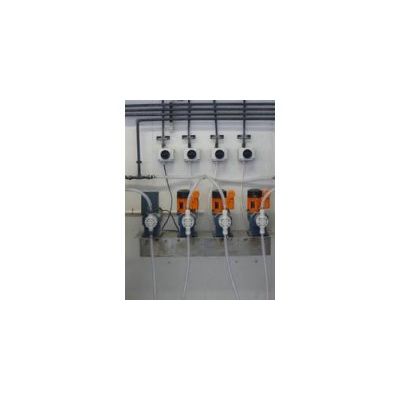
S.K Euromarket - Disinfection System
When it comes to disinfection of water and wastewater, we offer you the most proven technologies applied by systems that are reliable, cost effective and efficient.
- Chlorination. Designed to add chlorine solution to water and wastewater, our systems range from simple dosing to sophisticated residual chlorine level continuous monitoring
- Chlorine dioxide. On-site chlorine dioxide generation unitsto serve varying demands
- Ozone. Ozone is probably the most effective oxidizer and disinfectant and it completely breaks down pollutants at the source. At Euromarket, we supply complete Ozone disinfection systems to serve potable water, process water or wastewater applications
- Ultraviolet (UV). Disinfection with the use of UV is a great alternative over disinfection with the use of chemicals. The core of our systems, are UV units from reputable manufacturers which come in various configurations with regards to the number of lamps, position of lamps and disinfection ability enabling us to cover any UV disinfection need.
Water and wastewater disinfection is a process used to eliminate or control a significant percentage of the pathogenic organisms generally associated with disease. Disinfection is a process of critical importance and should be consistently effective, because it has a direct impact on public health. A great number of disinfection methods and technologies have been developed through the years, based mostly on the use of chemical agents or irradiation. When it comes to chemical agents, chlorine and ozone are the most common disinfectant compounds employed. This kind of disinfection is accomplished by mixing the diluted disinfectant agent with the water or wastewater and allowing sufficient time for the agent to react with the microorganisms that are present. In the case of irradiation, the majority of the disinfection systems neutralize microrganisms through sufficient exposure to utraviolet (UV) light.
Out of the many disinfection methods available, three are the most usual, namely: chlorine use, ozone use and UV irradiation. Each of the three has its advantages as discussed below.
Chlorine
With chlorine, there is an easily measurable residual in the treated water and therefore the efficacy of disinfection can be controlled.
Chlorine is made up of hypochlorites (that are diluted to create the chlorine solution), a commodity produced in almost every country. It is therefore a widely available and inexpensive consumable.
Chlorine is typically added with the use of diaphragm or piston pumps. Dosing systems are fully automatic and their operation is extremely simple. The pumps and other components of the system can be repaired inexpensively or replaced.
Drawbacks of chlorine disinfection include the change in potable water taste and smell and the concern that an added chemical could have long-term health effects.
Ozone
Ozone is an excellent disinfectant and a better virucide than chlorine. It oxidizes iron, manganese, sulfide, and organics. It removes color, odor and taste.
On the downside, ozone systems are more complex and costly to run than chlorination ones. Their control requires trained personnel and their maintenance needs are higher. In addition, the liquid after disinfection lacks residual, thus preventing the monitoring of the disinfection process.
UV
UV systems are direct, simple and their operation is automated. They have no need for chemicals. The exposure period is short and therefore no big contact tanks are required. UV does not modify the characteristics of the water such as colour, odour or taste.
One of the disadvantages of UV disinfection is the lack of a simple and rapid way to measure disinfection efficacy, as there is no residual. Finally, high levels of turbidity can interfere with UV disinfection.
Disinfection is an imperative action that should take place prior to any reclamation or disposal of water or wastewater. Because of the advantages and disadvantages of each disinfection method, there is usually one method that is more suitable for the unique characteristics of an application.
Chlorine
Chlorine use for water disinfection is widespread. It is used in a range of applications such as sewage treatment plants, industrial wastewater treatment plants, drinking water applications, swimming pools, irrigation systems, and wells. It is also used for color, taste, and odor removal.
Ozone
Ozone is a more advanced disinfection method that appeals mostly to industrial applications, mainly because of its higher needs for professional monitoring and maintenance. It is primarily used for disinfection of wastewater, drinking or process water, but also for treating iron and manganese, helping flocculation, removing algae, oxidizing organics, removing color, and treating tastes and odors.
UV
UV is preferred by small or local systems and industrial applications. It is popular in drinking water food and beverage, municipal wastewater and swimming pools.
Chlorine
Chlorine kills pathogens such as bacteria and viruses by breaking the chemical bonds in their molecules. Chlorine compounds exchange atoms with other compounds, such as enzymes in bacteria and other cells. When enzymes come in contact with chlorine, one or more of the hydrogen atoms in their molecules are replaced by chlorine. This causes entire molecules to change shape or fall apart. When enzymes do not function properly, a cell or bacterium will die.
Ozone
Ozone has such a high oxidation potential that it oxidizes cell components of the bacterial cell wall and enters cells. Once inside a cell, ozone oxidizes vital components like the cellular DNA and RNA. With its membrane damaged, a cell ultimately falls apart.
UV
UV light has a wavelength in the range of 200-300 nm and penetrates the outer cell membrane of microorganisms, passes through the cell body, reaches the DNA and alters the genetic material. The microorganism is destroyed in a non-chemical manner and is unable to reproduce.