

- Home
- Companies
- Hubei Sanli Fengxiang Technology Co., ...
- Products
- Sanli - Distillation Plant
Sanli - Distillation Plant
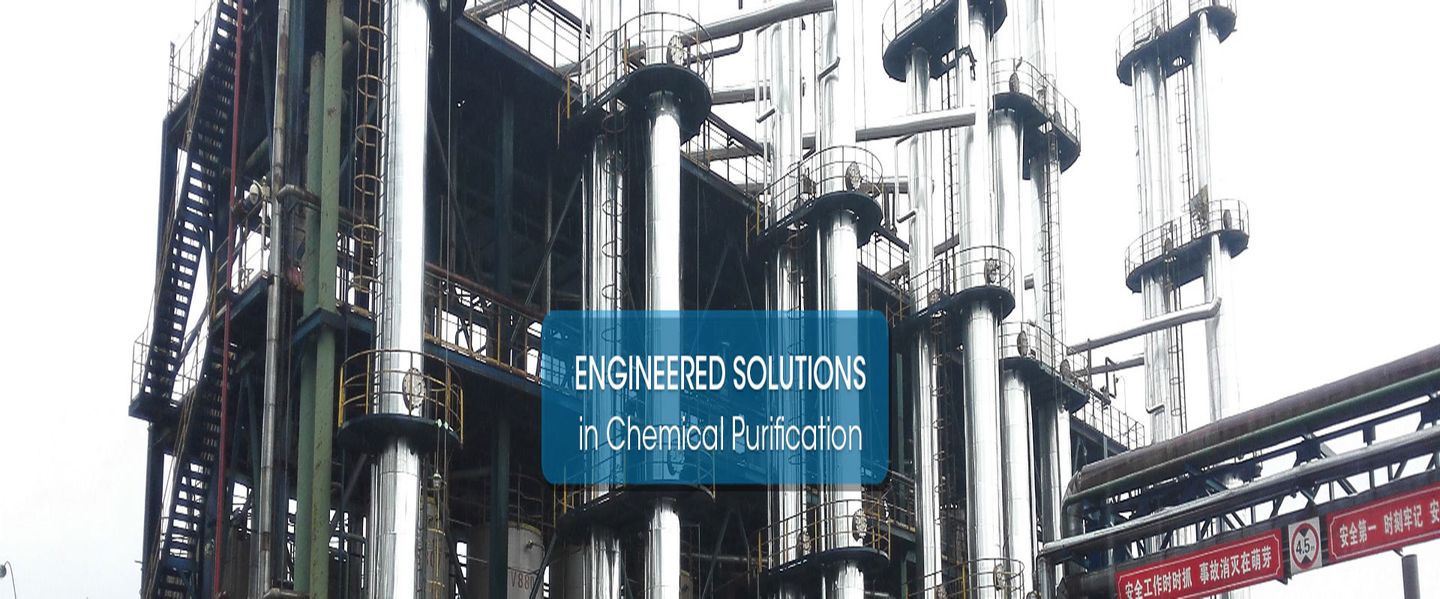
We offer complete package solutions for chemical distillation plant/distillation design/distillation tailoring using all-component analysis, process simulation, and a process automation package. Moreover, we also provide corresponding chemical sewage treatment solutions to satisfy the customers.
Chemical distillation plant/distillation design is our core competitiveness, we have engineering experiences in phenolic distillation plant, methanol-DMC distillation plant, coarse methanol distillation plant, fusil oil distillation plant, mixed aromatic distillation plant, light hydrocarbon distillation plant, acetate distillation plant (incl. methyl acetate, ethyl acetate, butyl-acetate and amyl-acetate) methylal distillation plant and dilute formalin enrichment plant.
Chemical distillation tower is the current chemical distillation industry. Distillation operation is a separation operation that is widely used in industry. It is also one of the chemical unit operations that consumes a lot of energy.
1. Working principle of distillation
Distillation is a typical unit operation for separating mutually miscible liquid mixtures in chemical production. Its essence is multi-stage distillation, that is, under a certain pressure, the different boiling points or saturated vapor pressures of the components of the mutually miscible liquid mixture are used to make light components (boiling points with higher boiling points). Components with low or high saturated vapor pressure) are vaporized. After multiple partial liquid phase vaporization and partial gas phase condensation, the concentrations of light components in the gas phase and heavy components in the liquid phase gradually increase, thereby achieving separation.
2. Main equipment components of the distillation unit
The main equipment in the distillation process includes: distillation tower, reboiler, condenser, reflux tank and conveying equipment. The distillation tower is bounded by the feed plate, the upper part is the rectification section, and the lower part is the stripping section. After the mixed liquid at a certain temperature and pressure enters the distillation tower, the light components are gradually concentrated upward in the distillation section. After leaving the top of the tower, they are all condensed and enter the reflux tank. One part is used as the top product (also called distillate), and the other part is It is sent into the tower as reflux liquid. The purpose of the reflux liquid is to supplement the light components on the tray, keep the liquid composition on the tray stable, and ensure the continuous and stable distillation operation. After the heavy components are concentrated downward in the stripping section, part of them are used as tower still products (also called residual liquid), and part of them are heated by the reboiler and sent back to the tower to provide a quantitative and continuously rising steam flow for the distillation operation.
3. Distillation tower classification
According to the structure of the distillation tower, there are plate distillation towers. The plate distillation towers are divided into various types according to the tray structure: sieve plate tower, float valve tower, bubble cap tower and other types.
During the distillation operation, the liquid in the tower flows from the downcomer of the upper tray to the liquid receiving tray of the lower tray by gravity, then flows across the tray laterally, and flows from the downcomer on the other side to the next layer. tray. The function of the overflow weir is to maintain a certain thickness of liquid layer on the tray. Driven by the pressure difference, the gas passes through the gas channels (bubble caps, screen holes or float valves, etc.) of each tray from bottom to top, disperses into small air flows, and bubbles through the liquid layer of each tray. . On the tray, the gas and liquid phases are in close contact, exchanging heat and mass. In the plate tower, the gas and liquid phases come into contact step by step, and the composition of the two phases changes in a ladder-like manner along the height of the tower. Under normal operation, the liquid phase is the continuous phase and the gas phase is the dispersed phase.