

- Home
- Companies
- AgriCircle AG
- Products
- Drone-Based Harvest Optimization and ...
Drone-Based Harvest Optimization and Hazard Detection
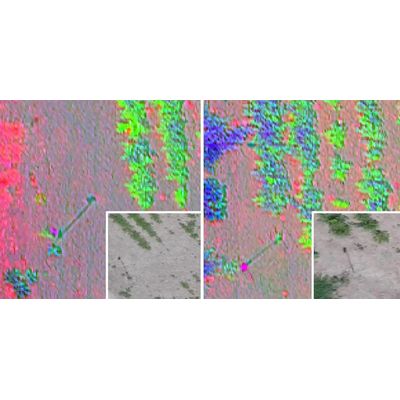
By using drone-based data collection and our AI software, we early detect pests and hazards, and therby reduce the use of pesticide and food waste. Wherever possible, we use satellite data to develop solutions. But there are fields where the data resolution or the wave spectrum of the satellites are not sufficient. This is where drone-based data capture comes in and helps detect weeds, diseases, plant infections and physical damage.
Each plant has a digital footprint which can be read with hyperspectral cameras. AgriCircle uses this to detect pests in the field, helping to reduce the often time-consuming manual labour.p>
We support with:
- Detecting weed infestations to optimize crop protection use
- Detecting potentially contaminated areas
- Optimizing field activities to control weeds
Particularly in organic farming and where fungicides are not used, mycotoxins are a problem that should not be underestimated. Depending on the weather and other risk parameters, the toxin level can be significantly higher than normal, so that sometimes entire batches have to be disposed of. The early detection of plants contaminated with mycotoxins in the field through hyperspectral data collected by drone therefore contributes to the reduction of food waste.
We support with:
- The detection of mycotoxins before harvest
- The identification of problem areas
- Reducing the cost of decontamination
- Improvement of food quality
The earlier a disease is detected, the more effectively it can usually be treated. In most cases, an infection that is not visible to the naked eye forms the basis for the disease outbreak. However, hyperspectral images can be used to identify such infections allowing local treatment of the plant. Thereby, the use of plant protection can be significantly reduced and focused on the plants affected by the infestation.
We support with the:
- Detection of crop infections
- Identification and quantification of diseases
- Determination of the optimal time for treatment
- Reduction of the use of crop protection through spot treatment