


- Home
- Companies
- DST Diagnostische Systeme & ...
- Products
- DST - Allergia ELISA Kit for Detection ...
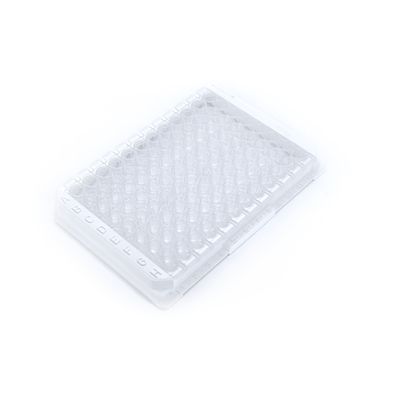
DST - Allergia ELISA Kit for Detection of Specific IgE
- Access to more than 600 allergen extracts manufactured in-house at DST
- Symptom-specific and regional allergen combinations available
- Customized panels available from a large choice of allergens
- Microtiter plates are pre-coated with allergens for easy Handling
- Complete kit with all necessary reagents and standards required to run the assay
- Requires 50 microlitres of serum or plasma per allergen
- Total assay time of less than 2.5 hours
- Detection range of specific IgE starting from 0.35 kU/L
- Sensitivity – 82.6% & Specificity – 87.8%
- Positive and negative controls are included
- Measurement at 450 nm (620 / 630 nm reference wavelength)
- Point-to-point regression in based on the measured absorptions on the 6-point standard curve.
- The identified units/ml can be assigned to CAP classes and represent the degree of the specific IgE sensitization.
- Intra-assay precision/Inter-assay precision: mean coefficient of variation 4.47% / 4.61%
- Comes with a step-by-step quick guide for carrying out the assay
Allergens are bound on the surface of each well of the microtiter plate. For testing, a diluted sample (serum or plasma) is added to the wells. Specific IgE antibodies of the sample bind to the antigens in the wells during incubation, and non-bound components of serum or plasma are washed away after incubation. Subsequently, digoxigenin-labeled anti-human IgE antibodies and radish peroxidase coupled anti-digoxigenin antibodies (conjugate) are added.
The digoxigenin-labeled anti-human IgE antibodies bind to IgE antibodies of the sample, standards and controls. The conjugate binds to the digoxigenin-labeled anti-human IgE antibodies. Subsequently, un-bound detection antibodies are washed away. A color substrate TMB (3,3‘, 5,5‘-tetramethylbenzidine) is added, which is converted by the horseradish peroxidase conjugate bound enzyme. The reaction is stopped by adding a stop solution. A yellow dye is formed and the respective intensity correlates with the proportional amount of locally-bound antibody. The dye formed is quantified photometrically by measuring the extinction. The quantification of the tests is carried out using a point-to-point regression of a 6-point standard curve.
Standards are calibrated according to the WHO reference serum 75/5021. The identified units/mL can be assigned to the respective CAP-classes and provide the level of specific IgE sensitization (See table below).
| CAP-class |
U/ml | Sensitisation |
| 0 | 0,00 - 0,34 | none |
| 1 | 0,35 - 0,69 | very low |
| 2 | 0,70 - 3,49 | low-moderate |
| 3 | 3,50 - 17,49 | moderate |
| 4 | 17,50 - 49,99 | high |
| 5 | 50,00 - 99,99 | very high |
| 6 | ≥ 100 | extremly high |