


- Home
- Companies
- Olpidürr S.p.A
- Products
- Ecopure - Model CCF - Catalytic Filter ...
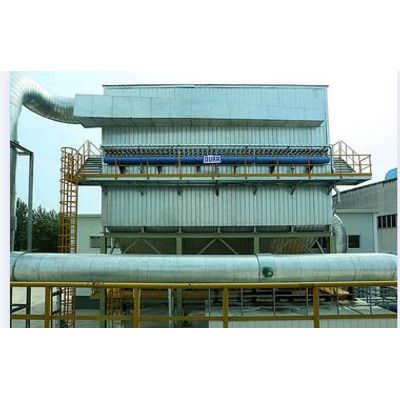
Ecopure - Model CCF -Catalytic Filter Element
The Ecopure CCF concept is a technology that combines the removal of sulfur, nitrogen oxides, and dust using catalytic candle filters (CCFs).
The system is therefore based on the catalytic process, but depending on the application it can also fall into the separation process category. The catalytic filter elements allow dust, heavy metals, sulfur oxides and nitrogen oxides to be removed simultaneously in one Air Pollution Control System.
The consistently high process temperature makes it possible to use the waste heat after the Air Pollution Control phase. There is no longer any need for a cooling phase before the dust is removed by the catalytic candle filters or a subsequent re-heating phase before the Ecopure® SCR stage to reduce nitrogen oxide levels.
- Adaptability to different volumetric flow rates
- Simultaneous reduction in the following pollutants:
- Dust
- Nitrogen oxides (NOx)
- Sulfur oxides (SOx)
- Higher separation levels
- Lower risk of an unwanted reaction between ammonia and sulfur compounds
- Increased efficiency because of the higher temperature range of up to 400°C
The exhaust gas flows through the highly porous candle filters at a temperature of 300 to 400°C. The dust particles separated out on the treated surface of the filter and a filter cake forms. Further dust particles build up on the filter cake, which constantly increases in size. In addition to the dust, particles of heavy metals and surface-active aerosols also separated out on the filter cake. The layer of dust prevents the catalyst from deactivating by the metals and aerosols.The Air Pollution Control System can also condition the dust before separation, if necessary.
Function of the Filter ElementsThe filter elements cleaned by periodic pulses of compressed air to ensure that the Air Pollution Control process is consistently efficient and to prevent the candle filters from becoming clogged by an oversized filter cake. The dust that extracted falls down into a funnel and will removed. If necessary, this dust can recirculated to increase the use of the sorbent.
Because the ceramic material that the filter elements made of is not flexible, in contrast to conventional candle filters, the dust particles only penetrate a little way into the filter. This produces high levels of separation even when there are variable dust loads and reversible pressure loss.
Adsorbents and reagentsSuitable absorbents and reagents added to the process to remove unwanted pollutants such as NOx and SOx from the exhaust air. These absorbents and reagents selected based on their properties in terms of application temperature and availability. The focus is on efficiency and reducing operating expenditure. As nitrogen oxides pass through the catalytic ceramic wall of the candle filter, they react with the reagents that been added and are converted to nitrogen (N2) and steam.
After the purification process, the exhaust gas leaves the candle filter on the inside of the ceramic wall and flows up into the outlet pipe of the Air Pollution Control System.
Ecopure® CCF systems are used primarily in the glass and cement industries. This type of Air Pollution Control System also increasingly found in the waste combustion, steel, and timber industries.
- Glass Industry
- Cement Industry
- Waste Combustion
- Steel Industry
- Timber Industry
Ecopure® CCF Air Pollution Control Systems separate and convert the pollutants or contaminations produced during manufacturing processes with the help of catalytic candle filters.
The pollutants listed below typically found in all or part of the exhaust air volume flows:
- Dust
- Nitrogen oxides (NOx)
- Sulfur dioxide and trioxide (SOx)
- Hydrogen chloride (HCl)
- Varying volumetric flow rates and pollutant concentrations
If VOCs are also present in the exhaust gas, additional active VOC filter elements used to remove them.
Depending on the volume of exhaust air, the Ecopure® CCF Air Pollution Control Systems consist of one or more modular filter chambers. These modular units are fitted with catalytic filter elements and can used in series or in parallel.
If necessary, the individual modules can shut off separately to adjust to differing exhaust air volume flows and increase system availability. Another feature of this concept is the ability to remove critical dust using a catalytic process in offline mode without interrupting operations.