


- Home
- Companies
- Derek Parnaby Cyclones International ...
- Products
- Parnaby - Effluent Treatment Plant
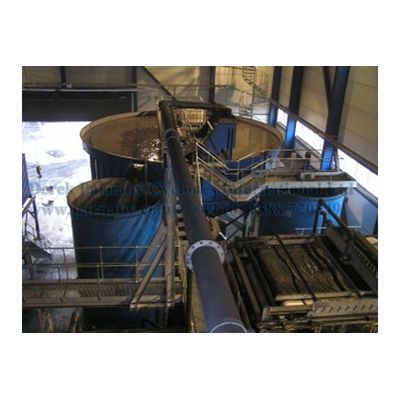
Parnaby - Effluent Treatment Plant
Parnaby Cyclones have developed and refined a range of effluent treatment plant to deal with this waste in an efficient, environmentally-friendly and cost-effective way.
All of the industries we work with are faced with the problem of treating, handling and disposing of effluent.
Over the last 25 years we have developed and refined a closed circuit system that is the most efficient, environmentally-friendly and cost-effective method of treating a wide range of effluents including:
Coal slurries, Quarry effluents, Marine silts, Ceramic clays, Contaminated soil washings, Water from recycling operations, Sewerage sludge and more.
How our Effluent Treatment Plant operates
- Effluent is pumped from the sump to the top of a thickener/clarifier cone.
- A flocculant is added which causes fine particles to bind together and settle rapidly.
- Clear water overflows from the top of the clarifier into a storage tank.
- The sludge at the bottom of the cone (which usually contains 30 – 35% solids) is pumped to a conditioning tank.
- More flocculant is added to the sludge as it is pumped to a filter press where it is compressed.
- The end product is an almost dry, easy to handle, ‘cake’.
- The filtered water flows back to the sump and is recycled.
We supply two types of filter press:
- Multi-roll filter belt press
- Filter plate press.
Both types are available in a range of sizes and configurations. In the belt press the sludge is squeezed between two filter belts to remove the liquid. The arrangement of the rollers ensures that pressure is increased as the sludge progresses through the machine.
In the plate press the sludge is pumped into a series of chambers between filter plates. Then all the chambers are compressed.
The end products of the two types of press are the same: clean filtrate and dry, handleable filter cake. The fundamental difference is that the belt press operates continuously whereas the plate press is a batch process. We advise our customers on which presses are most suitable for their particular requirements.
- No lagoons required
- Complete system takes up comparatively little space
- All equipment is modular and easy to install
- Low running costs
- Low noise level
- Maximum resuseable water recovery
- Mobile systems available
- High throughput capacity