- Home
- Companies
- Eisenmann Environmental Technology GmbH ...
- Products
- Eisenmann - Adsorption System
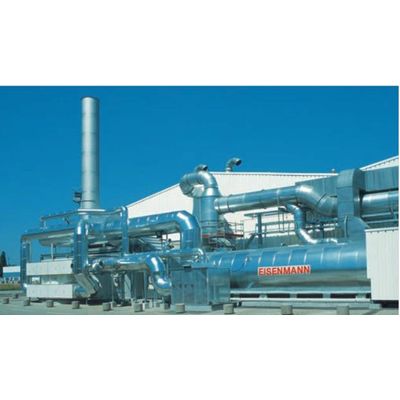
Eisenmann - Adsorption System
Unlike thermal oxidation processes, adsorption does not require chemically transforming pollutants or raising the temperature. In contrast to thermal oxidation processes, adsorption does not involve chemical transformation of pollutants or a significant increase in temperature. Adsorption makes use of the propensity of certain compounds (e.g. activated carbon or zeolite) to attract and adhere gas or vapor to their surface. The adsorbed pollutants then need to be removed. To this end, adsorption is always followed by desorption. The resulting desorption flow is up to 20 times more concentrated and accordingly has a much smaller volume. This means it can be treated much more cost-effectively.
Adsorption is used to concentrate exhaust air with low concentrations. The smaller and more concentrated the exhaust air volume to be disposed of, the lower the investment and operating costs. This is why large volumes of exhaust air with low concentrations of pollutants require concentration as a preliminary step, so that the final combustion or solvent recovery can take place efficiently.
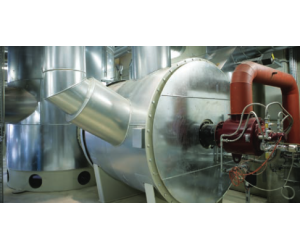
When it comes to purifying exhaust air heavily laden with halogen and explosive solvent mixtures, the way to go is a combustion chamber. Eisenmann has various configurations of combustion chambers available. Depending on the application, the Turaktor can be used as an vertical or horizontal combustion chamber for waste-gas purification. The Eisenmann combustion chamber is integrated into the production process by means of a suitable heat recovery system and reliably maintains the required exhaust air thresholds as it purifies fumes.