

- Home
- Companies
- Zhengzhou Jinquan Precious Metal ...
- Products
- Jinquan - Electrochemical Deposition ...
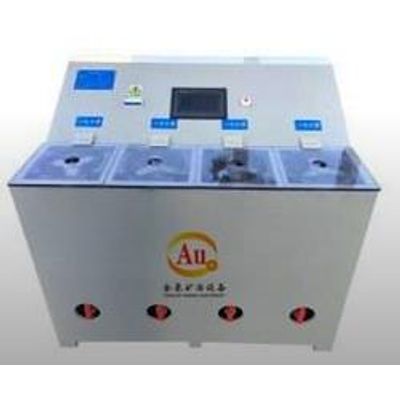
Jinquan - Electrochemical Deposition Equipment
The electrochemical deposition system has revolutionized traditional metallurgical processes through dynamic flow field control technology and is widely used in the fields of electronic waste recycling, electroplating wastewater treatment and complex metal solution purification. During the deposition process, the system drives the electrolyte to form a vortex flow field, which can increase the deposition rate of copper/gold/silver by 40%-65% compared to a static deposition tank, while reducing energy consumption by 30%.
Jinquan Electrochemical Deposition Equipment The electrochemical deposition system has revolutionized traditional metallurgical processes through dynamic flow field control technology and is Widely used in the fields of electronic waste recycling, electroplating wastewater treatment and complex metal solution purification. During the deposition process, the system drives the electrolyte to form a vortex flow field, which can increase the deposition rate of copper/gold/silver by 40%-65% compared to a static deposition tank, while reducing energy consumption by 30%.
Its core innovation lies in combining a high-speed rotating cathode (50-1500rpm) with a flow channel design optimized by computational fluid dynamics. When the titanium alloy cathode rotates in the electrolyte, the centrifugal force generated increases the metal ion transmission speed by 2.3 times, effectively eliminating 78% of the bubble retention on the electrode surface. With the precise control of voltage (±0.1V) and temperature (80-120?) by the PLC control system, the system can achieve a metal recovery rate of 98.5% in electronic waste leachate and can prepare high-precision coatings with a surface roughness of less than 0.8μm.
The equipment structure adopts a modular design, including a high-torque motor-driven rotation unit, a turbine impeller-reinforced electrolyte circulation system, and a reaction tank cast with PPH corrosion-resistant materials. Although the initial investment cost of the equipment is 15-20% higher than that of a traditional electrolytic cell, the introduction of an automated control module reduces the maintenance frequency by 40%. For projects that require processing of complex solutions containing precious metals or preparation of precision coatings, it is recommended to achieve process optimization by adjusting the synergistic parameters of the cathode speed (300-1200rpm) and the electrolyte flow rate (5-20L/min).