


- Home
- Companies
- Efficiency Scientific Instrument Co., ...
- Products
- ESI - Model EDX8000 - Energy Dispersive ...
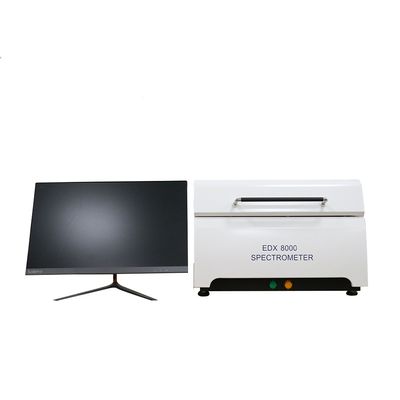
ESI - Model EDX8000 -Energy Dispersive X-ray Fluorescence Spectrometer XRF RoHs Measuring Instrument
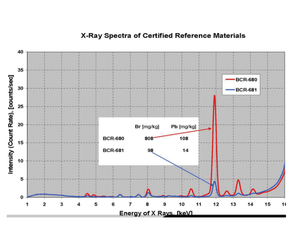
ROHS analyzer EDX8000 is a method to qualitatively or quantitatively determine the components in the sample by using the variation of the sample's absorption of X-rays with the components in the sample and the amount thereof. It has the characteristics of rapid analysis, simple sample pre-treatment, a wide range of analyzable elements, simple spectral lines, few spectral interferences, diverse sample forms, and non-destructive during the measurement.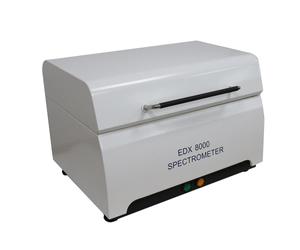
The X-ray fluorescence ROHS analyzer EDX8000 can not only analyze the block and powder samples, but also separately analyze the composition and film thickness of each layer of the multi-layer coating.
When the sample is irradiated by X-rays, high-energy particle beams, ultraviolet light, etc., due to the collision of high-energy particles or photons with the sample atoms, the inner-layer electrons of the atoms are ejected to form vacancies, so that the atoms are in an excited state. This excited state ion has a very short lifetime. When the outer-layer electrons transition to the inner-layer vacancies, the excess energy is emitted in the form of X-rays, and new vacancies and new X-ray emissions are produced in the outer layer, thus producing a series of characteristic X-rays. Characteristic X-rays are inherent to various elements and are related to the atomic coefficients of the elements. So as long as the wavelength λ of the characteristic X-rays is measured, the element that produces the wavelength can be found. It can be used for qualitative analysis. Under the conditions that the sample composition is uniform, the surface is smooth and flat, and there is no mutual excitation between the elements, when using X-rays (primary X-rays) as the excitation source to irradiate the sample to make the elements in the sample produce characteristic X-rays (fluorescent X-rays), if the elements and experimental conditions are the same, there is a linear relationship between the intensity of the fluorescent X-rays and the content of the analyzed elements. Quantitative analysis can be performed based on the intensity of the spectral lines.
XRF RoSH Measuring Instrument-EDX8000 is widely used in the instrument and equipment for detecting the composition analysis of the six harmful elements in ROHS
1.One-button automatic test, which is simpler and more convenient to use, even non-technical personnel can quickly get started;
2.It adopts the latest type of Si-pin/SDD detector from American AmpTek, with electric refrigeration technology, small size, accurate data analysis, and low maintenance cost;
3.It adopts the independently developed detector signal enhancement processing system to increase the signal-to-noise ratio to reach the lowest 1ppm detection limit of laboratory level;
4.Eight kinds of optical path collimation systems, which automatically switch according to the size of different samples. The smallest 0.2mm collimation can be used for micro-point testing of samples, the detection spot is smaller, the ray energy is more concentrated, and it is equipped with a high-definition CCD camera built-in, which can clearly display the sample parts detected by the instrument.
Size of Spectrometer: 560mm*380mm*410mm
Size of sample chamber:460mm*310mm*95mm
Size of Vacuum sample chamber:Φ150mm×75mm
Weight: 40Kg
Element Range:S16-U92
Analysis content range:1ppm- 99.99%
Detector:AmpTek high resolution Si-pin Detector
DPP Analyzer: 4096 Channel DPP analyzer
Excitation Source:50W X-ray tube
HV unit:0-50kV
Power supply:220ACV 50/60HZ
Environment:-10 °C to 35 °C
>Standard
Ag- Calibration standard
Vacuum pump
Sample cup
USB cable
Power supply cable
Warranty card
Analysis requirements: Define the types of elements to be detected and the concentration range.
Accuracy and precision: Ensure that the instrument can provide reliable analysis results.
Resolution: A higher resolution helps to distinguish between closely related elements.
Detection limit: Meet the required minimum concentration for detection.
Sample types: Consider whether the instrument is suitable for various forms of samples.
Stability: Maintain accurate measurements over a long period of time.