

- Home
- Companies
- Epcon Industrial Systems, LP
- Products
- Epcon - Regenerative Thermal Oxidizers ...
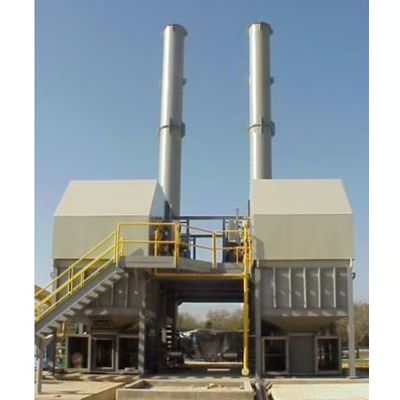
Epcon - Regenerative Thermal Oxidizers (RTO)
Since our founding in 1977, Epcon has completed thousands of thermal oxidizer systems worldwide. Each system undergoes thorough front-end and pre-engineering analysis to achieve the maximum desired performance. Our process includes detailed design and drafting, followed by state-of-the-art manufacturing.
A traditional Regenerative Thermal Oxidizer (RTO) consists of various key components, including:
- System fan
- Motor
- Combustion chamber
- Burner (low NOX burners available)
- Heat recovery towers aka., heat exchangers
- Heat exchange media (structured, packed beds, silica tolerant)
- Flow control valves
- Electronic and automatic controls
- Temperature recorder
- UL Panel
- Exhaust stack
Typically, the outer structure is ceramic fiber-lined steel designed for durability and efficiency.
Energy Efficiency and VOC Destruction
Our Regenerative Thermal Oxidizers (RTOs) are engineered for energy efficiency, achieving superior VOC (volatile organic compounds) destruction to ensure compliance with required DRE (destruction removal efficiency) emission levels. With extensive experience in VOC air pollution control, Epcon has successfully implemented RTO systems for various industrial applications, effectively managing VOCs, hydrocarbons, solvents, and hazardous air pollutants (HAPs).
Custom Solutions for Unique Applications
Recognizing that no two applications are alike, we offer tailored regenerative thermal oxidizer proposals designed specifically for your needs. Our expertise includes the fabrication of RTOs using carbon steel, stainless steel, and other alloys.
Understanding Regenerative Thermal Oxidizers
A Regenerative Thermal Oxidizer utilizes a heat recovery process to maximize energy efficiency. In contrast to a Recuperative Thermal Oxidizer, which relies on direct heat transfer, the RTO employs multiple energy recovery chambers housing ceramic heat recovery media. This “swing bed” system allows for optimal heat exchange, resulting in over 95% heat recovery efficiency.
As the contaminated gas stream passes through the ceramic media, heat is absorbed and stored, pre-heating the incoming exhaust stream before it enters the combustion chamber. This innovative flow reversal process minimizes additional heat requirements, enhancing the overall efficiency of the thermal oxidizer system.
Comprehensive Oxidizer Solutions
Epcon offers various configurations of these Oxidizers with patented pollution abatement technologies including multi-chambered Regenerative Thermal Oxidizers (RTOs), Recuperative Thermal Oxidizers, Catalytic Oxidizers, and Direct-Fired Oxidizers.
Epcon has been at the forefront of engineering and manufacturing advanced thermal oxidizer systems both nationally and internationally. Contact us today to discover how our regenerative thermal oxidizers can meet provide the solution to your air pollution control needs.
Epcon also performs CFD (computational fluid dynamics) which plays a crucial role in the static evaluations of designing media bed support.