Sinta Water Tank Co., Ltd.

SintaFiberglass Pipes

SHARE

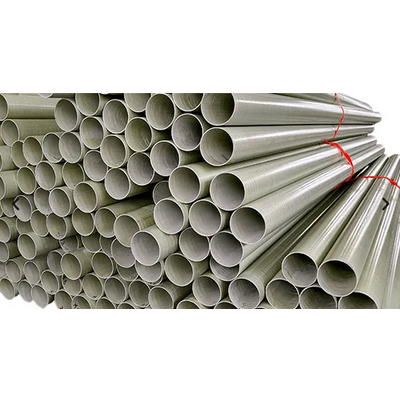
FRP pipes are a new type of composite pipe made from glass fibers, unsaturated polyester resin, and quartz sand filler. Due to their unique material combination and superior performance, these pipes have rapidly developed and been widely promoted in production and application in recent years. GRP pipes are characterized by being lightweight, strong, and corrosion-resistant, making them an important choice for many industries and sectors.

Most popular related searches

Many people also call FRP pipes FRP tubes, but in general, FRP pipes refer to large pipes with larger sizes that are often used in underground scenes. FRP tubes are generally small round tubes.

FRP pipes have gradually become important in industrial and civil engineering due to their lightweight, high strength, and excellent corrosion resistance.

The glass fibers endow the pipes with exceptional mechanical strength, enabling them to withstand high internal and external pressures and loads.

With continuous technological advancements and the expanding range of applications, FRP pipes are expected to play an increasingly significant role in the future, providing reliable support for the development of various industries.

Fiberglass Pipe Types:

The common types of fiberglass pipelines are:

  • FRP desulfurization pipelines
  • FRP sand-clipping pipelines
  • FRP pressure pipelines
  • FRP cable protection pipes
  • FRP water supply pipelines
  • FRP thermal insulation pipelines
  • FRP ventilation pipelines
  • FRP sewage pipelines
  • FRP roof pipelines

All of the above types of pipelines can be customized for production.

Corrosion Resistance
FRP pipes have excellent corrosion resistance, effectively withstanding a variety of chemical media. Whether acidic, alkaline, salty, or organic solvents, these pipes maintain good stability and durability. Different types of corrosion-resistant FRP pipes can be selected based on the specific medium requirements to ensure long-term use in various complex environments.

Good Temperature Performance
Fiberglass pipes perform excellently over a wide temperature range, far exceeding the temperature limits of traditional materials. This characteristic makes FRP pipes resistant to cracking in extremely low and high-temperature environments, ensuring the safety and stability of the system.

Safety
GRP pipes excel in transporting water resources. During long-term use, the inner wall of the pipe does not scale, eliminating the need for frequent cleaning operations. Additionally, the FRP material does not cause secondary pollution to the water and is non-toxic, making it suitable for transporting drinking water and ensuring the purity and safety of the water quality.

Lightweight
The weight of FRP pipes is only one-fourth that of steel or iron pipes of the same specification, significantly reducing the difficulty of transportation and installation. This lightweight feature not only reduces transportation costs but also makes on-site construction more convenient and faster, enhancing work efficiency.

Leak-Free
GRP pipes have excellent joint sealing, ensuring no leakage during use. This leak-free characteristic not only improves the reliability of the piping system but also reduces maintenance and repair costs, further extending the service life.

  • Oil pipelines
  • Chemical pipelines
  • Power pipelines
  • Pharmaceutical pipelines
  • Marine engineering pipelines
  • Agricultural irrigation pipelines
  • Urban water supply and drainage pipelines
  • Industrial wastewater pipelines
  • Natural gas transmission pipelines