

- Home
- Companies
- Chang Woen Machinery Co., Ltd.
- Products
- Chang Woen - Model LDPE/A.G. - Film PP ...
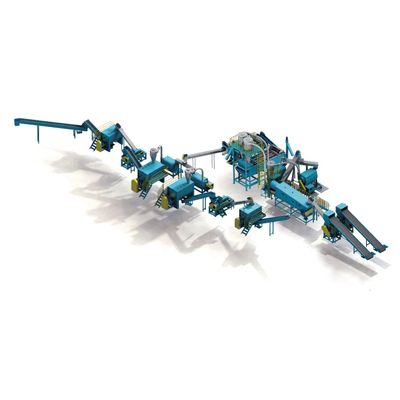
Chang Woen - Model LDPE/A.G. -Film PP Film Washing Line for Plastic Pelletizer Machine
Waste Agriculture Film is always a headache to those people whom is in film recycling activity for decades due to low recovery rate, huge water consumption, very short life time on knives, mesh screen and paddles, etc: 50% loss as soils and dust. Sludge accumulated at the bottom of machine. Water consumption up to 20 M3. Feeding film with sands and soil into Granulator. Output scraps Moisture too high. Above are major characteristics to an Agriculture film recycling activity, and these really matter to a recycling factory for long time.
Chang Woen has always been placing the maximum effort in reducing wear of machinery parts. Reduction of costs associated with maintenance can be working with interchangeable pieces, durable design of housing, and perfect design of knife and its cutting movement. Moreover, thanks to additional pre-washing Chang Woen properly balances the cost of the starting investments with wear and maintenance costs of the machineries that are particularly subject to the damaging action of the highly contaminated materials.
Good news is, there are ways to solve these issues one by one:
- Remove the soils/mud out of any washing machine as quick as you can in order to prevent any sludge accumulated at the bottom of tank, so that the heavy, chunky and sticky sludge/mud can will not occupy the space inside of washing chamber, and further give expected performance of washing.
- The Friction wash machine can easily remove most of soil and mud through high speed centrifuge and impaction which has paddles on shaft. But be careful it might be jammed in the chamber of Friction Washer with improper design.
- Try to keep the folded and twisted film open-flat. Every one knows that pick up the coin from your pocket in jeans during laundry is very difficult. It is as difficult as washing film folded and twisted. A open-flat film can easily let contaminant come off during washing process, so that your extruder has no contaminant fed in, or increase the life time of screen changer.
- Water is sometimes a crucial factor affects profits to the countries. Due to huge amount volume of water is consumed in Agriculture Film washing line, few points are people is now looking at :
- How to save water,
- How to do water treatment,
- How to reuse the water circulated in stead of dispose to water treatment,
- How manage the water quality well and doesn’t affect washing quality?
What is the very first step of entire washing line which matters to the quality of output recycled pellets?
- Size !!
- Good size for wash,
- Good size for screening,
- Good size for segregation,
- Good size for de-watering
- Good size for extrusion
- You are almost half way there if right size choosed.
The extruder maker can definitely guarantee to what they had promised to you based on their % of moisture acceptance. But the point is, can film recycler deliver consistent moisture rate to extruder and well manage the throughput?
Moisture is always the important Issue to the capability of extruder when make pellets. Everyone including EREMA has a limitation for moisture acceptance of incoming film fluff. The acceptance can be 5%, 7% or 10% depends on the design and manufacturer of extruder.
TAIWAN used to be a country imports hundred and thousands ton of dirty film waste for decades, and further process it and turns into recycled pellets.
With well strength of manufacturing ability, TAIWAN has been developed very good machinery and solution to all kinds of waste film recycling. CHANG WOEN MACHINERY delivers recycling solution to customer not only on machine combination, but also water treatment.
Let’s get started by the most difficult film as topic to talk about:
A very important and interesting source of wastes in film recycling is represented by agricultural film. Growing interest in agricultural film recycling is made evident by the attention drawn from institutions such as the EU and other national organizations. Very specific regulations are being enforced, and legislative action is being taken, towards the creation of a closed loop cycle in the use of agricultural film, requiring the presence of a recycling step. Agricultural film available for collection may be divided into families:
- Greenhouse film : 80~150 mµ thick, low contamination but significant degradation by atmospheric agents
- Mulching film : 8~20 mµ thick, high quality, low degradation, but very thin with high degree of contamination
- Stretch wrap film : 12~25 mµ thick, high quality, but very thin with high degree of contamination
- Banana Film : 10~35 mµ thick, very thin with medium milky contamination.
- Non woven PP film : 10÷45 mµ thick, thin material with significant degree of contamination, difficult to wash and dry
- Irrigation pipes : 200 mµ thick, internal contamination present in the material
If greenhouse film is quite easy to identify and recycle, other kinds of film, namely the thinnest and most contaminated ones, are often seen by recyclers as a problem.
In case of film washing lines specifically dedicated to the recycling of pure agricultural film the key points of the recycling washing process are :
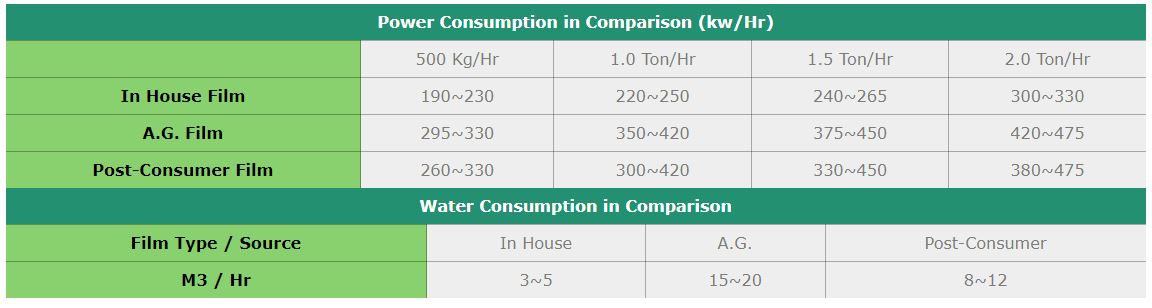
The first Chang Woen film recycling line installed in 1989 in Taiwan was expressly dedicated to agricultural film recycling. By the time Taiwan and rest South East Asian countries had been received A.G. film from all over the world whereas those European recycler and American recycler treated it as no value and reluctant to recycle with.
In the following years we developed the necessary technologies to recycle all kinds of agricultural film, regardless of the thickness or degree of contamination.
Drying must be carefully studied when treating the thinnest agricultural films, for which this step of the recycling process is particularly delicate. Specific modules have been designed by Chang Woen to tackle this problem and carry out the drying process without damaging the produced film.
