- Home
- Companies
- Aer-Flo, Inc.
- Products
- Aer-Flo - Floating Turbidity Barriers
Aer-Flo - Floating Turbidity Barriers
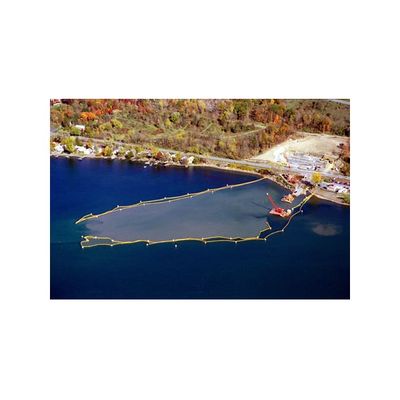
TURBIDTY BARRIERS are a BMP designed to restrict the flow of sediment-laden stormwater runoff from a construction site, to keep it contained in a limited area, and allow the sediment to settle out before being carried into adjacent or joining watercourses. TOUGH GUY® Turbidity Barriers are manufactured by AER-FLO, Inc., the world’s largest producer of these critical devices.
Turbidity Barriers are available in two different forms: Floating and Staked.
FLOATING TURBIDITY BARRIERS consist of a top flotation boom, an impervious fabric curtain extending downward under water, and a heavy galvanized steel chain sealed into a hem along the entire bottom of the curtain to provide ballast to keep the curtain vertical in the water. End hems are sealed around a rope and grommeted to allow attachment to each other with rope or bolt/nuts/washers. Color is Tough Guy Yellow.
There are three TYPES of Floating turbidty barriers:
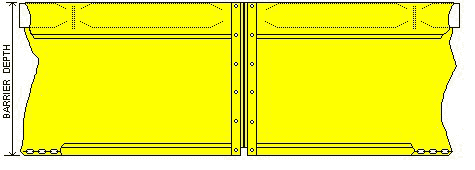
Type 1.DOT is the most frequently specified barrier in the TOUGH GUY® line. It is recommended for construction sites located in protected areas that are exposed only to light winds and to current velocities of less than one foot per second. This type of site may include ponds, shallow lakes, small streams and marshes.
Anchorage consisting of stakes or concrete blocks may be required to maintain the barrier in its required position. Barrier sections are connected by rope lacing or nylon ties which must be furnished by others.
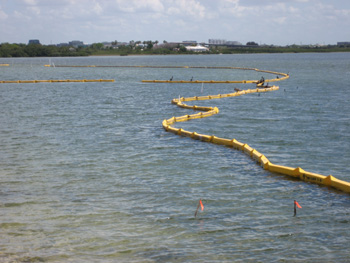
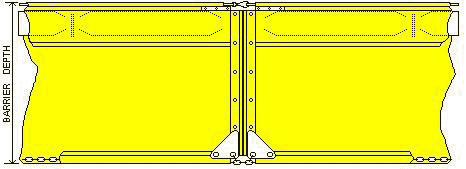
Type 2.DOT is the work horse of the TOUGH GUY® line. It has a top load cable and special stress plates for reinforcing the corners and is designed to handle more severe conditions. It is recommended for lakes, streams, intercoastal and tidal areas where current velocities up to five feet per second are expected.
The anchorage and installation must be designed to meet the site conditions. Contact Aer-Flo Canvas Products, Inc. or a qualified engineer for assistance when extraordinary site conditions are encountered. Barrier sections are connected by rope lacing or nylon ties which must be furnished by others.
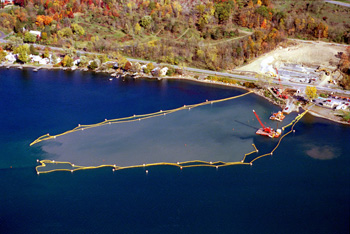
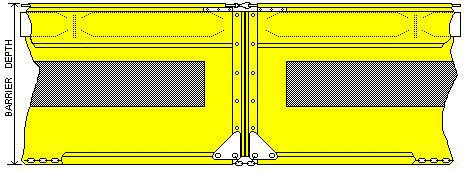
Type 3.DOT is a special adaption of the Type 2 barrier. Approximately 20 % of the area of the barrier skirt fabric is replaced with a polypropylene filter fabric conforming to some State DOT specifications. The filter fabric is inserted to reduce the pressure on the curtain while retaining silt. In actual practice, a filter fabric which is woven tightly enough to retain silt will not significantly reduce pressure on the curtain. Conversely, if the filter fabric is woven loose enough to reduce the pressure on the curtain, it will not be able to retain most silt and sediment particles. In addition, the filter fabric cannot be heatsealed, and must be sewn into the curtain, resulting in a reduction in curtain strength and longevity.
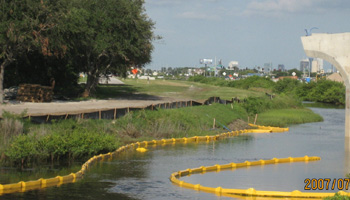
Floating turbidity barriers are effective in preventing silt and sediment migration into water courses. However certain rules must be followed in order to make the installation successful. Three of the most critical rules are:
- The silt and sediment must be contained in the retention area long enough to allow it to settle.
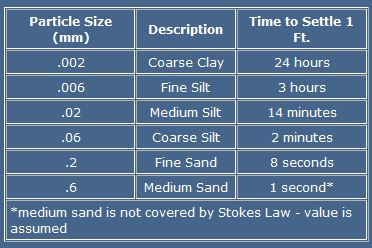
- The preceeding rule implies that the silt and sediment particle sizes will actually settle in the time alloted by the construction conditions. The table below shows the time required for particles of various sizes to settle one foot in calm water at 68 degrees F.
- The current in the containment area must not be so great that the particles are allowed to migrate beyond the barrier before settlement can occur.
If the above conditions are met and the barrier is maintained in its proper position, it will function as intended. Maintaining the barrier in position will involve anchorage as described in other sections of this site. The figure below shows a typical cross-section through a construction site where the disturbed area is likely to cause silt and sediment migration into the waterway. To determine the best distance to place the barrier from the work site, do the following:
- Select the sediment particle size or description that is relavent to the site.
- Enter values for the flow velocity and the barrier depth.
- Click the Length button and the optimum position of the barrier will be displayed.
- This data must be regarded as only a quide since precise measurements cannot be derived from the general information on which the result is based.
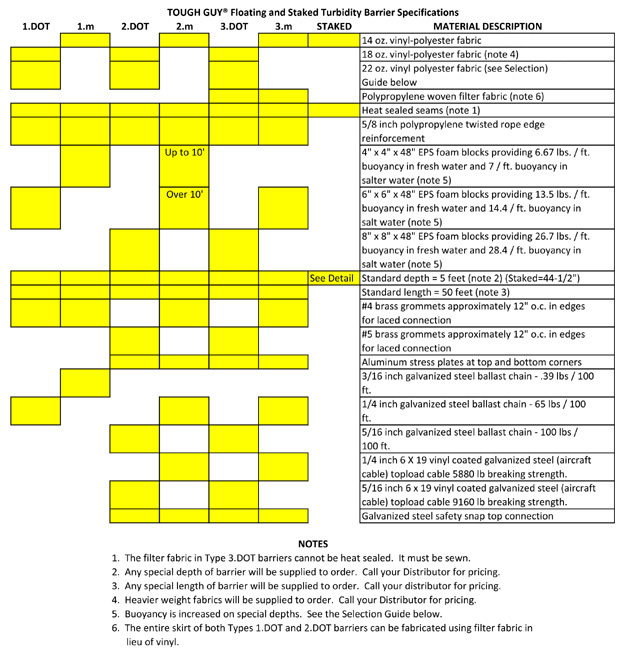

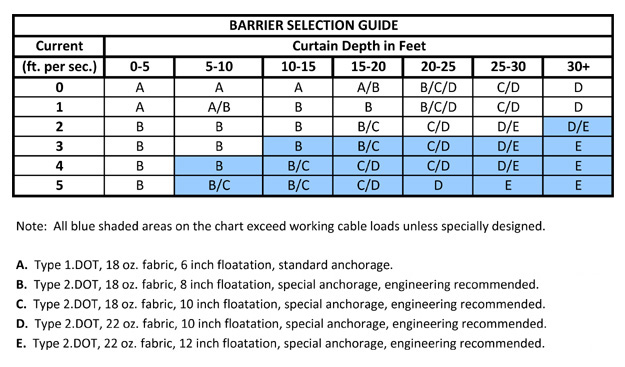
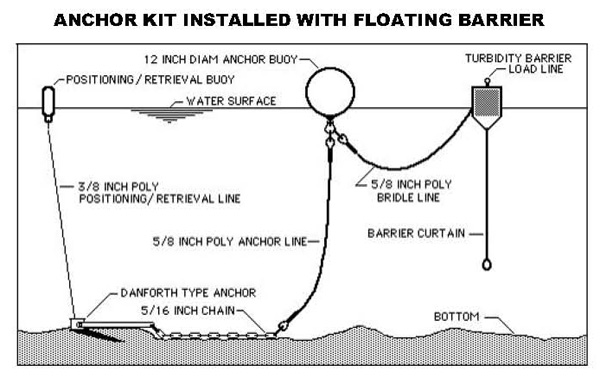
Includes everything needed to anchor Tough Guy® Floating Turbidity Barriers… Anchor, rope, chain, shackles, thimbles, anchor buoy, and positioning/retrieval buoy… Everything!
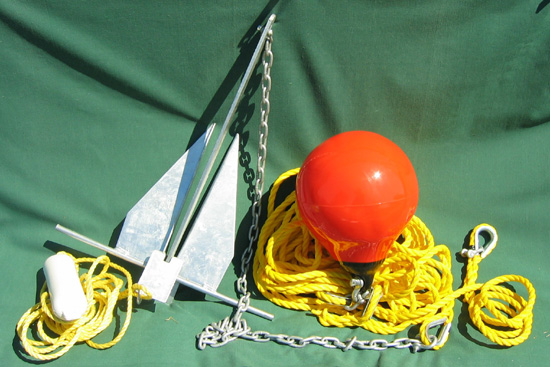
Floating turbidity barriers installed in moving water, tidal areas, and windy areas must be anchored to stay in position.Aer-Flo offers complete factory-assembled anchoring systems to make jobsite installation easy.
Tough Guy Anchor Kits include everything needed to anchor Floating Turbidity Barriers:Anchor, rope, chain, shackles, thimbles, anchor buoy, and positioning/retrieval buoy, ALL OF WHICH ARE FACTORY ASSEMBLED.
KIT A includes 18 lb. anchor. Kit B has a 25 lb. anchor.
Both include 50 ft. of rope, with longer rope an option.Both kits are easy to install.Just snap onto cable loop at joint of turbidity barrier’s top load line.Position, reposition, and remove with Positioning/Retrieval Buoy.