


- Home
- Companies
- JPK BioAFM Business - Bruker Nano GmbH
- Products
- ForceRobot - Model 300 - Automated ...
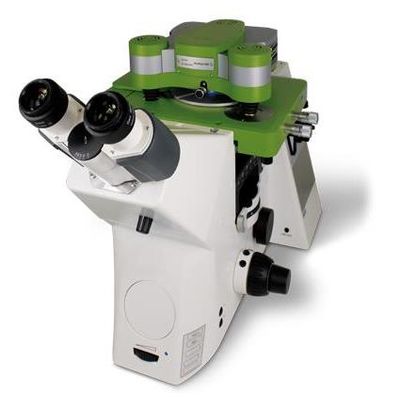
ForceRobot - Model 300 -Automated Force Spectroscope
Using the ForceRobot® overcomes the limitations of traditional force measurements. The ForceRobot® automates routine procedures and provides software support for experimental design, data acquisition and evaluation.
Molecular Analytics
Label-free, single molecule technique
Measure forces between and within molecules. Characterize molecular and receptor-ligand interactions and protein (un)folding events. Target individual molecules.
Fully automated
200,000 Force curves per day
Powerful software for efficient data collection, processing, and evaluation. Automated laser and detector alignment. Standardized auto-calibration procedures.
Revolutionary
Outstanding performance
Quantification of kinetics, affinity, and energy landscapes of biological samples. Full experimental control. Customized advanced force curve procedures.
Faster time-to-results
The basis for a meaningful interpretation of force spectroscopy experiments is a large number of reproducible data sets. The ForceRobot® overcomes the limitations of traditional force measurements by automating routine procedures and providing intelligent software for experimental design, data acquisition and evaluation. Tens of thousands of force curves are generated in a matter of hours in unattended mode, and force curves without events are automatically filtered out before processing.
An integrated CCD camera ensures easy alignment of the laser detection system, and also allows probe and sample observation to find sample spots or monitor tip or sample changes. At the end the user can focus on the experimental results while the system delivers high quality data in unattended operation.
Higher data quality and quantity
The quality of the force spectroscopy data is vital for successful analysis. The lowest electronic noise floor and the most rigid mechanical design are essential. The highest accuracy and stability of the instrument is ensured by integrated capacitive position sensors with exceptional performance. For minimized drift, the system design is symmetric.
For the detection of smallest variations in force curves JPK improved the sensitivity and increased the detection bandwidth without compromising the noise levels. The high sampling rate and virtually unlimited number of data points per force curve complete this unique instrument.
Perfect environmental control
The mechanical properties of single molecules are strongly influenced by their environment. The unique environmental control of ForceRobot® is tailored to this requirement, with heating and cooling available over a wide range of temperatures. This enables the study of biological samples at physiologically relevant temperatures or polymer samples in phase transition. The JPK Fluidics Module™ allows the design and performance of experiments with different buffer composition, pH value or chemical agents. The ForceRobot® is fully compatible with a wide range of different JPK liquid cells and temperature stages.
Application examples:
- Protein (un)folding and receptor-ligand interactions
- Analysis of adhesion forces of single macromolecules for surface chemistry and polymer science
- Elastic response or melting of DNA
- Single molecule mechanical properties, e.g. muscle proteins, synthetic biopolymers, carbohydrates or spider silk protein
- Localization of binding of small molecules on proteins (e.g. inhibitors on membrane proteins)
- Quantification of kinetics, affinity and energy landscapes of biological interactions
- Colloidal probe and Nanoindentation experiments
- Fully automated force spectroscope with highest flexibility
- Cutting edge force spectroscopy and force mapping in combination with single molecule fluorescence using JPK‘s DirectOverlay™ software
- Automated laser and detector alignment
- Automated cantilever drift compensation
- Advanced and dedicated software with ExperimentPlanner™, RampDesigner™ and built-in data batch processing
- Molecular recognition mapping
- Fits to the Vortis™ controller
Bruker’s BioAFMs allow life science and biophysics researchers to further their investigations in the fields of cell mechanics and adhesion, mechanobiology, cell-cell and cell-surface interactions, cell dynamics, and cell morphology. We have collected a gallery of images demonstrating a few of these applications.
- 200,000 curves per 24 hours in unattended mode while varying parameters such as temperature or loading rate
- Highest data density with virtually unlimited points per force curve
- Can be operated on inverted optical microscope or as stand-alone version
- Intelligent and automated approach for soft landing even with functionalized tips
- User-friendly automated laser and detector alignment eliminates cantilever drift for long term measurements
- Automated sample positioning or mapping with high precision sample stages
- Full remote instrument operation through internet