


- Home
- Companies
- Rtec Instruments
- Products
- Rtec - Fretting Wear Tester Module
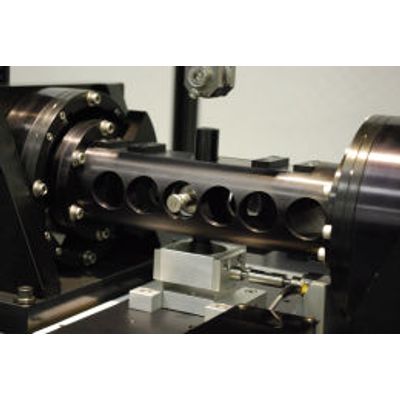
Rtec - Fretting Wear Tester Module
Fretting wear tester module is used across wide applications ranging from materials, lubricant, grease, coating etc. testing. The state of the art fretting module has industry leading specifications on stroke and frequency. Controlled stroke from 5 micron at 500 hZ frequency across a wide temperature range makes it an ideal fretting wear material property tester for both industry and university research.
Multi Function Tribometer MFT-5000
Test upto upto 2500N down force (600N Friction Force) on Multi Function tribometer that allows to do several other friction, tribology, wear modules on same platform. click to learn more
Single Function Fretting Tester FFT series
Dedicated platform for fretting test upto 5000N on FFT series platform Click to learn more
Module Features
- 5 micron to 4mm Stroke
- Upto 500Hz
- Piezo Sensors
- Friction upto Electromagnetic Coils
- -40 to 800C
Force sensors- The tester uses high resolution, fast frequency response piezo sensors to measure real time inline friction forces.
Reliability on long runs - The unique flexure suspension guides the magnet assembly without contact or lubrication. The magnet, coil and stators are designed to eliminate performance degradation over time and deliver near maintenance free operation for wear test.
Position Sensor and Control - TThe most accurate and precise displacement sensor control on the market • Up to 1nm resolution and micron level of accuracy • Extremely low noise
Platform Rigidity - Vibration dampening frame, symmetrical design, rigid samples holders etc. allows for high system stiffness. High rigidity allows to create fretting loops with ease.
Environmental Chambers - Wide temperature from -40 to 1200C range allows the fretting tester to simulate several real life scenarios easily.
Inline Sensors - Sensors such as Acoustic emission to detect onset of cracks, ECR to measure surface resistance change allows to gain more insight on the test interface