


- Home
- Companies
- TSI Incorporated
- Products
- Full CEN-Compliant Ultrafine Particle ...
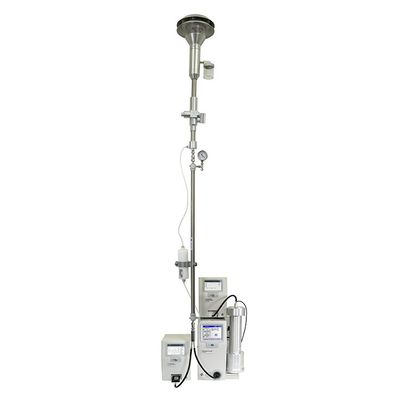
Full CEN-Compliant Ultrafine Particle Monitoring Solution
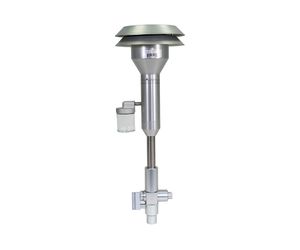
Any measurement can only be as representative as the sample that has been taken for analysis. As is the case with any other scientific endeavor, care must be taken to ensure that the aerosol sample delivered to the particle instrument is representative of the aerosol one wishes to characterize. Specifically, the sampling and conditioning process should aim to preserve the size distribution and concentration of the sampled aerosol as much as possible.
A CEN-compliant sampling system includes several components: a PM10 sampling head, a sampling tube, a cyclone, and a dryer. Use of the cyclone is optional, and depends upon the size distribution of the aerosol to be sampled.
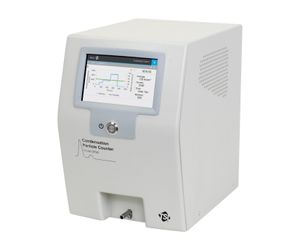
Condensation Particle Counters (CPCs) are designed to measure the number concentration of airborne particles. CPCs can detect particles as small as a few nanometers in size (depending upon the design of the CPC), and have been used to monitor ambient air globally for years. A CPC is specifically required by CEN/TS 16976:2016 as the tool to use when measuring atmospheric aerosol.
CEN/TS 16976:2016 specifies requirements for CPCs that pertain to their design, performance, operation, and calibration. For guidance on regular maintenance, please refer to the relevant TSI resources (especially manuals and maintenance guides), and/or contact us directly.
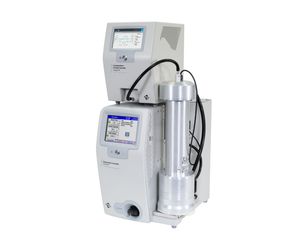
A Mobility Particle Size Spectrometer (MPSS) measures the size distribution of aerosol particles. It does this by performing several different functions simultaneously in concert with each other:
- Inlet impaction
- Aerosol neutralization
- Mobility classification
- Particle counting
Due to the need to perform all of the above functions (as well as perform the necessary data processing), MPSS systems are complex instruments. CEN/TS 17434:2020 specifies requirements for MPSS systems that pertain to their design, performance, and annual calibration. For guidance on regular maintenance, please refer to the relevant TSI resources (especially manuals and maintenance guides), and/or contact us directly.
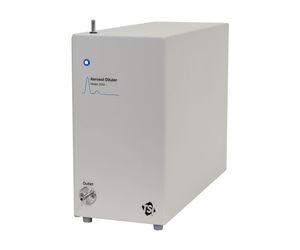
Aerosol number concentrations can vary widely by location. Some locations have both a high particle concentration and a high potential to impact human well-being; for example, traffic junctions, airports, or seaports. In such settings, the very characteristic that makes it desirable to measure ambient particles – their high concentration – makes it difficult to do so. Diluting the aerosol sample prior to measurement can solve this problem.
From the perspective of CEN/TS 16976:2016 and 17434:2020, dilution is optional, and should only be used when local concentrations exceed that which the CPC can handle in single particle mode.
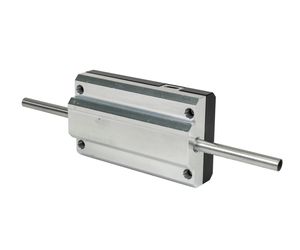
Measuring the temperature and relative humidity (%RH) data in the sampled flow provides valuable data, from both a scientific perspective as well as with respect to complying with CEN/TS 16976 requirements. Regardless of whether the ambient air is very humid or very dry, it is required to ensure that the air sample that enters the CPC inlet meets the requirement of <40% (3%) RH.