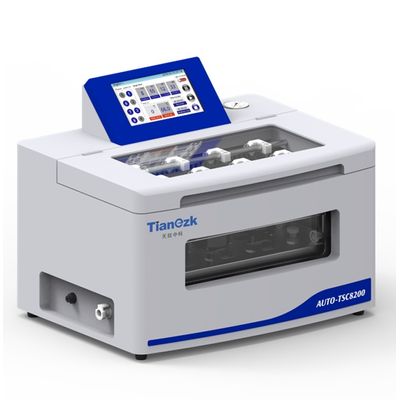
Tianezk - Model Auto-TSC8200 -Fully Automatic Quantitative Nitrogen Blowing Concentrator
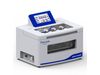
The fully automatic quantitative nitrogen blowing concentrator can simultaneously concentrate 1-60 samples. It uses nitrogen blowing and water bath heating to rapidly concentrate samples. The 7-inch LCD touch screen features an intelligent graphical user interface that displays parameters such as temperature, pressure, and time in real time. The dual blowing needle design first uses a vortex blowing mode in a slanted blowing mode, and automatically switches to a direct blowing mode when approaching the concentration endpoint to accelerate the concentration speed. The open-lid suspension design allows the lid to be suspended in any position for convenient and safe sampling.
- Product Model: Tianyi Zhongke-Auto-TSC8200
- Manufacturer type: Production company
- Updated: March 21, 2025
- Number of visits: 10046
- Brand: Tianezk
- Number of samples: 12-60 digits
- Test tube size: 120mm
- Temperature control range: -90℃
- Heating method: Water bath heating
- Application Areas: Healthcare, Environmental Protection, Food/Agricultural Products, Public Security/Judicial, Pharmaceuticals/Biopharmaceuticals
- Heating power: 600W
- Gas flow: 20L/min
- Temperature fluctuations: ±1℃
- Price range: Negotiable
- Origin Category: Domestic
- Pesticide residue analysis: vegetables, fruits, grains, plant tissues, etc.
- Environmental analysis: drinking water, groundwater, and polluted water samples, etc.
- Food and beverages: milk, wine, beer, etc.
- Bioanalysis: serum, plasma, blood, urine, etc.
- Pharmaceutical testing: Traditional Chinese medicine manufacturing, etc.
The fully automatic quantitative nitrogen blowing concentrator uses the rapid flow of nitrogen to break the gas-liquid equilibrium above the liquid, thereby accelerating the evaporation of the liquid; and increases the temperature through dry heating or water bath heating, thereby achieving the purpose of concentration.
The fully automatic quantitative nitrogen blowing concentrator utilizes the rapid flow of nitrogen to break the gas-liquid balance above the liquid, thereby accelerating the evaporation rate of the liquid; and raises the temperature through dry heating or water bath heating, thus achieving the purpose of concentration.
The fully automatic quantitative nitrogen blowing concentrator utilizes the rapid flow of nitrogen to break the gas-liquid balance above the liquid, thereby accelerating the evaporation rate of the liquid; and raises the temperature through dry heating or water bath heating, thus achieving the purpose of concentration.
Fully automatic
Automatic flow path control enables independent control of each channel.
It automatically collects and discharges exhaust gas, making it environmentally friendly and not taking up space in the ventilation hood.
The system automatically switches between blow needles, first using the oblique blowing mode and then switching to the direct blowing mode to handle different liquid levels and improve efficiency.
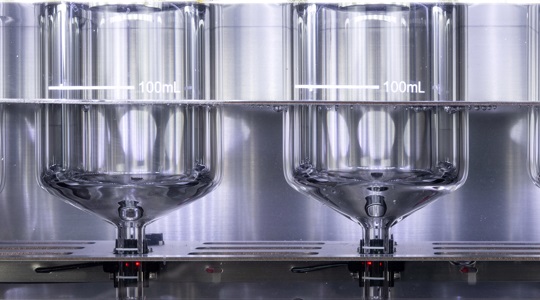
- End point control mode: The end point residual volume can be switched between 0.5 or 1.0 mL without changing the concentration cup.
- It will stop automatically after reaching the end point and issue an alarm.
- Nitrogen blowing
- Nitrogen is also an inactive gas that can isolate oxygen and prevent oxidation.
- Nitrogen is blown rapidly, continuously and controllably onto the heated sample surface to achieve rapid concentration of large amounts of sample.
- The rapid flow of nitrogen can break the gas-liquid balance above the liquid, causing the liquid to evaporate faster and concentrate more quickly.
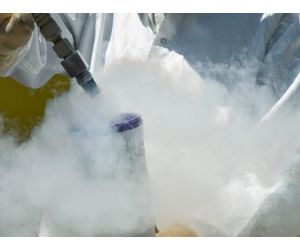
Examples of pesticide residues:
The solution with pesticide residues extracted from the sample generally has a very low concentration. Before the next purification or detection, the extract must be concentrated to reduce its volume and increase the concentration of pesticides to facilitate the purification step. During the concentration process, care should be taken to prevent the loss of pesticides, especially those with high vapor pressure and poor stability. Among the various operating steps of pesticide residue analysis, concentration causes the greatest loss of pesticides. Therefore, general distillation methods cannot be used. However, no matter what method is used for concentration, the solvent must not be evaporated to dryness, as pesticides are most likely to be lost during evaporation. Usually, during concentration, an evaporation inhibitor such as diethylene glycol that does not interfere with the analysis is added to the extract to prevent the loss of pesticides due to solvent evaporation. The commonly used concentration method is nitrogen drying.
Be one step ahead
- It can concentrate 1-60 samples at the same time, and use nitrogen blowing and water bath heating to quickly concentrate the samples.
- 7-inch LCD touch screen with intelligent graphical operation interface design, real-time display of temperature, pressure, time and other parameters.
- Double-blow needle design, first adopts oblique blowing mode vortex blowing, and automatically switches to direct blowing mode when approaching the concentration end point to speed up the concentration speed.
- The lid can be suspended at any position, making sampling convenient and safe.
- Detachable air nozzle: Each air nozzle can be removed and replaced independently.
- Concentration volume: Sample processing volume 15-250ml.