

- Home
- Companies
- Galvatek Part of the John Cockerill ...
- Products
- Galvatek - Effluent Treatment Plants
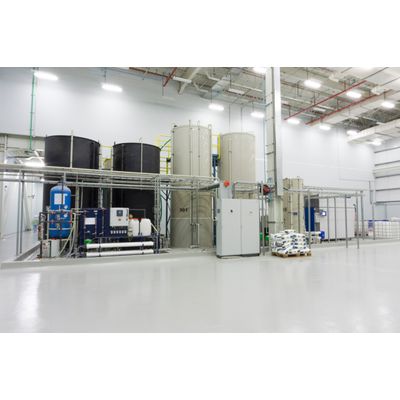
Galvatek - Effluent Treatment Plants
Environmentally friendly wastewater treatment, clean water production and retardation units for the aluminium industry. The design, manufacturing, supply and installation of Waste Water Treatment Plants for surface treatment rinse waters. Galvatek’s experience in industrial water and wastewater treatment plants (WWTP) dates back to the very beginning of the company. Our water treatment plants typically serve surface treatment plants, completing the overall plant project by producing clean water to the plant and/or treating the surface treatment wastewater utilising the latest technological and environmentally friendly solutions.
The two main types of industrial wastewater treatment plants are physical-chemical neutralisation systems and evaporation systems. Galvatek supplies effluent treatment plant (ETP) applications for the aviation, aluminium, energy and various metal finishing industries. Our wastewater treatment plants often include special applications, such as chemical recovery and/or demineralised water production.
Wastewater neutralisation plantsWastewater neutralisation plants are the most typical type of wastewater treatment plant in Galvatek’s process plant project deliveries.
Galvatek offers tailor-made water and wastewater treatment plant solutions for the aviation, aluminium and other surface treatment sectors. In these cases the effluent is rinse water from a surface treatment plant containing impurities such as dissolved metals and suspended solids, which must be removed from the water before sewage according to environmental regulations and norms.
Physical-chemical treatment process of wastewaterTypically, our wastewater treatment plants utilise traditional physical-chemical treatment steps, such as neutralisation, flocculation, clarification and filtration. We refer to these types of wastewater treatment plants simply as neutralisation plants. The pH of wastewater is adjusted, and the required coagulation/flocculation chemicals are added to the water to convert the dissolved components into solid form. The clarification step typically involves a lamella clarifier in which flocculated solids are separated. Solid sludge is further dewatered using a chamber filter press.
Sizing according to wastewater usageWastewater neutralisation plants are always scaled and designed according to the needs of the customer and the quantity of the wastewater to be treated. Typically our neutralisation plants can process up to 10 m3/h, but Galvatek can also deliver larger plants as required.
If zero water discharge to sewage and water recycling is required, an evaporation wastewater treatment plant is the best alternative.
Up to 95% recycling of wastewaterWater recycling reduces the intake of fresh water, as up to 95% of rinse water can be reused. These types of wastewater treatment plants are typically used in the aviation industry, especially by maintenance, repair and overhaul (MRO) shops.
Evaporators are high-tech units, but the principle is simple: Wastewater is boiled under vacuum, which causes the water to evaporate. Substances that have a higher boiling point than water (such as metals) will stay in the evaporation residue (also referred to as the concentrate) and will be separated. Steam is condensed into liquid water and can then be reused. Evaporation energy can be recycled in the heating of wastewater/cooling of distillate step to reduce operational costs.
Operating in mediate wastewater quantitiesWater evaporation plants are always scaled and designed according to the needs of the customer and the quantity of the wastewater to be treated. Typically our evaporation plants can process up to 2 m3/h, but Galvatek can also deliver larger plants as required.
Demineralisation plants and chemical recovery unitsIn addition to effluent treatment plants, Galvatek also delivers special equipment to complete the water treatment process.
Demineralization plants are typically included as part of the total delivery. Demineralised water is typically produced from tap water with softening and reverse osmosis units.
Chemical recovery units can be included as part of the total delivery depending on the application. For example, retardation units are used for sulphuric acid recovery and purification in aluminium anodising.