

- Home
- Companies
- StellarNet, Inc.
- Products
- StellarNet - General Lighting ...
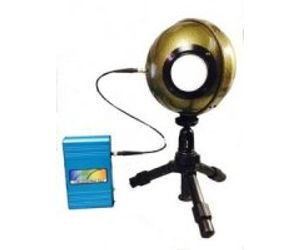
StellarNet - General Lighting SpectroRadiometer System
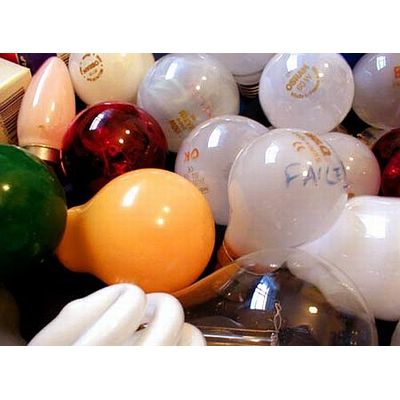
The StellarNet model spectrometers are great tools for low cost, routine analysis of all types of light. From measuring the irradiance of standard light bulbs to measuring the exact color coordinates of the yellow in a traffic light, StellarNet spectrometers are used worldwide to routinely analyze light. These instruments are calibrated to measure the spectral irradiance, radiance, or Watt flux over the wavelength range in nanometers provided by the selected spectrometer model.Currently, StellarNet offers Radiometer systems in the 200-1700nm range!
SpectraWiz Software can calculate many important values such as lumens, xy chomaticity, dominant wavelength, Correlated Color Temperature (CCT), and much more.
The the bottom of the page details the various ranges for each StellarNet Spectroradiometer. The BLUE and GREEN-Wave models, BLACK-Comet concave grating model, and RED-Wave-NIRInGaAs model can be configured to have the correct slit size and detector array to suite your application. Calibrated spectroradiometers can be used to measure absolute intensity, xy Chromaticity (CIE 1931), purity, correlated color temperature, and dominant wavelength.
SpectroRadiometer Test Reporting Software
The SpectroRadiometer Test Report Software now enables customers to prepare and instantly display all of the relevant test data on one sheet making quality control and R&D efforts much more efficient. Instantly StellarNet LED Test Reportacquire a complete spectrum of your test light source and view its color distribution with an under the curve wavelength color representation. This spectral curve allows for easy identification of color distribution of your light source.
- Total Power (Watts and Lumens)
- Efficiency & Efficacy
- CIELAB with the xy/u’v’ chromaticity
- CCT (Correlated Color Temperature)
- PAR
- Dominant wavelength
- Percent color purity.
- CRI (Color Rendering Index)
- CQS (Color Quality Scale)
Low Light Configurations
Many popular applications involve measuring the irradiance of light sources with low output intensities. From ambient streetlight to UV-LEDs many people need to detect low levels of radiation. StellarNet spectrometers can be specially configured to measure these low light levels. The spectrometer aperture or slit can be adjusted to allow more light into the unit, thus making it more sensitive to radiation. For low light applications a 200um slit is the standard slit size. Additionally, low light level calibrations can be employed to further optimize the spectrometers ability to see low light levels. And lastly, a TEC cooler can be installed on the detector array to increase the signal to noise of the unit by 66%. This in affect allows the spectrometer to integrate over longer periods of time, collecting more and more photons, while keeping a low noise value. If you have a low light application be sure to talk to a StellarNet sales engineer to discuss the configuration of your spectrometer.
Bright Light Configurations
In contrast, many industries require the measurement of really bright light emission. StellarNet spectrometers have a dynamic range of 6 decades allowing integration times from 1ms to 65s. StellarNet spectrometers can be specially configured for high power applications. The limitation of a high power radiometer will be limited by the power of the calibration source. StellarNet can configure Spectroradiometers to optimize calibration thus allowing the use of the units large dynamic range and detector linearity to allow high power light measurement. Additionally, smaller slits, fibers, and integration spheres can be employed to decrease the signal to the spectrometer. StellarNet offers a high light level calibration to further optimize the system performance.
SpectraWiz Software displaying 1931 xy chromaticity diagram measuring the color and Correlated Color Temperature (CCT) of an LED.
SpectraWiz Software allows the users to select the irradiance units. Additionally, scroll down menus allow the user to select their collection accessory in order to calculate radiant and luminous flux.
EPP2000-UVN-SR Metal Halide and High Power Sodium Lamps displaying Area Power Spectral Density, Centriod, Peakwave, FWHM, and CentBase.
BLACK-Comet spectrometer calculating LUX values of a bright source. StellarNet spectroradiometers are all calibrated first with base units of irradiance in W/m^2. SpectraWiz software applies different factors and algorithms in real-time to calculate your favorite comparison value (e.g. Lumen, footcandle, CCT, etc).
Dual DSR Spectroradiometer Halogen-lamp spectra (300-1700nm). StellarNet Dual DSR system pictured above uses a Y bifurcated fiber (F600-Y-UVSRNIR) to connect a BLACK-Comet-SR spectrometer and a RED-Wave NIR Spectrometer. The entire system can be radiometrically calibrated over the range 200-1700nm. Above system pictured with Flash Capture Interface (FCI) that allows spectrometer to capture emission from flashing sources such as flashtubes and pulsed solar simulators.
SpectroRadiometer Test Report Panel
Displays all Color & Radiometric test parameters on one sheet for easy testing, review, comparison, and printing
- Measure the spectral output of just about any light or luminaire
- Light Measurement Systems include a miniature spectrometer, a fiber optic cable (or direct attachment), a light collecting accessory/integrating sphere, and a NIST traceable intensity calibration
- Real-time 1931 CIE Chromaticity diagram for xy Chromaticity, Dominant Wavelength, Purity, and Correlated Color Temperature (CCT)
- Spectrometer configurations available to cover the 200-1700nm range