

- Home
- Companies
- GeoVista - GV International
- Products
- GeoVista - Induced Polarisation Probe
GeoVista - Induced Polarisation Probe
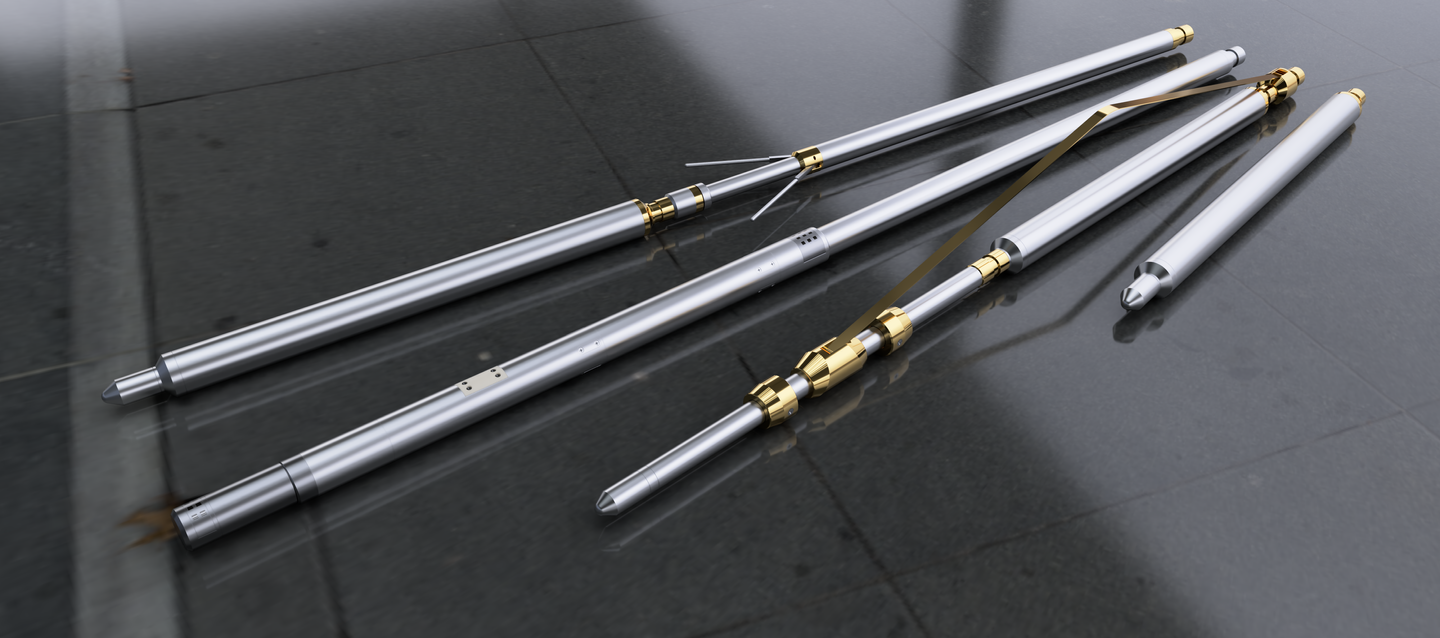
The Geovista Induced Polarisation (IP) Probe comprises four electrodes in AB-MN Wenner configuration. A high DC voltage with alternating polarity is periodically applied to the outer two electrodes. This voltage is applied for a fixed time and then the decaying voltage is measured at the inner two electrodes after a brief delay. The polarizability of different materials is dependent on the electronic configuration. In strata containing metals, the difference in the rate of electrolytic reactions when a current passes across conductive metal grains causes polarisation. An IP effect is also evident when a current is applied to certain clay minerals with surficial negative charges.
The Induced Polarization Probe measures formation resistivity and chargeability. Formations with high chargeability and low resistivity indicate potential areas of mineraliza-
The IP probe is an important tool in mineral exploration and is commonly used when prospecting for elements that commonly occur in sulphides like iron, copper, nickel, lead, cobalt, silver, and zinc.
