


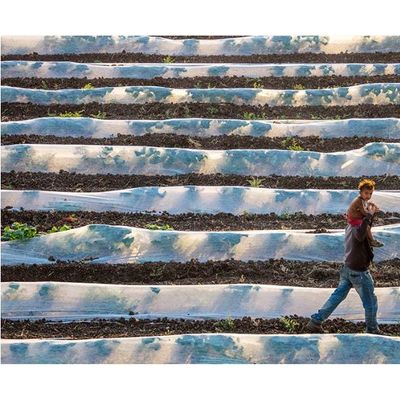
Ginegar - Model C794 -Low Tunnels
Ginegar’s mulch films are advanced multi-layer mulch films that are manufactured using two methods – multi-layer blow film co-extrusion and cast (flat die) extrusion. Offering UV protection, these films are available either embossed (cast) or smooth (blown) and in a wide range of thicknesses and widths according to specific growers’ needs, specifications and crops.
The cast production method involves embossing while the material is hot, thereby changing the surface of the sheeting and endowing it with greater flexibility, softness and strength. This allows better adherence of the sheeting to the ground surface and is particularly suitable for crops grown on raised beds. We manufacture our agricultural cover films using our new five-layer co-extrusion technology. This enables us to process raw materials that guarantee the highest level of mechanical strength and flexibility, and compatibility with all mechanical testing standards.
Types of Mulch Films- Divided into Blown and Cast
Mulch film, one or two colors, multi layer blown (smooth) film co-extrusion,
exceptional mechanical properties.
The cast production method involves embossing while the material is hot, thereby changing the surface of the sheeting and endowing it with greater flexibility, softness and strength.
This allows better adherence of the sheeting to the soil surface and is particularly suitable for crops grown on raised beds.
Low Tunnels
Ginegar manufactures market-leading agricultural cover films that offer excellent protection for open-field crops against low temperatures, and exceptional insulation when used as internal films in double-roof structures.
These advanced cover films are available as blown, transparent, clear or diffused films, and with low thickness, high-mechanical and spectral properties.
Multi Perforation
Cover films with multi perforation ensure a good balance of diurnal and nocturnal temperatures. Available with perforations of 6- or 8-mm diameters and in parallel or domino formations, these cover films are ideal for a wide variety of crops including melons, watermelons and peppers.
Weed control
Mulch films reduce water evaporation and, in this manner, save water usage. They also reduce the water fluctuations in the soil and help maintain constant humidity in the root zone.
Water conservation
The combined use of mulch films and drip irrigation improves water dispersion and contributes to maintaining consistent levels of moisture in the soil. In addition, darkness under the mulch “raises” root development upwards towards the ventilated upper layer of soil, where in the presence of oxygen, their activity is more efficient.
Pest attraction or repelling
Transparent or opaque mulch films help retain heat and raise the temperature of the soil, which is extremely important in autumn, winter and early spring. Opaque films (such as black/silver) reduce the day-night temperature fluctuations in the soil, and black/silver and black/white mulch films reflect the light and enhance photosynthesis. These mulch films are suitable for hot seasons.
Substrate for Plants and Fruit
The mulch films prevent direct contact between the plants and fruit with the soil and preserve the quality of the fruit.
Modification of microclimate in plant and soil
Reflective films (silver) repel harmful pests, specifically leaf aphids and trips. Yellow mulch films attract moths and reduce their adhesion ability.
Environments
In open areas, fertilizers may be diluted in the root zone area (specifically in high precipitation microclimate and rainy regions). The use of mulch films prevents this from occurring. However, the mulch films also prevent the removal of salts that accumulate around the root area after rainfall.