

- Home
- Companies
- Gnee Steel Co., Ltd
- Products
- Gnee-Steel - Stainless Steel Clad Plate
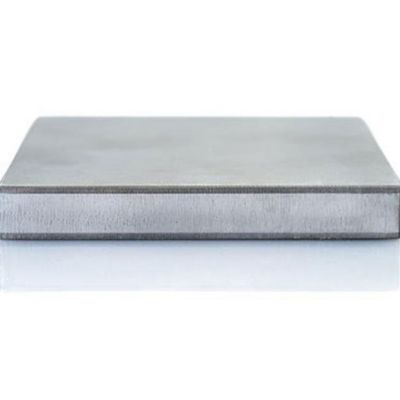
Gnee-Steel - Stainless Steel Clad Plate
316 Stainless steel clad plate is a new type of metal structure material that is made of carbon steel and stainless steel to give full play to their advantages. It ensures the good strength, toughness, and processing performance of carbon steel and at the same time also has a certain degree of corrosion, oxidation, and wear resistance of stainless steel. Consequently, it is well-suited for different fields including construction, textiles, petroleum, automobiles, energy, paper making, 3D printing, and public facilities. Contact us for more details if you need.
- Standard: ASTM, AISI, DIN, EN, GB, JIS
- Shape: rectangular, square, round, or as required
What Is 316 Stainless Steel Clad Plate?
316 Stainless clad steel plate is classified as a composite steel that is created by bonding two or more metals together. Typically, the base material includes low alloy steel and carbon steel, and the cladding material is stainless steel. The plate combines the necessary strength of a structural material (base metal) with the resistance to heat and corrosion (cladding material). Moreover, it offers substantial economic benefits because the plate is lower in cost than similar products made entirely of cladding material. Consequently, it is extensively used in a variety of industrial fields and sectors.
316 Stainless clad steel plate offers a highly effective solution in different industrial sectors. Further advantages of it include:
1. Excellent Corrosion Resistance
The chromium, nickel, and molybdenum content in 316 stainless steel provides increased resistance to corrosion and rust to extend its operational life. It can protect the structure from attack by temperature, wind, water absorption, sunlight, pollution, organic acids, and other strong media. Also, its resistance to pitting and crevice corrosion further enhances its suitability, especially in chloride-rich environments.
2. Excellent Bonding Characteristic
By special technology, the composite interface of these two materials can achieve good and firm metallurgical bonding. And the interface strength is very high.
3. Long Lifespan
Stainless steel cladding will sustain itself for years, without the need for repair or renovation. Comparatively speaking, it has a longer lifespan than other cladding materials, about 50 years.
4. Polished Finish
This kind of plate usually has a smooth, bright, and non-porous surface, helpful to add extra aesthetic value to your projects. If needed, a simple clean can be used to retain and maintain its beautiful properties within a project.
5. Good Processing Performance
Like other steel materials, it can also perform various processing such as hot forming, cold bending, cutting, welding, drawing, etc., and has good process performance. However, it is incredibly difficult to punch, drill, or machine.
6. Low-cost Solution
316 Stainless steel cladding plate is a highly efficient and green material. On one hand, compared with stainless steel plates, it can reduce alloy elements like chromium (Cr) and nickel (Ni) by 70–80 %, and reduce costs by 30–50 % because of the low cost of carbon steel. On the other hand, it has achieved the effect of saving resources and reducing costs without reducing the use effect (anti-corrosion performance, mechanical strength, toughness, etc).
316 Stainless steel cladding materials offer immense benefits to heavy and light industries. Examples of clad plate applications include:
1. Construction: building material, marine protection projects, architectural improvement, shipbuilding, steel structures, roofing panels, desalination plant, etc.
2. Manufacturing: use as the main substrate for making stainless steel products in coils, pipes, coils, wires, profiles, fittings, etc. Others include heavy-duty tanks, pressure vessel fabrication, industrial scrubbers, chemical storage, food processing, upgrade of coking equipment, material-handling equipment, pharmaceutical equipment, etc.
3. Industry: used to make pressure vessels, pagodas, conveyor systems, pumps, water treatment plants, steam boilers, burners, and other industrial equipment.
4. Public uses: reactors, heat exchangers, separators, cookwares, elevators, agricultural projects, water conservancy, electronics, home appliances, and other decoration projects
- Raw Material : base metal: low alloy steel or carbon steel (Q235B?Q345R?Q355?Q245R?20#?40#…)
- cladding metal: stainless steel (304, 304L, 310, 310S, 316, 321, 318, 410S, 420, 904L…)
- Grade : 316
- Standard : ASTM, AISI, DIN, EN, GB, JIS
- Thickness : base material thickness: 0.5 – 50 mm
- cladding material thickness: 1.5 – 20 mm
- cladding thickness: 1.5 – 5 mm
- Width : 100 – 800 mm
- Length : 500 – 15000 mm
- Shape : rectangular, square, round, or as required
- Production Method : explosive cladding, hot/cold rolling
- Surface : NO.1, 2B, BA, 4K, 8K, HL, NO.4, annealed, pickled, polished,
- Processing Services : cutting, shearing, welding, leveling, rolling, punching, bending, etc
- Package : standard export seaworthy package or as required