


- Home
- Companies
- Leiyuan Greening Solution Company ...
- Products
- Greening - Model M2017 - Modular ...
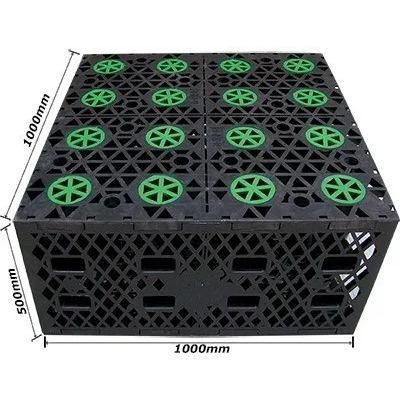
Greening - Model M2017 -Modular Stormwater Detention and Rainwater Cistern
The Rainwater Cistern, composed of PP (polypropylene) modules, represents a cutting-edge approach to rainwater collection and management. These underground stormwater tanks are designed to be installed beneath public areas such as city squares, green belts, and parking lots. Their primary function is to temporarily store rainwater during peak flow periods, gradually releasing it afterward to prevent flooding and promote water recycling.
- Underground Stormwater Tanks
- Size: 1000 x 100 x 500mm
- Material: 100% Recycled PP
- Load Capacity: 45T/sqm
- Tanks: 2 tanks/cbm
- Void ratio: 95%
- Water Storage: 475L/tank
- Weight: 20kgs/tank
Effective Rainwater Management: The Rainwater Cistern helps mitigate rainwater flood peaks by temporarily storing excess rainwater and slowly discharging it after peak flow. This process not only prevents flooding but also facilitates rainwater recycling and reduces initial rainwater pollution in receiving water bodies.
Versatile Installation: Underground Stormwater Tanks cover large areas, making them suitable for various urban settings. Their flexible design allows for installation in public spaces without disrupting the surface use.
Self-Cleaning Mechanism: While particulate impurities in rainwater can settle in the storage tank, the system incorporates retaining and self-flushing devices, such as flushing doors, to maintain cleanliness and functionality with minimal manual intervention.
Robust Construction: A unique interlocking system, where a quarter of the modules between two layers are stacked in a cross pattern, ensures a safe and reliable structure. This horizontal and vertical interlocking system provides enhanced stability and durability.
The construction of a "sponge city" involves a cycle process crucial for effective urban water management. The "storage" principle in a sponge city entails retaining and storing rainwater to achieve multiple objectives, including mitigating peak flows and enhancing water harnessing efficiency.
- Flood and Rainwater Peak Management: Efficiently manages rainfall peaks and flood peaks, improving urban resilience to heavy rainfall events.
- Natural Rainwater Purification: Establishes a sponge-like drainage purification system that enhances the natural water cycle and improves water quality through natural filtration processes.
- Flexible and Customizable Construction: The modular design allows for various types of rainwater storage tanks to be constructed according to specific site requirements and conditions.
- Cost-Effective Purification: Assists in purifying rainwater naturally, reducing subsequent purification costs and contributing to overall water management efficiency.
- Urban Public Areas: Ideal for installation beneath city squares, green belts, and parking lots to manage stormwater without affecting surface usability.
- Residential and Commercial Complexes: Effective in managing rainwater in housing complexes and commercial areas, preventing local flooding and enhancing water recycling.
- Sustainable City Projects: Key component in developing sustainable and resilient urban infrastructure, particularly in sponge city initiatives.