- Home
- Companies
- Willowstick Technologies LLC
- Products
- Willowstick - Groundwater System ...
Willowstick - Groundwater System Modeling and Mapping
Willowstick provides quick and nonintrusive technologies to identify, map and model preferential groundwater connection paths. Like an angiogram that enables medical personnel to see blood flow inside the body, the Willowstick method is able to quickly identify groundwater flow paths. This technique is a powerful tool for finding seeps through or under engineered embankments, leaks through inaccessible liners or for finding preferential flow paths of groundwater.
The Willowstick method is an active geophysical technique. Active methods work by transmitting man-made signals such as percussion waves or electric currents through the earth. The Willowstick method works by introducing an electric current directly into the water of interest. We use the subsurface water of interest as the medium to help us establish an electrical circuit. By measuring the magnetic field generated by the flow of electric current in the water we can identify if there are, and the location of, any preferential water connection paths. This unique method works in the following manner:
- Electric current is introduced directly into the water of interest at the elevation of interest.
- Earthen materials enhance the electrical conductivity of water.
- The electric current uses the groundwater as a path of least resistance to complete the circuit.
- These electrical pathways generate relative magnetic highs.
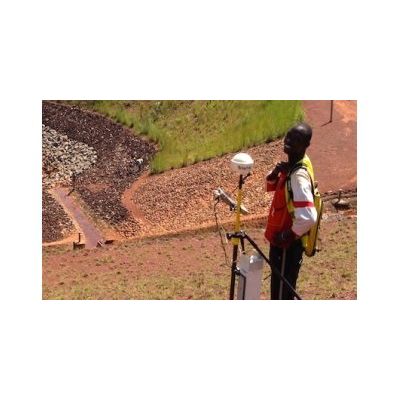
- The magnetic field is measured an recorded at the surface.
- This magnetic field reveals the location and depth of the groundwater connection paths.
The Willowstick method has been ground-proofed in projects completed throughout the world. Willowstick enjoys a high rate of returning customers many of which are recognized as leaders within their respective industries. For a partial client list click here.
The Willowstick technology has the ability to identify and model water flow paths with precision. By directly energizing the water of interest with strategic electrode placement, the Willowstick technology is better suited to identify preferential subsurface water flow paths than other geophysical methods.
Groundwater characterization is often a frustrating experience. It isn’t easy to understand what is happening with the water beneath our feet. When boreholes fail to provide answers to important questions a typical approach is to drill more holes. In the long term, this approach is cost-prohibitive and may not provide the necessary answers.
Willowstick suggests a more practical approach in characterizing groundwater. Augment data from existing wells with a Willowstick geophysical investigation specifically designed to characterize groundwater flow paths. This approach provides a more comprehensive model of the location and depth of preferential groundwater flow paths. A Willowstick investigation typically identifies specific areas that warrant further investigation while reducing the number of additional wells that need to be installed. The early application of a Willowstick investigation saves time and money by eliminating unproductive remediation efforts.
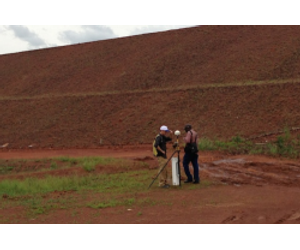
The Willowstick method, also known as AquaTrack, uses a low voltage, low amperage, alternating electrical current to directly energize the groundwater by way of electrodes placed down wells or in contact with seeps or leaks. Since groundwater is typically a better conductor of electrical current than the surrounding rocks or earthen materials, the electric current follows the water bearing features that help to complete the circuit between the two electrodes. This electric current, same as all electric currents, generates a magnetic field. This magnetic field is then measured and recorded at the surface of the ground using very sensitive instruments.
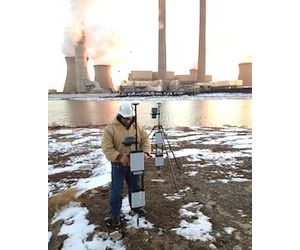
Survey data is normalized to show relative highs and lows. These are referred to as anomalies that represent areas of different physical conditions. In the simplest terms, the Willowstick method identifies the preferential connection paths present in the area of investigation. Willowstick has proven effective in mapping and modeling subsurface water systems for over 130 clients in a wide variety of applications.
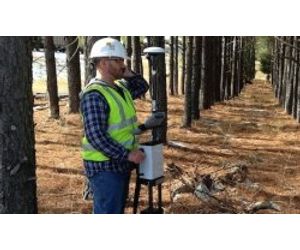
Just as performing an angiogram allows physicians to understand any problems with blood flow prior to surgery, performing a Willowstick survey allows for improved understanding of groundwater connections before remediation. Both allow for more targeted methods to be employed. Reduce exploration and remediation costs and rest assured that you have an accurate characterization of your groundwater.
2D Maps
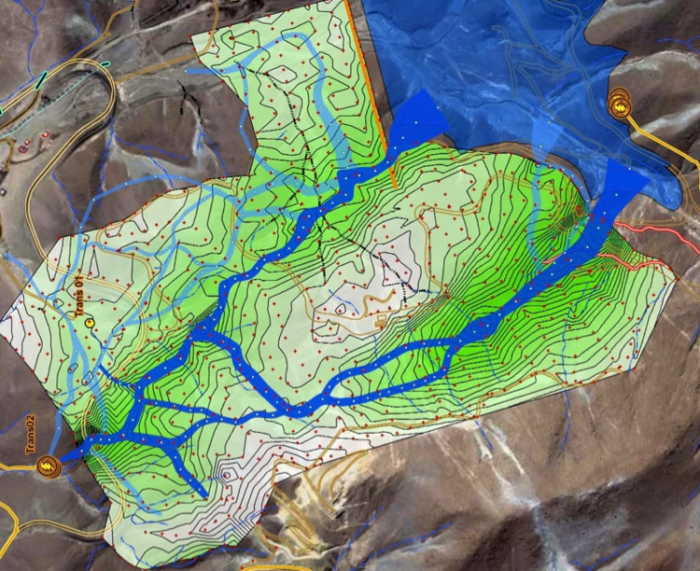
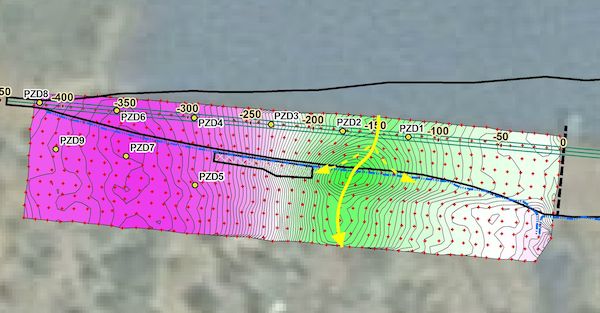
The initial maps that are provided to our clients are 2D. These maps allow us to rapidly communicate with the client on survey results within the first day or two of starting fieldwork. This allows for collaboration on how the fieldwork should progress based on active observations. Our clients see initial results on every survey we perform before we leave the site. This puts the client in control of the investigation and avoids any surprises.
3D Models
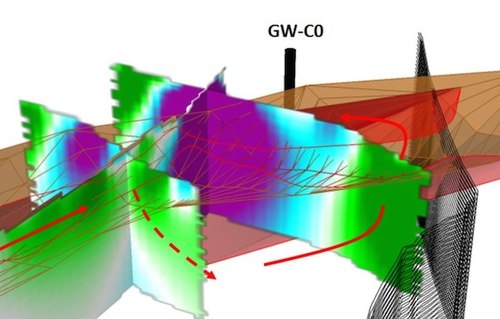
Understanding subsurface water connections is critical to enhancing site conceptual models so that better decisions can be made regarding the monitoring and remediation of a particular site. Willowstick employs two different modeling techniques when producing 3D groundwater models. They are Electric Current Flow Models and Electric Current Distribution Models. They are explained in more detail below.
Electric Current Flow Models (ECF)
With the same magnetic field data used to generate the 2D maps, an electrical current is simulated in a modeling environment and a theoretical magnetic field contour map is created. Next, the modeler adjusts the depth and electrical current flow until he can match the theoretical magnetic field contours with the observed magnetic field contours. Once a reasonable match is achieved, the modeler can assign depths to the individual pathways.
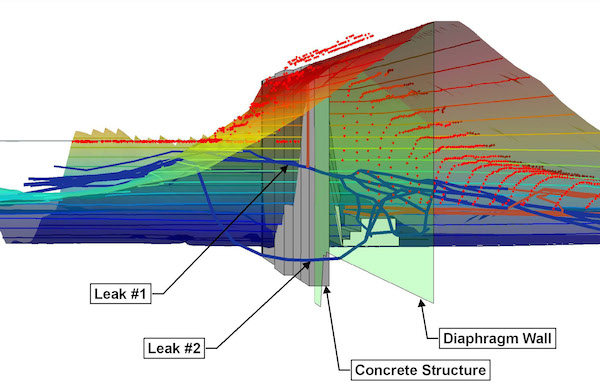
Electric Current Distribution Model (ECD)
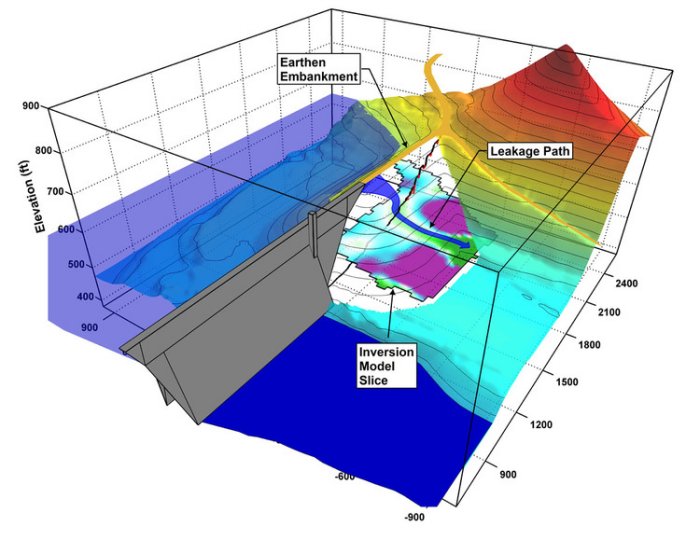
These models depict the distribution of electrical current through a given site. The data is subjected to an inversion algorithm (mathematical model) designed to identify the distribution of 3D electric current flow within the study area. This modeling process provides clients detailed views of how seepage paths are connected through their site. This model is then provided to the clients for incorporation into their own site models.