


- Home
- Companies
- Endura Coatings
- Products
- Endura - Model Series 500 - Hard ...
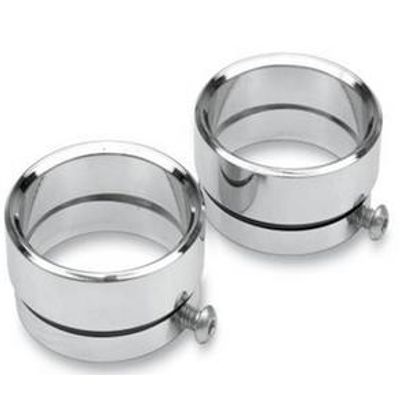
Endura - Model Series 500 -Hard Chromium Plating
By nature, chromium has a low coefficient of friction and is resistant to a wide variety of corrosive agents and materials. These attributes make hard chromium plating particularly attractive for applications plagued by accelerated wear and high friction. Compared to an uncoated surface, a chrome-plated work piece can provide increased in-service longevity, creating significant advantages to our customers by lessening or eliminating down-time and tool maintenance / replacement. Endura®`s functional hard chrome plating is used in a variety of industries and environments, such as applications in which durability and alloy protection is imperative.
Need something more? Consider Endura®`s Infused Matrix™Coatings. These coating technologies are further reinforced with a variety of fluorochemistry enhancements which provide extra performance benefits including, but not limited to: superior corrosion resistance, low-friction and non-stick properties. Created by means of a proprietary vacuum impregnation process, our Infused Matrix coatings are truly unique, providing all of the benefits of traditional Teflon or "Teflon-like" coating within a wear-hardened ceramic matrix. These surface conversion technologies create improved release, lower friction, enhanced corrosion protection, and a harder, more wear-resistant surface than other chromium coatings available today.
At Endura Coatings, we offer our Series 500 Hard Chromium Plating, using chromium`s low coefficient of friction and high corrosion resistance for applications where durability and alloy protection is important. As part of our hard chromium plating process, we have seven steps.
Step 1: Our proprietary surface cleaning
Step 2: Parts go through an acid etch pretreatment to prep the metal substrate for plating. Different acid etching solutions are used for different substrates.
Step 3: Bath deposit process occurs in step 3
Step 4: Chrome matrix deposit is formed
Step 5: The newly formed chrome matrix is vacuumed infused with sub-micron sized particles to optimize specific coating performance objectives
Step 6: The newly formed, hardened, and bonded coating will not chip, crack, flake or peel
Step 7: Different fluoropolymers are utilized to optimize specific performance objectives
Coating Specifications
Suitable Coating Materials
Series 500 hard chromium plating coatings can be successfully applied to most metal substrates including steel, stainless steel, iron, brass, bronze, copper, hastelloy, inconel, monel, nickel alloys, and aluminum.
Coating Thickness
Our Series 500 coatings are applied utilizing a time controlled deposition process, which allows us to specify a wide range of thicknesses and hold tight tolerances. Depending on your application requirements, we routinely apply coatings as thin as 0.0002” per surface or as thick as 0.002” per surface, holding tolerancing within 0.0001” per surface. Our nominal thickness that we specify for the majority of our 500 Series coatings is 0.001”, which is held within +/- 0.0002” per side.
Surface Finish (RMS)
500 Series coatings are uniform and extremely conformal in nature. Unless you instruct Endura® to grit blast prior to coating application, the majority of our 500 Series coatings will replicate your parts’ surface geometries and closely mirror their existing RMS surface values. If desired, 500 Series coatings are capable of being polished to a SPI A2 finish.
Hardness
Typical micro surface hardness varies within our 500 Series product platform between 68 and 72 Rc.
Wear & Abrasion Resistance
These coatings exhibit superior abrasion resistance and are one of the best known solutions for mitigating wear, greatly superior to that of hardened, carburized or nitrided steels. Under high stress contact against abrasive materials, chrome outperforms many other coating options.
Low Friction
Series 500 coated surfaces are uniform, conformal and smooth, and may be further supplemented through the impregnation of low friction, high release fluoropolymers. The increased lubricity is especially well-suited for molding applications utilizing plastic, epoxy, silicone, and rubber, as well as fire retardant and glass-filled materials. These coatings offer excellent release and is often used in areas where other coatings fail. Frictional values typically range between 0.10 and 0.12, depending on the coating selected as well as the load, sliding speed, and temperature of your application.
Chemical & Corrosion Resistance
Series 500 coatings are resistant to a variety of chemicals, most acids, alkalis, and a multitude of solvents. Using the ASTM B-117 with a coating thickness of at least 0.001 inch, our Endura® 500CR coating has shown to withstand corrosive attack in excess of 500 hours. We recommend that you evaluate the selected Endura® 500 Series coating against the corrosive elements of your application. Sample coupons are available upon request to test the performance of our coatings in your use environment.
Non-Stick (Release) Properties
Through a proprietary, vacuum impregnation process, Endura® can infuse specific high release fluoropolymers into the chrome matrix. These fluorochemistries provide exceptional non-stick surface characteristics, creating sustained high release properties from a variety of materials and tactile products.
Operating Temperature Range
Our Series 500 coatings can withstand severe temperature fluctuations with little loss in physical properties. These coatings are designed to perform to 1150°F continuous operating temperatures.
Electrical Properties
Endura® 500 Series coatings are good thermal and electrical conductors. The electrical resistivity of our 500 Series coatings varies by coating system. Depending on the coating being applied, chrome thickness and density, values may range from 14 to 67 microohm-cm.
Non-Wetting
Series 500 "Infused Matrix" coatings contain organic polymer reinforcements that afford excellent non-wetting surface characteristics. Depending on your application requirements, specific fluoro-chemistries can be vacuum impregnated into our 500 Series coating’s microstructures to create oleophobic and hydrophobic finishes that are truly unique. These highly engineered surfaces resist wetting by most liquids, thus greatly reducing or eliminating extensive cleaning efforts.
Critical Processing Factors
Base Metal Surface Requirements
Surface imperfections, contaminants, and existing coatings must be removed prior to applying any of our 500 Series coatings. These coatings are conformal and uniform in nature, and consequently will replicate all existing surface geometries of your base metal substrate. Therefore, any existing surface defect or roughness will be amplified. Endura® possesses the ability to remove most any known pretreatment or coating, however; we recommend that you provide clean parts that possess the RMS value you wish to maintain post processing. In order to ensure proper adhesion to your base metal substrate parts also must be free of scale, slag or discoloration associated with heat treat, as well as all magnetism.
Racking
To create our Series 500 coating architectures, your parts must be fully submerged during pre-treatment and processing. As a result, fixture points of contact are required to securely hold and suspend your tooling during processing. Areas where we make contact with you parts will have small racking voids and should be located on your parts non-functioning (non-working) surfaces. Prior to sending tooling in for processing, it is important to have acceptable surfaces for racking defined to ensure our manufacturing and production team run your parts to specification.
Masking
Areas where coating voids are required will need to be masked off prior to processing. Endura® works with a variety of mediums to mask surfaces where coating is not desired. Depending on your part’s geometry and surface characteristics, painted-on lacquers, pull-plugs, and custom fabricated fixtures may be used. In the event masking is required, highlighted or "marked" prints identifying critical surfaces are extremely helpful in ensuring your parts are processed to specification.
- Typical Surface Growth - 0.0003"
- Hardness Equivalent - 70 Rc
- Non-Stick - Good
- Lubrication - Good
- Non-Wetting - N/A
- Corrosion / Chemical Resistance - Very Good
- Taber Abrasion Resistance - 0.04 g
- Friction (Dynamic/Static ASTM 1894) - 0.3
- Max. Continious Operating Temperature - 1500°F
- FDA/USDA - N/A