


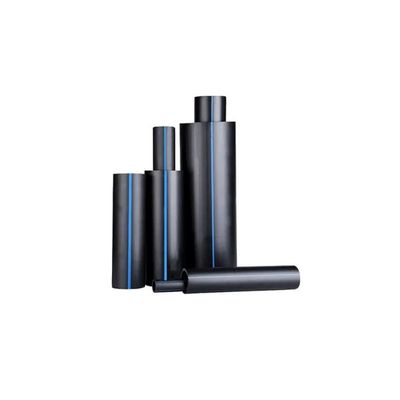
Kuzeyboru - HDPE Pipe
Hdpe Pipe is produced by Kuzeyboru with its high quality and many advantages. Kuzeyboru Hdpe Pipes, which are the most preferred in international projects, are ideal for a wide variety of applications. We produce Kuzeyboru Hdpe Pipes in desired diameters between 20 mm - 1600 mm and in Pn4-Pn32 pressure classes with high performance and quality. Hdpe Pipe systems that you can safely use in your projects offer many advantages.
What is High-Density Polyethylene Pipe?
HDPE Pipe produced from polyethylene has become popular with its advantages, high strength and wide usage area. Hdpe Pipe has many advantages. It has become the best choice for projects with the reliability of pipes and fittings, ease of transportation and loading, and ease of assembly. Polyethylene Pipes show high resistance against impact and pressure. It has high chemical resistance. These features have been the most important reason for the preference of polyethylene pipes and polyethylene fittings.
So what distinguishes HDPE from other products? HDPE pipe is strong, durable, flexible and lightweight. Because the fusion process creates a monolithic HDPE system, HDPE has a zero leakage rate when combined. HDPE pipe is also a more environmentally sustainable option as it is non-toxic, resistant to corrosion and chemicals, has a long design life and is ideal for trenchless installation methods due to its flexibility.
- Easy assembly method and easy assembly of fittings.
- It is not affected by underground movements and is not broken.
- It has high impact resistance and rapid crack propagation.
- They have high flexibility properties. Thus, they provide ease of use.
- Since they have low internal surface roughness, they have significant advantages in diameter selection during project design.
- It is not affected by sea water and sea movements, it is suitable for mounting on the sea floor.
- Black colored pipes are resistant to UV rays. They are not affected by harmful substances.
- It is found in the structure of the soil that causes abrasive effects. They are resistant to chemicals.
- They do not change the smell and taste of water, so they can be used safely in drinking water.
- It is not possible for plant and tree roots to get inside.