


- Home
- Companies
- Zeus Industrial Products, Inc.
- Products
- Zeus - Model FEP 1.3:1 - Heat ...
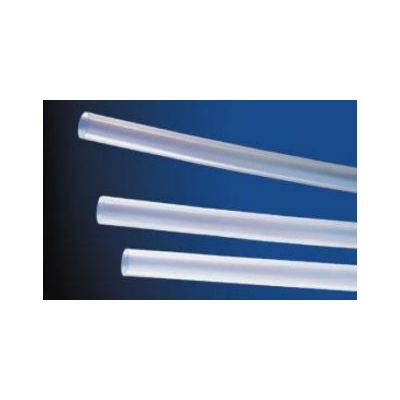
Zeus - Model FEP 1.3:1 -Heat Shrinkable Tubing
Zeus provides the ideal method for the application of a tight and protective jacketing to items that ultimately will be subjected to extremes of heat, corrosion, shock, moisture, and other harsh environmental conditions. Heat shrink tubing extends the life of the protected components nearly indefinitely and helps to sustain their performance. Zeus heat shrink tubing has a high presence in the aerospace, electrical, chemical, optical, medical, and automotive fields.
Fluorinated ethylene propylene, or FEP, heat shrink tubing is chosen particularly for its lower shrink temperature than other heat shrinks such as PTFE. FEP also has greater flexibility, optical clarity, and high lubricity in comparison to PFA. In addition to those traits, FEP heat shrink is commonly chosen for its lower cost and for applications where large heat shrink ratios are not needed.
Zeus heat shrink tubing products are provided in their expanded state. With the brief application of heat, they mold themselves snugly around the most intricate and irregular shapes to form a completely sealed covering. Sources of heat and methods of heating are optional. Please contact your Zeus Technical Account Manager for guidance on selecting the best heat option for you.
Shrink Ratios and Recovery
Heat shrink ratio refers to the final diameter of the heat shrinkable material after being allowed to shrink fully unrestrained compared to the original diameter of the pre-shrunk material. After heat shrinking is complete, the material is considered to be in its “recovered” or “recovery” state. Thus, final dimensions for heat shrink usually refer to recovered or fully shrunk dimensions.
As an example, for a heat shrinkable material with a 3:1 heat shrink ratio, the final diameter of the fully shrunk material will be reduced to 1/3 of the pre-shrunk diameter. Or, put another way, the original diameter of the pre-shrunk material will be 3× the diameter of the fully shrunk (recovered) material; the ratio of their diameters, pre-shrunk:recovered, will be 3:1.
Note that heat shrink is typically applied over a material or component to encapsulate it; thus, in practical application, it is restrained from being shrunk completely.
Heat shrink ratio is a fundamental consideration for every application based on the degree of non-uniformity of the items or components to be covered. The more irregular the shape, the greater the heat shrink ratio needed to cover the shape. Conversely, for more uniform parts such as cylinders or wires, smaller heat shrink ratios will generally suffice to achieve proper coverage. Consideration should also be given to tapered parts: While appearing generally uniform in shape, the degree of taper should be taken into account when selecting heat shrink and its shrink ratio.
Zeus FEP heat shrink tubing is available with 1.3:1 and 1.6:1 or greater shrink ratios and can be selected based on American Wire Gauge (AWG) or fractional sizes. This heat shrinkable material incorporates all of the same high standards and characteristics of FEP. We can also provide custom micro-miniature dimensions and other tailored specifications and tolerances upon request.
Heat Shrinking Guidelines for FEP Heat Shrink Tubing
Always assure good ventilation in the immediate work area before beginning the heat shrink process. (Caution: Fumes can cause nausea and dizziness).
- FEP heat shrink tubing requires approximately 420 °F ± 50 °F (215 °C ± 10 °C) to initiate shrinkage. While this is a liberally safe range, these temperatures are approximate. Actual shrink temperatures may vary based on dimensions and wall thickness of the tubing, methods of application, and other factors. Zeus is happy to provide samples to test in your application and help you determine the best material to use.
- The mandrel (part) to be covered by FEP heat shrink must be able to tolerate the range of the heat shrink temperature.
- Parts or mandrels may act as a heat sink. Therefore, Zeus recommends preheating larger diameter mandrels and other parts.
- FEP heat shrink needs only a small degree of recovery. You may experience some slight longitudinal change depending on the amount of recovery. Contact Zeus if longitudinal change is a concern.
- Heating and cooling should be even on all sides for best results. Uneven heating or cooling tends to split the side still in the "gel" state while the other side is in the hard or crystalline state, particularly upon recovery. Note: Shrinking starts when the FEP is brought up to the "gel" state but completes its recovery during the cooling cycle. In its gel state the tubing becomes crystal clear and glassy in appearance.
- Ovens are the most reliable way to recover heat shrink products due to their ability to ensure even heating and reduce the risk of overheating the material (which can lead to brittleness and cracking). If a heat gun is to be used, please contact our team our team or call toll-free in the US 1-800-526-3842 or +1-803-268-9500 internationally for tips on proper heat application to achieve the most uniform recovery.
- Encapsulation – For general purpose protection and covering of components, FEP heat shrink may be the best choice for your application for cost, heat shrink temperatures, and other features making it competitive with products that are more expensive. FEP 1.3:1 heat shrink is best suited for applications that do not require large heat shrink ratios. Such covered parts include medical instruments, temperature probes, roll covers, lighting, hoses, wires and cables, to list but a few. FEP heat shrink’s transparency allows your covered components to remain observable while they are protected from heat, chemicals, moisture, and temperatures.
- Insulation – FEP’s dielectric properties make is a good choice for encapsulating and insulating electrical components such batteries (lithium and alkaline) or solenoids. FEP heat shrink’s heat tolerance likewise allows it to continue to perform at temperatures commonly encountered in electrical environments.
- Wire Harness – This heat shrink material’s excellent dielectric properties make is a good choice for covering wires and cables and can even support splicing. Once covered, FEP heat shrink also serves as insulation.