

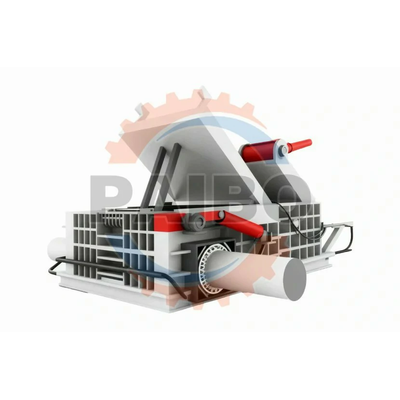
Paibo - Model PB -Heavy Duty Metal Baler for Furnace-Ready Compacts
Have you ever wondered?With the same 100 tons of scrap metal, some recyclers can sell furnace-ready bales processed on our Heavy Duty Metal Baler for Furnace-Ready Compacts at a clear premium, while others are constantly pushed down on price by smelters. The difference is not just transport cost. In reality, it comes down to how much of your metal is lost inside the furnace. I’ve seen too many recyclers lose money right at the furnace — without realising where the loss was coming from.
Beyond Compaction: Why High-Density “Submerged Melting” is Your Real Profit
The principle is simple.
Smelters buy scrap bales for one reason only: to produce molten metal.
If a bale is not compacted tightly enough, it contains large air gaps and has low effective density. Once charged into the furnace, such bales tend to float on the molten bath instead of sinking.
At furnace temperatures, the interstitial oxygen trapped inside these air gaps reacts immediately with the exposed metal surface. Rapid oxidation occurs, turning valuable metal into dross and slag. This loss is known as burn-off.(The dynamic demonstration below visualizes the process of submerged melting vs. surface oxidation.)
By contrast, bales produced with our Heavy-Duty Metal Baler are no longer loose scrap. They are true Furnace-Ready Compacts. When charged, they sink directly below the melt surface and achieve real Submerged Melting.
Below the molten surface, oxygen is physically excluded. The metal melts into liquid rather than oxidising, and melt loss is kept to a minimum. This is why density directly translates into profit.
When scrap is processed using our Heavy Duty Metal Baler for Furnace-Ready Compacts, the discussion with the smelter changes fundamentally.
I know the concern—”If a Chinese part breaks, is my baler going to be down for weeks waiting on a shipment?”
As a CE Certified Metal Baler, PAIBO was designed from day one to break the “parts monopoly.” We’ve replaced proprietary components with global brands you can find at your local industrial supply store: Rexroth hydraulics, Siemens motors, and Schneider electrics. If a sensor fails, you don’t need to call us across the ocean; you can just drive to the nearest town and grab a replacement. We call this “Zero-Wait Maintenance.”
To consistently produce Furnace-Ready Compacts, our Heavy Duty Metal Baler is typically 2 to 3 tons heavier than equivalent models. This extra weight isn’t scrap iron; it’s the thickened Hardox Steel wear plates and a reinforced frame.
When processing sharp aluminum extrusions or high-tensile stainless scrap, the inside of a baling chamber experiences a “mini-earthquake” with every stroke. Without a rock-solid foundation, frames warp within two or three years. We invest in this extra steel to ensure that 10 years from now, your Heavy Duty Metal Baler for Furnace-Ready Compacts is still punching out perfectly square blocks just like it did on day one.
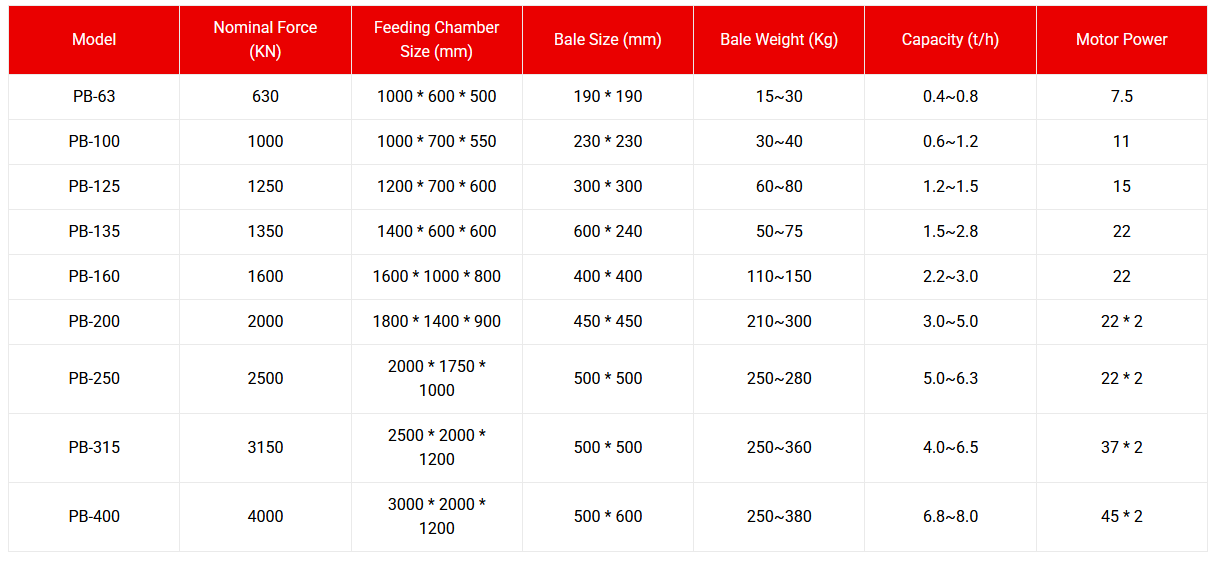
Different operations require different “firepower.” Below are the detailed specifications for our PAIBO baler series.
Please note: the Bale Weight and Capacity are calculated based on standard material densities. If you require extreme “smelter-grade” density, we can customize the pressure curves for your application.
- Metal Recycling & Waste Management
- Automotive Dismantling
- Foundry and Smelting Industry
- Metal Fabrication Plants
- Machinery Manufacturing