


- Home
- Companies
- Polymer Technology (H.K.) Co., Ltd.
- Products
- POLYTE - Heavy Metals Chelating Agent
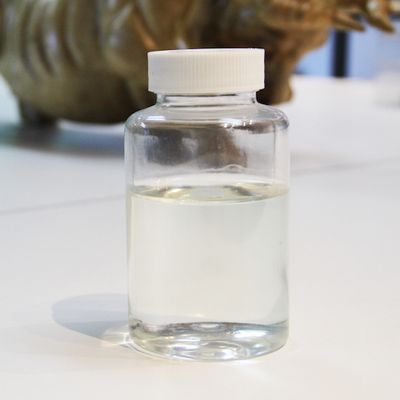
POLYTE - Heavy Metals Chelating Agent
The POLYTE Cleanseries heavy metal chelating agentform a planar tetragonal structure with metal ionsof thedsp2valence bond orbital, andform a tetrahedral structure with a metal ionof thesp3valence bond orbital, and metal ions of d2sp3 valence bond orbital. Because the chelating agent forms a less spatial configuration with the metal ions of different valence bond orbital, the chelate formed by the reaction of the chelating agent with the heavy metal ions has higher stability. This kind of chelate has stable chemicalproperty, difficult to dissolve in water, low dissolution rate, and low risk forsecondary pollution. It is widely used in the removal of heavy metals such as zinc, lead, cadmium, arsenic, nickel, copper and chromium in wastewater and solid waste.
- Strong chelation ability: It has good removal effect on monovalent and divalent heavy metal ions in water without affected by the concentration of heavy metal ions in water. It can remove almost all heavy metal ions at one time; it can be processed directly without break the heavy metal ions complex.
- High chelation efficiency and low dosage: The combination of large and small molecules effectively avoids the failure of effective groups caused by steric hindrance, improves the chelation efficiency and reduces dosing ratio.
- The property of chelate is stable without dissolve. It has been determined that the chelate formed has a very stable stability and is more stable than sulfides and hydroxides formed by the same metal element.
- The double effects of chelating flocculation: The macromolecular chain has the functions of bridging, net filling and sweeping at the same time while chelating, which can effectively reduce the dosage of subsequent flocculants.
- The operation method is simple. The agent can react at room temperature without heat or cool down requirement. Basic flocculation reaction conditions can be used and can be combined with other water treatment technologies.
- High comprehensive cost-effective: Reaction occur when the pH is adjusted to neutral, and the pH value of the wastewater after the reaction can basically meet the discharge standard, large amount of acid-base neutralizing agent can be saved in the entire reaction process.
- The amount of sludge produced is small, easy to dehydrate, and no secondary pollution.