


- Home
- Companies
- JPK BioAFM Business - Bruker Nano GmbH
- Products
- JPK NanoWizard - Model Ultra Speed 2 - ...
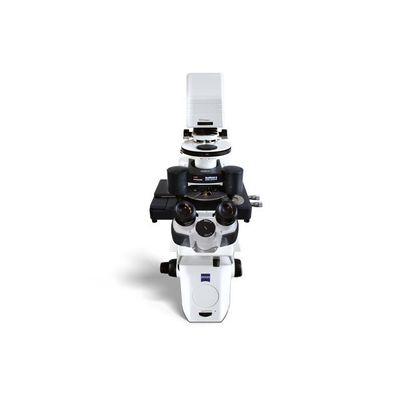
JPK NanoWizard - Model Ultra Speed 2 -High-Speed AFM Combined With Advanced Optical Microscopy
The JPK NanoWizard® ULTRA Speed 2 delivers exceptional performance and unmatched user-friendliness. It reaches speed levels previously unattainable with traditional AFMs and combines true atomic resolution and fastest scanning with rates of 10 frames/sec. Real-time, in-situ experiments can be performed in combination with advanced optics. A broad range of modes and accessories makes the system highly flexible and upgradable.
Speed
High-speed imaging at 10 frames/sec
Time-dependent, force-induced nanomanipulation of biological samples. Examine cellular function and structural dynamics at the single-molecule level.
High Resolution
Live-cell imaging
Visualization of membrane proteins, single cells, subcellular structures, DNA, and single molecules.
Dynamics
Study cellular dynamics in their native state
Real-time visualization of dynamic processes, signalling events, cell-cell and cell-surface interactions. Characterization of dynamic mechanical properties.
- NestedScanner Technology for high-speed imaging of surface structures up to 8µm with outstanding resolution and stability
- PeakForce Tapping® for easy imaging
- New tiling functionality for automated mapping of large sample areas
- V7 Software with revolutionary new workflow-based user interface
- DirectOverlay™ 2 software for perfect integration and data correlation with advanced fluorescence microscopy platforms
- Vortis™ 2 controller for high-speed signal processing and lowest noise levels
The images show Plasmid-DNA with major and minor grooves imaged in liquid (top) and true atomic resolution of a calcite crystal plane in liquid recorded at 100 lines/sec (bottom).
The video shows AFM images of the same individual DNA molecule acquired in liquid over 400 consecutive scans, which demonstrate the low invasiveness and stability (rate 10 frames/sec). With conventional AFM (4 lines/sec), this experiment would take more than 2 hours.
- Observe sample dynamics in real-time with highest resolution
- Access to corrugated and higher surfaces with the NestedScanner technology
- Combine AFM and optical fluorescence microscopy for multiparametric in-situ experiments
- Enhance productivity, probe more sample positions faster
The video shows melting and cystallization of a thin film of biodegradable Polyester polycaprolactone (PCL) by ramping the sample temperature from 33°C to 62°C and back while scanning. The NestedScanner technology allows high speed scanning of 225µm/s during the entire temperature cycle by following the swelling and contraction of the PCL film over the whole height range of 2.5 µm.
This superior force control results in the most consistent, highest resolution AFM imaging, and is suitable for the widest range of sample types.
Using PeakForce Tapping, crystal-clear images can be obtained with just a few clicks, and without any expert knowledge or cantilever tuning necessary. Never before has it been so easy to image a sample.
The image shows Peakforce Tapping on DNA Origami (GATTAAFM, Gattaquant, Germany) on mica in TAE buffer.
Navigate around the sample, collect a list of interesting features for Multiscan, or even map force responses over greatly extended scan ranges.
The HybridStage is a newly developed modular, piezobased sample scanner stage combined with motorized XY sample movement, giving direct access to anything you can see. The highly versatile solution for all your sample requirements.
The images show living Vero cells in cell culture medium at 37°C in PetriDishHeater™ . [1] Optical tiling with 5×6 phase contrast images covering a 630µm×450µm region. [2] Zoom of the regions indicated and multiple AFM images using PeakForce Tapping mode. [3] Height image of region (a) in (2) with pixel difference filter applied [4] Height image of region (b) in (2) showing microvilli, z range 500nm; Sample courtesy of Prof. A. Herrmann, Humboldt University, Berlin
- High-speed imaging with 10 frames/sec with excellent resolution
- Now with Bruker’s exclusive PeakForce Tapping as standard
- Revolutionary new workflow-based user interface for ergonomics and ease of operation
- New tiling functionality for automated mapping of large sample areas together with the HybridStage
- Unique integration with optical microscopy by tip-scanning design and the newly enhanced DirectOverlay 2 mode for most precise correlative microscopy
- New Vortis 2 controller with high-speed low-noise DACs and cutting-edge position sensor readout technology
- Highest flexibility and upgradeability with a broad range of modes and accessories
Bruker’s BioAFMs allow life science and biophysics researchers to further their investigations in the fields of cell mechanics and adhesion, mechanobiology, cell-cell and cell-surface interactions, cell dynamics, and cell morphology. We have collected a gallery of images demonstrating a few of these applications.
The new V7 software interface guides users through the workflow to set up experiments intuitively and makes it simple, even for users with minimal AFM experience, to progress confidently to generating high-quality data. Each stage of the setup and operation works as an optimized desktop that brings all the vital information into focus with a single click.
- On-screen, context-sensitive help
- Status feedback for alignment and setup
- Efficient task-based experiment selection
- Fast access to favorite and recently used experiments
- One-click probe calibration
- Instant overview of the key data
- User management for Multi-User environments like imaging facilities
The combination of AFM with the Nobel prize-winning super-resolution technologies (STED, PALM/ STORM) provides enhanced imaging capabilities.
The NanoWizard ULTRA Speed 2, with its unique tip-scanning technology, can also be integrated with single molecule techniques like FRET, FCS, FLIM, TIRF to provide additional optical data sets when performing dynamic experiments on living cells or molecules. Correlation with other advanced optical techniques like confocal, spinning disc, and structured illumination techniques (SIM), combined with livie cell imaging, makes this system the perfect choice for applications in medical, biophysical, chemical or material research.
The newly enhanced DirectOverlay 2 software module enables the direct correlation of AFM and optical data. The capabilities of our calibration algorithms, visualization routines and usability have all been expanded to provide the most user-friendly functionality available today.
The images show a correlative Experiment of AFM and STED on ATTO-647N labelled DNA nanorulers in TAE-buffer. Sample courtesy: GATTAQUANT GmbH, Germany [1] and correlative STED and AFM images of isolated sacculi of Bacillus subtilis with cell division protein (FtsZ) labeled for highlighting z rings. Sample courtesy: R.K. Tank1,3 · R.D. Turner2,3 · S. Kumar1,3 N. Mullin1,3 · A. Cadby1,3 · S.J. Foster2,3 · J.K. Hobbs1,3; 1 Department of Physics and Astronomy · 2 Department of Molecular Biology and Biotechnology · 3 The Krebs Institute; all University of Sheffield, UK [2].
Latest accessories for enhanced usability
- TopViewOptics™ module for opaque samples: Can be used on an inverted microscope.
- Head-up stage for tall samples (up to 14cm in height)
The new, high-speed, low-noise Vortis 2 controller is a brilliant piece of precision engineering. With more processing and computing power than any other controller today, Vortis 2 sets the standard. Equipped with the latest FPGA technology and a dual core Power PC, the system can process a huge amount of data in the shortest timeframe. Vortis 2 comes with faster, low-noise DACs and a cutting-edge position sensor readout technology. The system offers a large number of feedback modes, a powerful HV amplifier module for high speed applications and is passively cooled to keep acoustic noise in the lab low.