

- Home
- Companies
- Zhengzhou Hoo Chemtec Co., Ltd
- Products
- Hoo-Chemtec - Model CAS 60-00-4 - ...
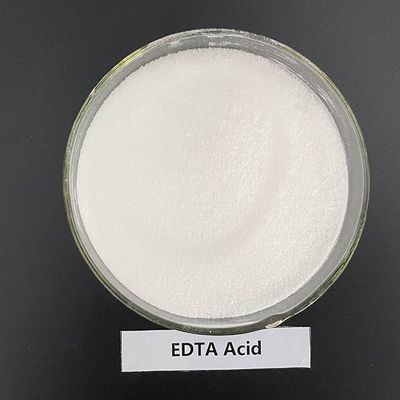
Hoo-Chemtec - Model CAS 60-00-4 -Chelating Agent Chemical
Ethylenediaminetetraacetic Acid (EDTA) is a multifunctional chelating agent widely employed in industries, laboratories, and medicine for its metal-binding properties and diverse applications.
- CAS Number: 60-00-4
- EINECS NO.: 200-449-4
- Molecular Formula: C10H16N2O8
- Purity (%): Typically 99%
- Appearance: White crystalline powder
- Packing: Available in various packaging options.
Ethylenediaminetetraacetic Acid (EDTA) is a synthetic compound with the chemical formula C10H16N2O8. It is an organic acid and a chelating agent, meaning it can form stable complexes with metal ions by surrounding and binding to the metal ions with multiple coordination sites. EDTA is widely used in various industries, laboratories, and medicine due to its strong metal-binding properties and its ability to sequester and remove metal ions from solutions. This makes it valuable in applications such as water treatment, chemical analysis, medicine, and as a stabilizer in various products.
- Chelating Agent: EDTA is widely used to remove metal ions in the detergent industry, preventing them from interfering with cleaning.
- Water Treatment: EDTA is used to chelate metal ions in water, preventing scale formation, mineral deposits, and removing heavy metal contaminants.
- Chemical Analysis: EDTA is commonly used in analytical chemistry for complexometric titrations to determine metal ion concentrations in samples.
- Medicine: EDTA acts as a chelating agent for treating heavy metal poisoning by binding and eliminating toxic metal ions from the body.
- Food and Beverage Industry: EDTA serves as a preservative to prevent oxidation, maintain color, and preserve flavor in certain food products.
- Pharmaceuticals: EDTA enhances stability and shelf life in certain medications.
- Cosmetics: EDTA stabilizes formulations and improves effectiveness in cosmetics and personal care products.
- Photography: EDTA is an ingredient in photographic developers used in the photographic industry.
- Industrial Cleaning: EDTA is used in metal cleaning solutions and agents for surface preparation.
- Agriculture: EDTA enhances nutrient availability in soil and aids plants in the uptake of essential metal nutrients.
The chemical structure of Ethylenediaminetetraacetic Acid (EDTA) is as follows:
In this structure:
- H2N represents the amino (NH2) group.
- COOH represents the carboxyl (COOH) group.
The four carboxyl groups (COOH) and the two amino groups (NH2) allow EDTA to form strong complexes with metal ions, making it an effective chelating agent.