


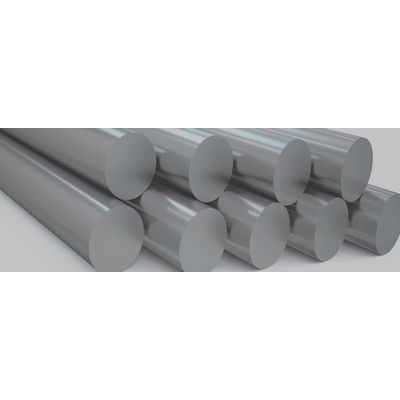
Tri-Round - Hot Rolled Bar
Manufacturer and Supplier of finished steel bright bars in the domestic as well as global market, Triroundbars.com is an ISO 9001:2008 certified company. We have been producing cold drawn hot rolled bars since 1982 and have a production capacity of 6000 MT of HIGH PRECISION QUALITY STEEL BRIGHT BARS in different grades, sizes & sections.
Our plant is equipped with a range of machines and advanced processing facilities, allowing us to meet the exact requirements of our clients.
India’s Bright bars compare with the best in the world thanks to the company’s production. We process a variety of popular grades in various national and international specifications. We produce Bright Steel Bars in a variety of shapes and sizes and conform to BSS, EN series, SAE, ISI, DIN, AISI.
Hot rolling is a mill process in which the steel is rolled at a high temperature (typically over 1700°F), which is above the steel’s recrystallization temperature. The steel can be easily shaped and formed above the recrystallization temperature, and it can be made in much larger sizes. Due to the fact that it is often manufactured without any delays in the process, and therefore no reheating of steel is required (as it is with cold rolled steel), hot rolled steel is typically cheaper than cold rolled steel. The steel shrinks slightly when it cools off, so it can be shaped and sized less precisely than cold rolled steel.
We manufacture hot rolled bars in Stainless Steel grades such as 303 Stainless Steel, 304 Stainless Steel, 304L Stainless Steel, 304H Stainless Steel, 316 Stainless Steel, 316L Stainless Steel, 316H Stainless Steel, 316Ti Stainless Steel, 321 Stainless Steel, 321H Stainless Steel, 416 Stainless Steel, 347 Stainless Steel, 310 Stainless Steel, 310S Stainless Steel, etc. As well as 317L Stainless Steel also known as UNS S31700, 317/317L Dual Certified have increased strength, corrosion resistance (including crevices and pitting), higher tensile strength, and a higher stress-to-rupture ratio.
Rolling is a metalworking process that occurs above the recrystallization temperature of the material. As grains deform during processing, they recrystallize, retaining an equiaxed microstructure and preventing the metal from hardening. The starting material is usually large pieces of metal, such as semi-finished casting products, such as slabs, blooms, and billets. In continuous casting operations, these products are fed directly into the rolling mills at the proper temperature. For smaller operations, the material must be heated first.
Gas or oil-fired soaking pits are used for larger workpieces, whereas induction heating is used for smaller workpieces. The temperature of the material must be monitored as it is worked to ensure it remains above the recrystallization temperature. In order to maintain a safety factor, a finishing temperature is defined above the recrystallization temperature. The finishing temperature is usually 50 to 100 °C (90 to 180 °F) above the recrystallization temperature. If the temperature drops below this point, the material must be re-heated before more hot rolling can be done.
Metals that are hot rolled generally have limited directionality in their mechanical properties and deformation-induced residual stresses. Non-metallic inclusions often impart some directional properties to workpieces less than 20 mm (0.79 in) thick, as well as workpieces exceeding 20 mm (0.79 in) thick. A non-uniform cooling process will also induce a lot of residual stresses, which commonly occur in shapes with non-uniform cross-sections, such as I-beams. The product is of good quality, but it is covered in mill scale, an oxide that forms at high temperatures. Most commonly, it is removed via pickling or the smooth clean surface process, revealing a smooth surface. Dimensional tolerances are typically 2 to 5% of the overall dimension.
Hot-rolled mild steel seems to have a wider tolerance for carbon than cold-rolled steel, making it more problematic to use as a blacksmith. Likewise, hot rolled metals tend to be less expensive than cold rolled metals.
Stainless steel bar is widely used in general fabrication and repairs in industrial maintenance, agricultural implements, transportation equipment, etc. Hot rolling is used primarily to produce sheet metal or simple cross sections like rail tracks. The other common uses for hot rolled metal include truck frames, automotive wheels, pipe and tubular, water heaters, agriculture equipment, strappings, stampings, compressor shells, railcar components, wheel rims, metal buildings, railroad hopper cars, doors, shelving, discs, guard rails, and automotive clutch plates.
Steel that has been rolled at very high temperatures is called hot rolled steel.Steel that has been hot rolled has been rolled at very high temperatures-over 1,700 °F, which is above the re-crystallization temperature for most steels. As a result, the steel is easier to form, and the products are easier to work with.
To process hot rolled steel, manufacturers begin with a rectangular piece of metal called a billet. After being heated, the billet is sent for pre-processing, where it is flattened into a large roll. To achieve its finished dimensions, it is kept at a high temperature and run through a series of rollers. Streams of white-hot steel are pushed through the rollers at high speeds. For sheet metal, rolled steel is spun into coils and cooled. In the case of other forms, such as bars or plates, materials are sectioned and packaged.
Steel shrinks slightly as it cools. In addition, as hot rolled steel is cooled after processing, it has less control over its final shape, which makes it less suitable for precision applications. When minutely precise dimensions aren’t critical, hot rolled steel is often used. Railroad tracks and construction projects are good examples.
Hot rolled steel bar is typically made from iron ore or recycled scrap metal in electric arc furnaces. Temperatures nearing 3,000 F liquefy scrap that is cast in molds to produce an ingot or billet. Afterward, these ingots and/or billets are reheated to 2,000 degrees Fahrenheit and forced through a series of machined rolls to form round, square, or hexagon shapes. Hot Rolled bars are the primary feedstock for many forging and machining processes and they are used in their “as rolled” state.
Hot rolled steel can often be identified by the following characteristics:
- Surfaces scaled by extreme temperatures
- Round edges and corners for bar and plate products (due to shrinkage and less precise finishing)
- Cooling may result in slight distortions, such as trapezoidal forms, rather than perfectly squared angles
Hot rolled steel usually requires less processing than cold rolled steel, which makes it cheaper. Since hot rolled steel is allowed to cool at room temperature, it is essentially normalized, meaning it is free of internal stresses caused by quenching or work-hardening processes.
Hot rolled steel is ideal in applications where dimensional tolerances aren’t as important as overall strength, or where surface finish isn’t critical. If surface finish is a concern, scaling can be removed by grinding, sand blasting, or acid-bath pickling. A variety of brush or mirror finishes can also be applied after scaling has been removed. A descaled steel surface is also better for painting and other surface coatings.
Hot Rolled Steel CharacteristicsHot rolled steel bar provides a wide variety of beneficial features, including:
-
Slightly rounded edges and corners (due to shrinkage).
-
Slight distortions, where cooling may leave slightly trapezoidal forms rather than perfectly squared angles.
-
Scaled surfaces due to the extreme temperature cooling process.