


- Home
- Companies
- Solid Scanner
- Products
- Solid Scanner - HSI Camera Systems
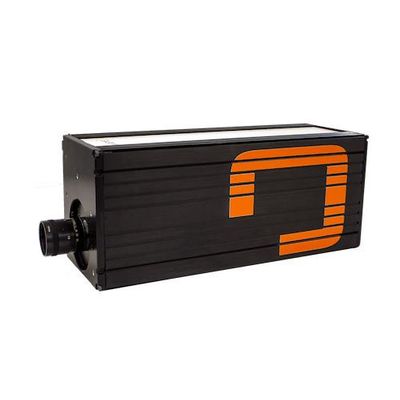
Solid Scanner - HSI Camera Systems
HSI technology needs powerful hardware, fast software and the expertise to combine this into a reliable overall system. We offer all this so that you can monitor the chemical homogeneity of your products inline.
Hyperspectral imaging (HSI) combines the advantages of optical spectroscopy and spatially resolved image acquisition
RGB color cameras are well suited for checking external quality features such as size, shape and color. However, the plastics industry must check other quality parameters such as the chemical composition and the distribution of additives. Spectroscopic methods can help here. They provide information about the chemical composition and physical properties of a product. HSI can show what is invisible to the human eye.
Hyperspectral imaging comprises numerous spectral channels covering different wavelengths, from ultraviolet to long-wave infrared. This technology uses the reflective behavior of a material to measure and evaluate certain chemical properties with spatial resolution, also known as chemical imaging.
Use of hyperspectral imaging offers potential for new Applications
Hyperspectral systems provide spectral data per object pixel and not just monochrome or color values. Depending on the wavelength range and spectroscopic processing, this enables highly accurate color coordinates, chemical material properties and layer thickness information. Although the information output is more complex, it also offers greater variety and selectivity for applications.
Objects that look the same can have different light spectra under broadband illumination due to their chemical properties. Hyperspectral systems have the unique ability to distinguish between these objects, which is not possible with other image processing solutions.
Sorting and recycling plastics is an important application for hyperspectral systems. HSI can automatically separate plastic parts such as polyethylene and polypropylene. With the help of color sorting and the differentiation of the molecular composition, the substances can be distinguished. This improves the quality of the sorting process.
At present, hyperspectral image processing is not a widespread field. This is due to the high cost of hyperspectral technology, which represents a major barrier to entry. The technology is also complex and requires specialist knowledge of spectroscopy. Despite some promising applications, it remains an exotic discipline in image processing.
Hyperspectral camera systems produce a large amount of data that must be processed correctly. Advanced software algorithms are required to extract spectral information from the noise. The processors must have sufficient power for fast processing.
One of the challenges is the hardware, as hyperspectral imaging is not compatible with the LED illumination commonly used in imaging. Halogen lamps are required that emit a broad wavelength spectrum. Suitable lighting is still required.
The need for powerful hyperspectral software, reliable spectral data and experience are the reasons why this new technology is spreading rather slowly.