
Coast Corrosion
Coastal areas have high salt content. When droplets of salty ocean water evaporate, the salt content is left floating in the air. When salt settles on HVAC fins and coils it inhibits heat transfer and accelerates corrosion.


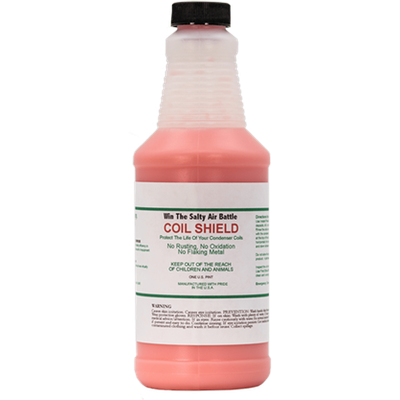
Coil and fin corrosion inhibits heat transfer, making the unit less effecient and more exspensive to run. There are multiple causes for corrosion, such as moisture, chemicals, and acids. Eventually as corrosion progresses, refrigerant begins to leak and ultimately the unit fails.
Coastal areas have high salt content. When droplets of salty ocean water evaporate, the salt content is left floating in the air. When salt settles on HVAC fins and coils it inhibits heat transfer and accelerates corrosion.
All water, regardless of location contains minerals. When water evaporates it leaves behind minerals that develop scale on condenser coils. Buildup on condenser coils inhibits heat transfer, which lowers unit efficiency
Coil Shield was put to the test in an accelerated weathering chamber. The test inflicted salt spray, UV light exposure, heat, and industrial chemical exsposure.
Independent studies in an accelerated weathering chamber showed that Coil Shield treated coils performed for at least 4,000 hours. The equivalent of a year in the harshest weather conditions. At this point the test was stopped. The coils treated with Coil Shield were still structurally intact while untreated fins were falling off copper tubes.