IMR SCHWANDER - Model SBR -Wastewater Treatment Plants
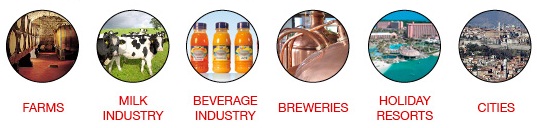
Our plants are produced with the SBR technology and are intended for the treatment of industrial and municipal wastewater. The plant is modular: plants is suitable for urban center, from villages to large cities, and production unit such as farm, milk factories, beverage industry. The plant consists of a stainless steel silo. The purifying phases that compose the biologic process are carried out sequentially in temporal succession within only one reactor. The area of land required is reduced by 90% compared to the conventional plant. Our plant is completely automated and the operative costs are optimized. The sludge production is 50% less than in the traditional plants, with a consequent reduction of disposal costs. We are able to obtain efficient reduction of COD/BOD, denitrification, biological removal of phosphates and purification of the discharged effluent within the limits of the law or more.
The first characteristic of the IMR SCHWANDER SBR (Sequence Batch Reactor) plant, is the reduced space needed, about 10% of a conventional plant.
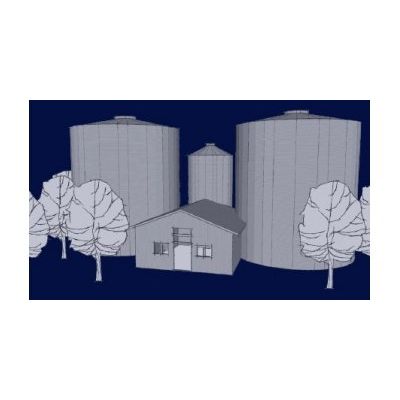
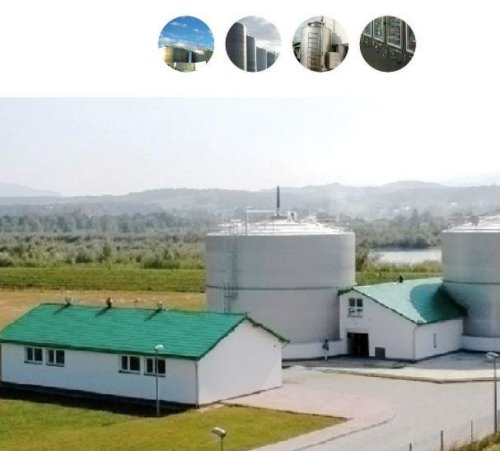
Our plant is composed by a Stainless steel silos, where the aerobic and anaerobic processes are performed and a smaller silo for additional aeration of the sludge.
During the pre-treatment phase the sand and grit are separated from the influent wastewater. During the bio degradation process of the organic contaminants the nitrification, de-nitrification and the biological removal of phosphor is performed. Problems with Bio Gas during the anaerobic phase is not encountered and the pH levels are biologically maintained through out the process. Our process allows treatment of industrial, domestic or a combination of both, suitable for industrial, commercial or municipal applications with values in excess of 80,000 COD and 40,000 BOD5.
The IMR SCHWANDER SBR plants allows the stabilisation of the sludge to a point, where the operational cost per m3 is kept to a minimum. Furthermore as an option, Ozone treatment may be applied, so as to reduce the quantities even more, bringing the IMR SCHWANDER SBR plants to reduce the sludge to a minimum. Every IMR SCHWANDER SBR plant can reach "0" BOD 5 Levels.
During the entire process, no bio filters or membranes are utilised.
Multi-use of the IMR SCHWANDER SBR Plants
The IMR SCHWANDER SBR Plants are efficient for the treatment of influents deriving from organic industry, municipal sewage or both. We are able to dimension our plants according to real needs from small or large organic industries, villages or medium to large cities. Our plants are modular and can be pre-engineered with the idea of "add on" modules in time.
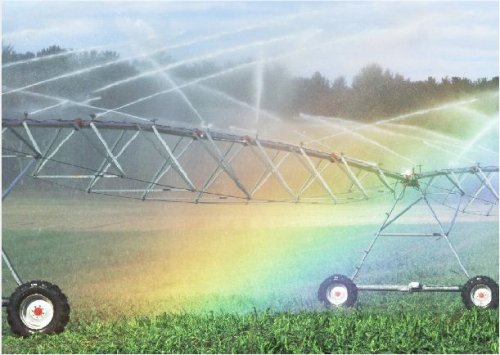
- Flexibility Reliability: The vertical development of the bioreactor, means that the space occupied is kept to a minimum and out of built up areas.
- Small Environmental Impact: With the assistance of urban designers and architects, the plant can easily be built so as to have a small visual impact on the environment.
- Safety
- Optimization
- Real Time Control
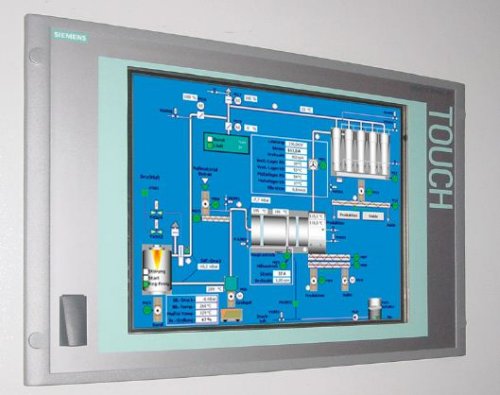
- The plant electronic Management system used is our exclusive software and hardware system with touch screen control.
- The system relies for the automatic optimization of the processes on our "intelligent software", with scope to maximise clean effluent, save energy, simplify operations and in complete safety.
- The software only needs a short training period to become proficient.
Simplicity + Intelligence = Saving Of Time & Money
- Less Energy Consumption: The principal characteristic of our plant is the reduced energy need / m3 treated waste water.
- Less Sludge for Disposal: Another characteristic of our plant is the reduced maintenance during operations, this relates to more cost savings.
- Less Maintenance: There are no major consumables, only the disposal of the treated sludge is needed and in much less quantity than conventional plants.
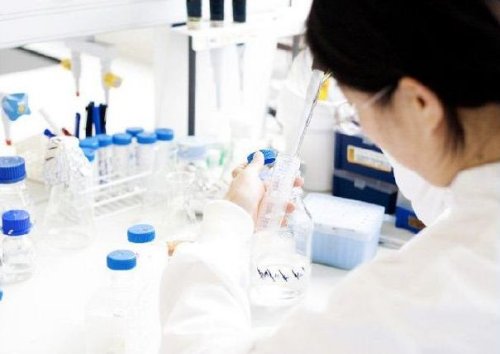
- Economical: The IMR SCHWANDER plants are operated by one person, with all due savings on personnel.
- Simple: The training of the personnel is performed in a short while and during the commissioning of the plant.