


In-Situ Environmental
- Home
- Companies
- In-Situ Environmental
- Products
- In-Situ Aqua TROLL - Chlorophyll a ...
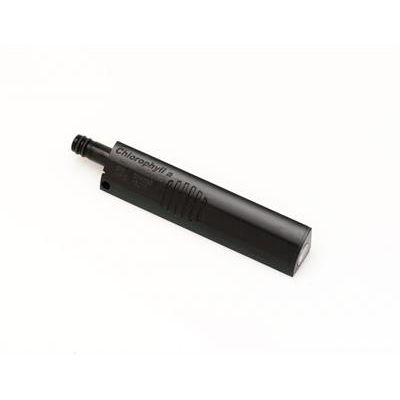
In-Situ Aqua TROLL - Chlorophyll a Sensor
Detect harmful algae blooms sooner with the only chlorophyll sensor designed for maximum stability at low detection limits. The Chlorophyll a sensor uses In-Situ’s patented Integrated Optical Compensation technology to reduce drift and improve accuracy of algae concentration measurements. Unlike total algae sensors, our sensors measure chlorophyll and blue-green algae separately to reduce interference for more reliable data. This sensor measures chlorophyll a and is compatible with the Aqua TROLL 500 or Aqua TROLL 600 multiprobes, which feature wireless data collection via mobile app.
Most popular related searches
chlorophyll A sensor
chlorophyll sensor
blue-green algae
harmful algae bloom
remote data acquisition
water monitoring system
chlorophyll
chlorophyll blue-green algae
algae concentration
algae sensor
- Measurement range: 0-100 RFU, 0-1000μg/L
- Linearity: R2>0.999 for serial dilutions of Chl a in MeOH across full range
- Resolution: 0.001 RFU or 0.01 μg/L
- Integrated Optical Compensation: In-Situ’s patented technology uses a second detector to compensate for LED drift over temperature and time, providing more accurate, stable measurements.
- Ambient Light Rejection: External light can introduce bias in your data, but our fluorometers block external light for reliable performance in any setting.
- Low Interference Spectral Bands: Combined chlorophyll and BGA sensors measure wide ranges of the visible spectrum. Our individual BGA sensors detect smaller ranges to reduce environmental interference.
- Isolated Optical Frequencies: Using two or more sensors simultaneously typically creates interference among sensors. Our sensors use separate frequencies, providing a unique digital signature for each light source to minimize interference and improve accuracy.
- More accurate, reliable data: Improved stability and minimized interference means overall better data.
- Less maintenance: Internal diagnostics, lower calibration solution volume and one- or two-point calibration means you spend less time on maintenance.
- Reduced monitoring costs: Install only the sensors you need, so you don’t have to buy what you won’t use.
- Ease of use: Sensors retain calibration data so you can use them in any sonde.
- Versatile applications: Use the sensor with river or lake monitoring as well as coastal studies.