


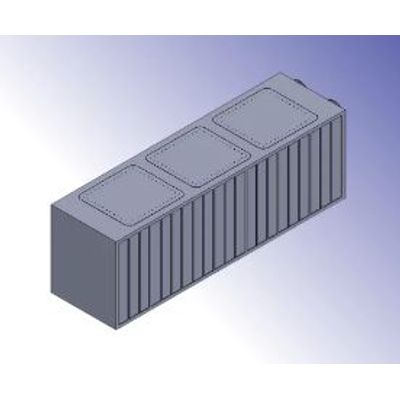
Apurio - Industrial Air Purification Biofilter
Biofilters are an efficient solution for the purification of industrial exhaust air by utilizing biological processes. These systems leverage microorganisms that reside on organic support materials, such as shredded wood, to decompose airborne pollutants, converting them into benign or low-odor byproducts. The efficacy of these systems is contingent upon suitable conditions, including exhaust air that is warm, moist, and free of grease and dust. A notable application of biofilters is the removal of volatile organic compounds (VOCs) and offensive odors. The design allows for both open and closed systems, accommodating various industrial needs. These biofilters offer advantages such as low operating and maintenance costs, straightforward construction, rapid production, and environmentally favorable outputs, primarily carbon dioxide and water. Additionally, they can be manufactured using diverse materials to suit different system components, enhancing versatility and application scope.
Biological exhaust air purification processes refer to methods in which airborne constituents are broken down within a controlled separation system by microorganisms, converting them into non-harmful or low-odor degradation products. Under the appropriate conditions (including biodegradable exhaust components, warm/moist/dust-free exhaust), biological processes can offer a cost-effective alternative to other methods. The most commonly used biological process is the biofilter. In this process, microorganisms reside on a moist organic support material (e.g., shredded wood) placed on a grid and passed through by the exhaust air.
- Removal of VOCs (Volatile Organic Compounds) and odors
- Open or closed (e.g., container construction)
All system components (pipelines, containers, electrical components, etc.) can be manufactured and supplied in the following materials:
- Steel
- Galvanized steel
- Stainless steel (e.g., V2A)
- Plastic (e.g., polypropylene (PP), polyethylene (PE), electrically conductive polyethylene)