


- Home
- Companies
- Advetec Holdings Limited
- Products
- Advetec - Model XO - Industrial-grade ...
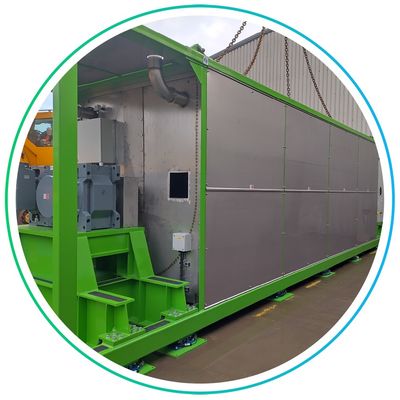
Advetec - Model XO -Industrial-grade Machines
Industrial-grade machines, built around your operation. The Advetec XO system uses biotechnology to rapidly accelerate the breakdown of organic waste. In doing so, it significantly reduces waste mass and converts material into a dry, stable output that can be further processed, including into Solid Recovered Fuel (SRF).
Waste costs are increasing fast, driven by changing regulation, rising gate fees and limited disposal options. The XO has been developed over more than 20 years of research, testing and real-world deployment in some of the toughest waste management environments.
Our XO technology helps you reduce waste mass, lower operational costs and cut greenhouse gas emissions by transforming non-recyclable waste into a more valuable resource.
Scalable, multi-machine configurationsAdvetec’s XO systems can be configured to process as little as 10 tonnes of waste per day, with no upper limit when deployed in a multi-machine configuration.
This modular approach allows your operation to scale as waste volumes change, future-proofing your infrastructure without locking you into fixed capacity.
Discover XO technology in our informative video, exploring typical non-recyclable waste operational challenges and how we help tackle them. Our team customises systems for various commercial setups, streamlining processes and reducing environmental impact through tailored solutions.
Modular design
The XO technology integrates with clients’ on-site processes seamlessly. We assess your site and current operations and design the machine to fit your current and future needs.
This allows for variation in your future waste tonnage processing requirements.
Seamless integration
The XO system has been designed with minimal customer disruption as an integral feature.
We dovetail our technology into our customers’ operations ensuring there are little or no changes to site operators’ activities, this helps ensure rapid adoption by the team using our machines.
Site requirements
Our machines require a flat base for installation, and then for 3-Phase power to be available either from a mains supply or a site generator.
Advetec XO systems do not require a water supply or drainage.
Remote management and control
Advetec ensure we can operate, control and monitor equipment 24/7.
Every Advetec system reports information in real-time, monitoring the production process including weights, heat, energy use and volumes – enabling the ability to control, change and adapt the systems for maximum throughput, remotely.
Minimal maintenance
Our machines have been engineered and manufactured to cope with the rigorous environment that they are exposed to in the waste industry.
Advetec XO system maintenance has been simplified through robust design and feedback from our installations across the world.
Power efficiency
Our technology uses motors controlled by intelligent Variable Speed Drives in the most power-efficient way, and has the ability to monitor and maintain the ideal conditions inside the XO.
The Advetec XO reuses the heat generated by the biological process to provide the optimal conditions for digestion.
- Fully automated 24/7 process with live data logging
- Up to 85% waste volume and 70% waste mass reduction results, on average
- Easy to install with a low overall footprint
- Can handle mixed, organic and non-organic matter
- Standard power supply requirements
- No water connection or drainage requirements
Watch a live video demonstration of Advetec XO technology with Richard Goff, our Chief Operating Officer, recorded at our industry ‘Show and tell’ event at our engineering facility in Southwick, England.
Watch a live video demonstration of Advetec XO technology with Richard Goff, our Chief Operating Officer, recorded at our industry ‘Show and tell’ event at our engineering facility in Southwick, England.
By adapting your operations and enhancing your green credentials, you not only improve your environmental impact but also boost your profit margin and create a more stable cost structure.
Striving towards achieving net zero and adopting environmentally friendly practices are all key components that can help you to differentiate and propel your company towards sustainability and financial success.
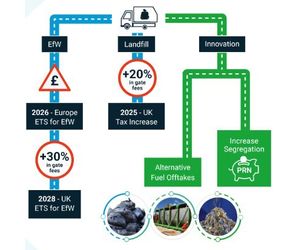
Handling waste is an increasingly expensive business. Legislative changes are focused on promoting segregation and decarbonisation within industries. This is evident in the upcoming rise in Landfill Tax, BMW Landfill bans, and the introduction of Emissions Trading Scheme (ETS) for Energy from Waste (EfW).
The solution lies in seeking innovative, alternative offtake options and adapting waste operations. Our technology reduces treated waste mass by 50% and reduces associated greenhouse gas (GHG) emissions by over 70%. It transforms non-recyclable waste into a coal replacing alternative fuel known as Solid Recovered Fuel (SRF).
By leveraging our network of reliable off-takers, we can secure higher profit margins for you, reduce your transportation costs and cut the greenhouse gas emissions associated with your waste.
Businesses are increasingly prioritising contractors with proven environmental credentials and the ability to gather Scope 3 data when making their choices. Our technology enables you to stand-out to your customer base, through enhanced environmental performance and measurement.
Advetec technology not only halves your waste mass but also significantly reduces associated GHG emissions. If you choose to dispose of the output as an alternative fuel – SRF – it further benefits the environment by diverting waste away from landfill or Energy from Waste (EfW) facilities.
When 10 tonnes of Mixed Residual Waste (MRW) are converted into SRF, 6 tonnes of CO2e are saved, no methane is emitted, and 2.5 tonnes of coal are prevented from being burned.
By using alternative, predictable offtake and replacing coal in energy-intensive industries, you not only decarbonise your operations and those of your customers, but you also contribute to the decarbonisation efforts of end users.
It all moves us closer to the collective goal of Net Zero emissions.
We are currently developing a methodology to produce Carbon Credits in alignment with the Gold Standard, one of the most recognised registries for issuing carbon credits in the Voluntary Carbon Market (VCM). This standard allows you to quantify, certify, and maximise impact for climate and sustainable development.
Our methodology will calculate GHG reductions based on the amount of waste processed, determining the amount of methane that would have otherwise been emitted.
Our focus is always on helping you to prove your green credentials through transparent, meaningful data.
AT4 tests measure the stability of biodegradable waste and consider whether it will break down further.
Our compliance with AT4 levels demonstrates that the waste has been stabilised, meaning it can still go to landfill with a reduced environmental impact.
Our extensive independent testing of the floc demonstrates that it achieves the required AT4 threshold for stability. This means;
- in Ireland the floc can go to landfill at the lower rate of landfill tax
- in Scotland, the floc can still go to landfill post 2025
We remain committed, however, to encouraging waste handlers to recover the value of floc in a more sustainable way, such as sending it for processing as SRF.
The XO system has been designed with minimal customer disruption at the heart of what it does.
We dovetail our technology into your operations ensuring there are little or no changes to site operators’ activities, this helps ensure rapid adoption by the team using our machines.
Stabilising waste has multiple benefits for any offtake method used.
When stabilised waste is utilised as SRF it is an effective alternative fuel for reducing GHG emissions from energy-heavy industries.
But infrastructure and economic challenges can prevent waste handlers from taking advantage of this route, meaning landfill is often used for contaminated waste that cannot be recycled.
GHG emissions from landfill are approximately a 50/50 split between methane and CO2, with methane being 32x more damaging to the atmosphere than CO2.
Our technology removes organic material from waste, preventing further break down and limiting methane emissions.
Waste streams can dictate different permitting requirements in the UK; this can involve either a standard permit exemption or the need for a bespoke permit. Along with our specialist environmental partners, we’ll help you to navigate the process correctly and efficiently.