

- Home
- Companies
- Zetaş Kimya
- Products
- Zetas - Industrial Oil Water Separator
Zetas - Industrial Oil Water Separator
Oil separators are a product used in many sectors and produced to separate different variations of oils. It is used to separate the oil entering the network from the water. Oil separators can be produced from various materials. Examples of these are AISI 304 and HDPE.
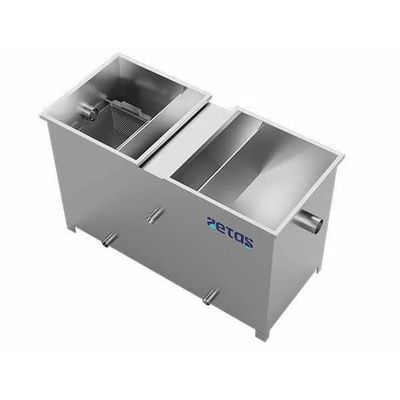
Oil separators practically consist of 3 stages;
- The entrance area of the water is the first section. Incoming wastewater is collected by pouring into the mesh chamber and large scale residues remain closed in this chamber.
- The part where the fat is separated from other regions is the middle region. The oil is taken from the covered compartment here.
- The last section is the section through which the waste water enters the separator. With the hydraulic pressure, the water completely loses the oil reservoir in the separator and the water is regained.
NOTE: We have a 2-year warranty and free service against all kinds of design, manufacturing, workmanship defects for the above systems, as well as a 15-year paid spare parts and service warranty.
The grease trap is one of the industrially known and supported environmentally friendly systems. This system, which separates the oils remaining in the water in the sewer, prevents the waste oils from being mixed into the sea or any environment, and thus protects the biodiversity of our world by preventing environmental pollution.
This system, also known as oil trap or oil residue trap and oil trap, is provided by installing a simple mechanism. This mechanism is similar to the bearing position of the barrels and consists of three chambers. If these sections explain operationally, at first, oil wastes in a heavier mass than this water are deposited in filters by pressure in a cage-like place and turned into a sediment. Then, the oil wastes found on the surface of the water are collected in a different reservoir. The last stage ends with the cleaning of the waste water and giving it to the sewer.
Oil traps should be used in every business or region that leaves oil waste to the sewer for the cleaning of the environment. Examples of these are:
- School
- Cafe
- Factory
- Hospital
- Restaurant
- meat plants
- Shopping malls
used in many fields such as As said, it is used and should be used wherever oil waste is discharged into the sewer.
With oil separator or other names oil trap; The system that keeps waste oils is a system that is supported for environmental cleaning and is now a rule that the state has made to protect the environment. Thanks to these oil traps, waste oils are protected without contaminating the sea or any environment, without polluting the environment, without harming the biodiversity, that is, the cycle of nature.
If you want to have an oil trap system installed in a business you have just opened, first of all, the waste oil capacity should be checked and a suitable model should be determined. Because the price difference between the capacities in the oil trap system may vary.
To minimize these oil wastes, it will not be enough to use oil traps alone. We, too, need to be conscious of the natural environment and in order for these oil retaining systems to fail less. When cooking our meals, especially after frying, if the excess oil is not to be used, we should put it in a jar, not in the sink. You can leave these waste oils that we collect at home to recycling facilities. If there is a residue of soup after eating, for example, or a residue of any food remains, transfer it to a garbage bag. We should leave as little food scraps in the sewers as we can.