

- Home
- Companies
- Paibo Machinery Co., Ltd.
- Products
- Paibo - Industrial Recycling Grinder
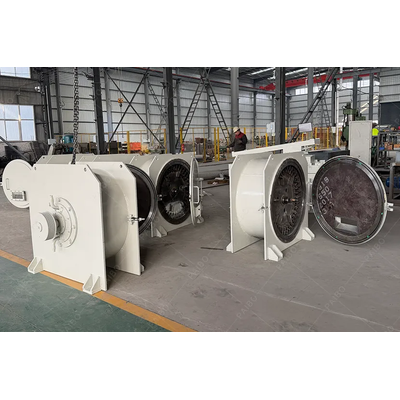
Paibo - Industrial Recycling Grinder
Industrial Recycling Grinder Built Around Your Recycling Line. The industrial recycling grinder is the core of material liberation, but real performance depends on how well it works with the rest of the recycling line. PAIBO designs grinder machine as part of an integrated system — matched to feeding, conveying, and separation — to ensure stable operation across different materials and risk levels.
How Our Grinder Works Seamlessly with Your Recycling Line
The grinder machine is the core of any recycling line. But even the best industrial recycling grinder can’t perform if the feeding and sorting systems aren’t matched. At PAIBO, we focus on smooth operation across the whole line, making sure your grinder works perfectly with upstream shredders, conveyors, and downstream separators.
How We Make It Work
Intelligent Feed Control
Feeding too fast can jam the industrial recycling grinder; feeding too slow wastes capacity. Our current-based feedback system monitors the grinder load in real time and automatically adjusts the conveyor speed.
Result: no jams, steady output around the clock.
Dust-Free, Cool Material Transfer
Screw conveyors can clog when moving fine powder and create hot spots. Our negative-pressure pneumatic transport immediately moves the material out of the turbo mill, carrying heat away and keeping dust under control.
Result: smooth, cool, clean transfer to the next stage.
Perfect Connection to Sorting
Material with air flow can disrupt electrostatic or other fine separators. Our rotary airlock valves and buffer hoppers settle the material first, gently feeding it into the separator.
Result: stable material flow, better separation, less wear on downstream equipment.
Solar panel recycling materials are highly inconsistent: EVA, glass powder, residual aluminum, and backsheet fragments are processed together.
The biggest issue at the grinding stage is heat accumulation. EVA softens at low temperatures, and once it starts melting, material sticks to the cutting chamber and causes rapid blockage.
In addition, glass particles act as a constant abrasive, accelerating blade edge wear and widening particle size distribution over time if blade geometry is not properly optimized.
How PAIBO designs the grinder differentlyWe focus on heat control and fast material evacuation:
- Load-based feed control prevents overload and friction spikes
- Fast discharge combined with air-assisted conveying removes material immediately
- The grinding chamber is designed to avoid dead zones where heat builds up
- Blade materials and cutting angles are optimized for continuous glass contact, reducing edge wear caused by glass powder abrasion and maintaining stable cutting performance over long runs
- Continuous operation without EVA sticking
- Lower internal temperature
- Cleaner glass powder and more stable downstream separation
Lithium battery recycling introduces a completely different level of risk.
At the grinding stage, the main concerns are:
- Heat generation
- Fine dust accumulation
- Sudden load spikes
All of these increase the risk of fire and thermal events.
The PAIBO Engineering FixSafety and stability come first:
- Load-based control to prevent sudden torque and current spikes
- Rapid material evacuation to limit heat buildup
- Closed, dust-controlled discharge interfaces for downstream systems
- Stable feeding into separation stages to avoid shock loading
The grinding chamber adopts a sealed structure, allowing controlled internal airflow and optional inert gas purging when required.