


Bhavi Plast Pvt Ltd
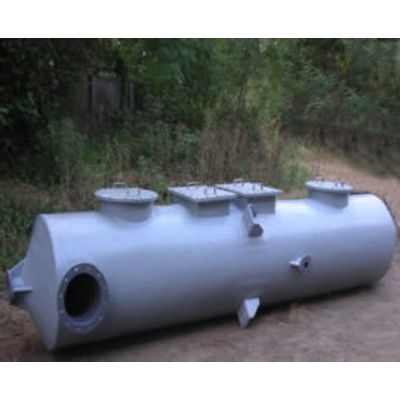
Bhavi Plast - IP Scrubbers
The gas passes up through the openings in the perforated plates (Impingement Plate stage fixed on Diaphragm plate trays) which hold a bed of liquid.
Most popular related searches
gaseous pollutant
plate scrubber
gas scrubber
impingement scrubber
process gas
scrubber design
pressure comparator
contaminant cleaning
particle sizing
- The secret is in the Impingement plate scrubber’s design which uses an impingement baffle above each individual hole.
- The tiny droplets, created by the wetted baffles, are the heart of the collection process.
- High Gas velocities through the holes result in thousands of jets which atomize the liquid into droplets of the order of 100 microns in diameter to clean the contaminated gas. . Each jet aspirates liquid from the blanket of scrubbing fluid and results in a wetted target surface on the baffle which is located just above the point of maximum velocity (vena contracta). This entraps the particles in the scrubbing liquid.
- Continuous violent agitation of the blanket of scrubbing fluid prevents settling of particles and flushes them away. Therefore In operation, the scrubber is highly pluggage-resistant.
- Intimate gas/liquid contact results in the maximum collection efficiency for particles and droplets as well as absorption (mass transfer) of gases and vapors.
- When used for absorption, low outlet emissions can be achieved by virtue of the scrubber’s countercurrent operation.
- The Bhavi Plast Impingement Plate Gas Scrubber is able to reduce gaseous pollutants to any desired concentration if a sufficient number of plate stages is used.
- High absorption efficiency for gases and vapors. Efficiencies of upto 98-99% are possible for removal of gaseous pollutants to any desired concentration if a sufficient number of plates are used. This means high mass transfer rates can be achieved.
- 98+% collection efficiency for particles 5 microns in size or larger.
- These high particle collection efficiencies are achieved at a comparatively low pressure drop.