

- Home
- Companies
- TerraSource Global
- Products
- Jeffrey Rade - Model DynaGage - Bar ...
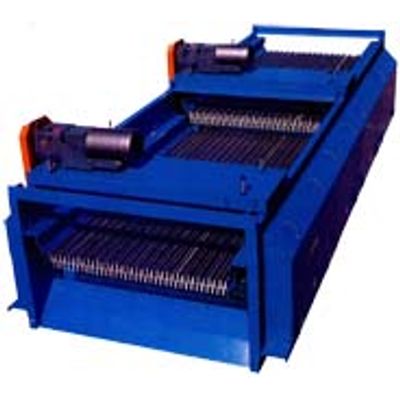
Jeffrey Rade - Model DynaGage -Bar Screen
The development by Jeffrey Rader of the DynaGage Bar Screen represents the most significant chip screening advancement to date. No other device can match the DynaGage screen’s ability to remove over-thick chips at such high efficiencies with no little accept carry-over. Most importantly, this screen can be installed, operated and maintained at the lowest possible cost
The DynaGage was created using technological advances that go far beyond simply changing disc configurations or cutting grooves in shafts. In fact, rotating wear surfaces have been completely eliminated. This means operating performance is no longer dependent on expensive maintenance and replacement of worn screening surfaces. It also means better selectivity, greater control over a wide range of flow rates and a significant reduction in energy and space requirement.
Time and opportunity are the essential requirements for efficient chip screening. The DynaGage design principle (patents pending) maximizes these criteria and provides operating performance superior to conventional screening methods. The DynaGage design consists of flat steel bars alternately attached to eccentric shafts. These Gagebars are accurately preset and locked in place so that the slots between the bars establishes the maximum thickness that will pass the screen. When activated, the eccentricity of the shafts causes the bars to alternatively rise and fall in a circular pattern.
During the screening process, chips are repeatedly tipped and tumbled by the oscillating motion. Chips of acceptable size pass through the slots while overthick material is retained on the decks and carried over the end.
With DynaGage, screening performance is no longer a trade-off between overthick removal and accept carryover. At wide ranging flow rates, DynaGage will remove over 90% of overthick chips from chip furnish. Equally as important, accept carryover will be under 10%.
The reasons for these impressive numbers are simple. DynaGage has the largest open area available in a thickness screen. The open areas run uninterrupted, in line with the chip flow, the full length of the unit.
The unique tipping action created by the oscillating motion of the Gagebars increases the opportunity for accepts to find and pass through the openings. The tight control and accuracy of the openings, plus the absence of rotating nip points, assures overthick retention.
Operating performance is no longer dependent on costly maintenance and replacement of the screening surface
The longer a thickness screen can maintain its performance without replacement of the screening surface, the more cost effective its operation.
Experience has shown that the abrasive action of chips and the wedging of contaminants can severely wear rotating screen surfaces. The effective performance life of the DynaGage screening surface is significantly greater than conventional screens because of the gentle oscillating action of the screen decks.
If replacement does become necessary, sections of the screening surface can be removed and replaced without removing the shafts, thereby eliminating extended downtime. In addition, replacement costs per square foot of screen area are substantially less when compared to disc shaft assemblies or grooved rolls. The compact, flexible footprint can accommodate any layout-including existing V-screen replacement.
The DynaGage is a true primary screen designed to be installed in new screen rooms or as a replacement in existing operations.
Because of its high efficiency and long wear life, pre-thickness screening with gyratories or disc screens is never required. The small footprint, low profile, and low vibration levels allow easy positioning without complicated support structures or chutework. Horsepower requirements are also extremely low for its high throughput which means a substantial savings in energy cost.
Independently-driven stairstepped modules allow variable oscillation speeds to meet specific performance objectives.
Operation
Oscillating bar decks tip and tumble the chips so that gravity can draw accept chips through the slots between the bars. Reject chips are carried to the end of the screen by the oscillation. The oscillating motion is generated by using four crank shafts.
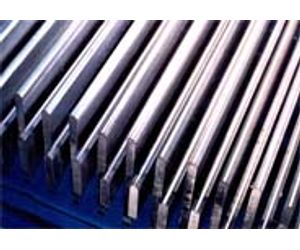
DynaGage Bars
The alternating height bars tip the chips so they can fall through the slots. Bar spacing should not be adjusted after startup. There is no adjustment for a single bar.
Features and Benefits
- +90% separation efficiency
- Low accept carry over
- Gravity draws chips through bars
- Robust design
Operation
- Even material distribution gives maximum efficiency. Distributing screw should be tuned for average operating flow rate.
- Bar spacing and module speed are the only adjustments that effect separation efficiency.
- Control system must be designed to clear material from the screen in a normal shut down sequence.
Sizing Guidelines
- Capacity depends on chip thickness distribution
- All sizing should be done using the weighted average method
- Maximum loading is .45 UPH/SqFt