


- Home
- Companies
- Kappa Filter Systems GmbH
- Products
- KAPPA Wavebionix - Nanoparticle Filter ...
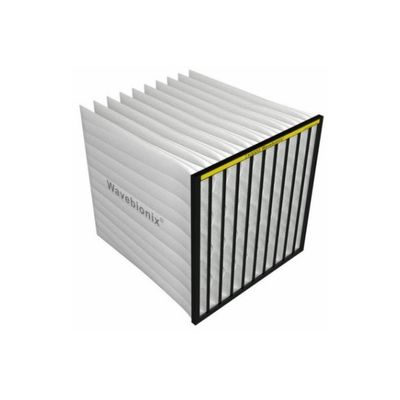
KAPPA Wavebionix - Nanoparticle Filter Element
The Kappa Wavebionix is a new and innovative nano-filter element for ventilation units. It can be easily installed in ventilation units as an alternative to conventional pocket filters without any modifications. The Kappa Wavebionix is highly effective in separating pathogens and pathogenic substances such as viruses, bacteria, fine and ultra-fine dust, aerosols, soot particles, brake dust, microplastics and pollen. The Kappa Wavebionix also saves energy.
NANO-FILTRATION
The Kappa Wavebionix® nano-filter elements efficiently separate particles and pathogens in the nano range - with the pressure drop of an F7 filter.
The effectiveness and filtration efficiency of the Kappa Wavebionix® nano-filter elements has been confirmed by OFI, an accredited testing and certification institute. For the first time, a filter element for ventilation systems was tested for its filtration efficiency in relation to active viruses. The result demonstrates a viral filtration efficiency of 97.2%.
Kappa Wavebionix® filter elements are made to order and fit into almost every ventilation unit. They can be used easily and without modifications instead of the previous pocket filters.
The Kappa Wavebionix® nano-filter elements separate ultra-fine dust, nano-particles and pathogens very effectively, thus ensuring healthy air in buildings.
INCREASES PRODUCTIVITY
Clean and fresh air increases performance. The Kappa Wavebionix® nano-filter elements increase cognitive performance and reduce errors, accidents, and work absences.
The Kappa Wavebionix® nano filter elements save large amounts of energy compared to filter elements with comparable separation performance. The high degree of filtration efficiency facilitates circulating air and mixed air operation. This saves large amounts of heating and cooling energy. For a typical medium-sized building ventilation system, this results in savings of approx. €7,000 annually. This corresponds to an annual CO2 reduction of 11,000 kg.