

Kathyon - Wastewater Treatment Plant
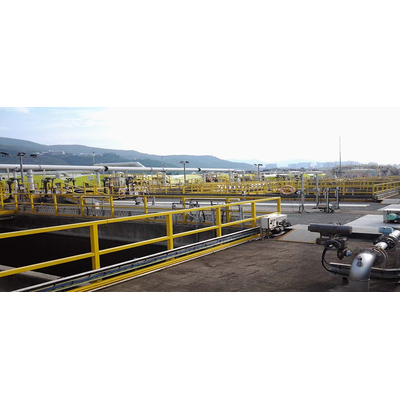
Wastewater treatment plants are responsible for purifying domestic and industrial wastewater in cities and protecting the water environment. The treatment process is mainly divided into three stages. Primary treatment (physical treatment): Wastewater first passes through a screen to remove large pieces of debris, then enters a grit chamber to settle sand and gravel, and then remains in a primary sedimentation tank to allow most suspended solids to settle, achieving initial separation of sludge and water. Secondary treatment (biological treatment): This is the core stage.
Wastewater is sent to an aeration tank, where activated sludge composed of a large number of microorganisms decomposes and consumes organic pollutants (such as nitrogen and phosphorus) in the water through "respiration." Subsequently, secondary sedimentation occurs in a secondary sedimentation tank, completely separating the sludge and water, resulting in relatively clear effluent.Tertiary treatment (advanced treatment): To further improve water quality, processes such as filtration and disinfection (e.g., ultraviolet light, chlorine) are used to deeply remove residual fine particles and pathogens, ensuring that the effluent meets strict discharge or reuse standards.