


- Home
- Companies
- Umicore UK Ltd
- Products
- Kyocera DEGUSSIT - Model C799 and C795 ...
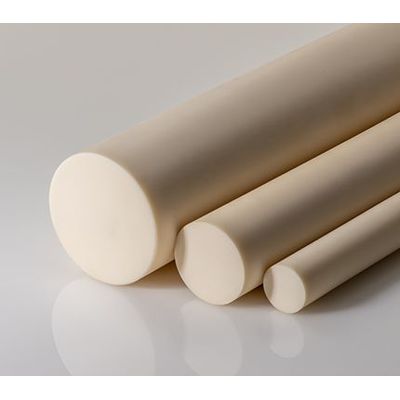
Kyocera DEGUSSIT - Model C799 and C795 -Alumina Bars for High-Temperature Applications
C799 and C795 alumina bars are engineered for high-temperature applications, leveraging the exceptional thermal, electrical, and mechanical properties inherent in alumina. These ceramic bars, often referred to as rods or sticks based on their size, are manufactured through isostatic pressing or extrusion. The main composition of these bars is Kyocera DEGUSSIT AL23, composed of 99.7% alumina, providing high resistance to thermal shocks and temperatures up to 1950 °C. Alumina's dimensional stability at high temperatures ensures consistent performance and longevity. It is also highly resistant to wear, corrosion, and mechanical abrasion, making it suitable for demanding industrial applications. The electrical insulating properties of alumina are ideal for protecting components like thermocouples in high-temperature conditions. These bars serve as semi-finished products allowing custom machining to fit specific industrial requirements.
The ceramic rods we offer are of varying sizes: small rods are called sticks, large rods are called bars. Depending on their size, these ceramic rods are manufactured by isostatic pressing or by extrusion. They are made of alumina, a technical ceramic ideal for high temperature applications. They can be used as they are (in tubular furnaces for example), but they are semi-finished products: they can be machined by our customers to create an industrial ceramic of the shape of their choice.
Why choose alumina to manufacture ceramic rods?
Aluminas are technical ceramics. The choice of this material to manufacture ceramic bars is explained by its numerous thermal, electrical and mechanical properties. Aluminum oxide is resistant to thermal shocks and high temperatures: up to 1950 °C for Kyocera DEGUSSIT AL23 (99.7% pure with a low silica content). This material also offers excellent dimensional stability, even at high temperatures, ensuring that our bars and other products can be used for high temperature applications. Alumina also has high resistance to wear, corrosion and mechanical abrasion, which ensures the long operational life of our products.
In addition, aluminum oxides are excellent electrical insulators, even at high temperatures, making them ideal for insulating cables from their environment or from each other. For example, alumina is used to protect thermocouples used to measure particularly high temperatures.
The ceramic rods and bars we offer
Our alumina rods are separated into 2 ranges: rods and bars depending on the diameter. Our ceramic rods have a diameter that varies between 0.5 mm and 12 mm (general tolerances +/- 5%). Their maximum length is 400 mm for diameters less than 3 mm, 1000 mm from 3 mm diameter. They are extruded from Kyocera DEGUSSIT AL23 alumina (composed of 99.7% alumina). Our standard price list shows prices for rods of 100, 200, 300, 400 and 1000 mm length.
Ceramic rods are larger semi-finished products. They are made of F99.7 alumina. Their maximum length is 400 mm, their diameter varies from 15 mm to 90 mm (tolerances on the diameter +1/+4 mm).
n addition to pure alumina bars, we offer bars and other semi-finished products made of 95% alumina (C795), MACOR®, porous (C530) or dense (C610) mullite, zirconium oxide (3Y-TZP, Mg-PSZ, 8Y-FSZ), sapphire, silicon nitride (Si3N4), and sintered silicon carbide (SSiC). Except for MACOR®, these very hard ceramic materials can only be machined with diamond wheels and tools.
How are our ceramic rods manufactured?
Ceramic parts are manufactured by extrusion or isostatic pressing processes depending on their dimensions. For rods (small sizes), the extrusion method is the most used: the alumina is shaped into a plastic paste using a piston extruder or a vacuum screw press. Once the rod is formed, it is dried and sintered at high temperature.
For larger diameters (bars), cold isostatic pressing is used. This is also known as CIP (Cold Isostatic Pressing), which consists of consolidating powders under isostatic pressure at around 1800 to 2000 bar. This method significantly reduces the porosity of the raw ceramic, which is particularly important in order to obtain the best possible densification during sintering and therefore the best possible mechanical properties.