


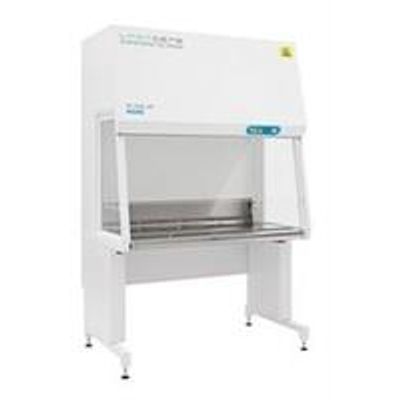
LaboGene - Biological Safety Cabinet
A Biological Safety Cabinet is a ventilated enclosure offering protection to the user, the product and the environment from aerosols arising from the handling of potentially hazardous micro-organisms. The continuous airflow is discharged to the atmosphere via a HEPA filter.
The three States of Protection
- Personal Protection from harmful agents within the cabinet
- Product Protection to avoid contamination of the samples.
- Environmental Protection from contaminants contained within the cabinet.
Biological Safety Cabinets are classified into three classes based upon their containment capabilities when working with biological agents.
Class 1 Cabinets
- Provides personal and environment protection.
- Used when working with low to moderate risk biological agents.
- Biosafety levels: 1, 2 and 3
Class 2 Cabinets
- Provides personnel, environment and product protection.
- Used when working with low to moderate risk biological agents.
- Biosafety Levels: 1, 2 and 3
Class 3 Cabinets
- A highly specialized laboratory “glovebox”. A Class 3 cabinet provides the same protection as a Class 2 but is designed for working with Biosafety Level 4 highly infectious agents and provides the highest level of protection for the environment, product and user.
- Used when you are working with very high risk biological agents.
- Biosafety Level: 4
Explanation of the different Biosafety Levels
Biosafety Level 1 applies when working with biological agents, which pose a minimal risk/ threat to laboratory personnel and the environment. Work with these types of agents are generally performed in open laboratory cabinets without the use of special containment equipment.
Biosafety Level 2 covers working with pathogenic or infectious organisms posing a moderate hazard.
Examples include Salmonellae, Hepatitis B virus and Measles virus.
Biosafety Level 3 applies when working with indigenous or exotic agents, which may cause serious or lethal disease via aerosol transmission. Examples include Yellow Fever and Encephalitis.
In Biosafety Level 4, applies when working with extremely dangerous, contagious and life-threatening agents. Maximum containment and protection is required at all times. Examples include Ebola, the Lassa virus and any sample with unknown risks of pathogenicity and transmission.