

OPSIS - Model LD500 -Laser Diode Gas Analysis Systems
LD500 - a good complement to the DOAS analysers. As an alternative to the DOAS systems, OPSIS also offers gas analysis based on laser diode technology, TDL. The TDL technology is a good choice if only a single or a few types of pollutants or other substances are to be monitored, or if a certain measurement performance for a specific type of substance is to be achieved.
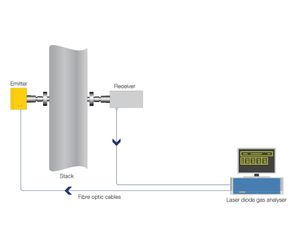
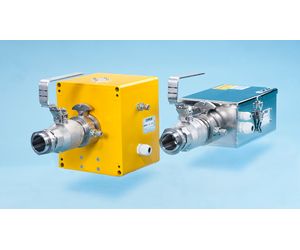
The levels of the substances of interest are monitored along a monitoring path just like in a DOAS system, in this case with the ER060L emitter and receiver. However, the details are different. The emitted light is delivered from the analyser via an optical fibre. The received light is measured by a light sensitive detector located inside the receiver. The signal from the detector is digitised and sent to the analyser via other optical fibres.
As with DOAS systems, emitters/receivers and analysers are linked by optical fibres. This makes it possible to have the emitter/receiver outdoors in harsh environments, while the more sensitive analyser can be indoors. Two types of fibre are used: OF005/010 which carries the laser light from the analyser to the emitter, and CF120 which carries the detector signals in digitised form from the receiver back to the analyser.
The fibres can be very long, several hundred metres. This gives great flexibility in the choice of monitoring site and location of the analyser.
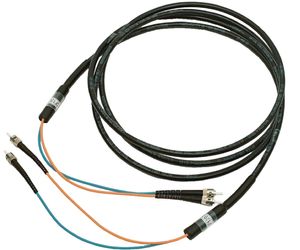
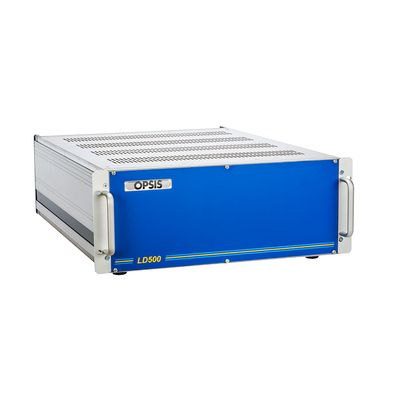
A basic LD500 system for monitoring emissions or process gases consists of an analyser (LD500), an emitter/receiver pair (ER060L), and optical fibres (OF005/010, CF120) running between the analyser and the emitter/receiver. The same analyser can measure the levels along several different monitoring paths using multiplexers and demultiplexers. This provides a complete monitoring system that is both versatile and cost-effective.
It is straightforward to complement an existing system by measuring more substances and on more monitoring paths.