Liming of Waterways
Through liming the pH level and buffer capacity of acidic water can be raised to a level where the normal ecosystem survives or recovers. In order to achieve this goal, the pH level of the water must exceed 6 and the buffer capacity must exceed 0.1 mekv/l. Fine limestone powders or magnesium-rich limestone powders should be used for all water liming. The best result is achieved with extra fine products.
Only sufficient pre-analysis and thorough planning can guarantee good and safe liming results.
Limestone-based products are absolutely safe for both the user and watercourses. There is no risk of overdose. In a typical case of lake liming, about 0.5-1.5 tonnes of limestone powder/hectare are needed.
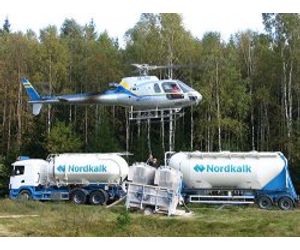
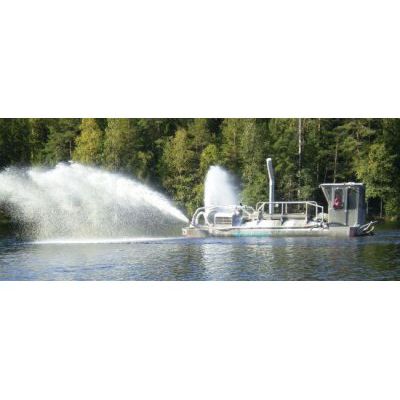
In large watercourses, the most common spreading methods are liming boats, choppers and different dispensing devices. The liming of lakes and ponds can also be performed on top a thick layer of ice.
Liming boats are used in places where the lime powder is spread directly into the lakes. Small lakes and wetlands are often outside road systems so the only possible method is to use a chopper. Different dispensing devices are a natural choice when liming running waters.
In Finland, lake liming is done, when possible, in winter, directly on the ice. The spreading is done with machinery designed for field liming. Liming on ice is almost as effective as boat liming but warm winters and heavy machinery limit the use of the method.
The brook and river courses burdened by the acid sulphate soil on the west coast of Finland and the delta areas often require heavier liming methods to achieve good water quality. Efficient liming stations work non-stop to neutralise river courses. These units technically resemble the liming dispensers of water utilities and waste water treatment plants.