

Liquid Jet Eductors
Liquid Jet Eductors (or Water Ejectors) use the kinetic energy of a motive liquid to entrain another liquid, completely mix the two, and then discharge the mixture against a counter pressure and are used in large numbers throughout industry for pumping and mixing operations. Applications are so numerous, it is impossible to note all of them. General uses include lifting, pumping, mixing, and agitating of liquids as well as handling granular solids and slurries. Some of the typical applications can be seen below: Draining flooded cellars, Emptying tanks and sumps or bunds, Pumping and mixing operations in oil treating systems, De-watering sand and coal barges, Introducing anti-knock fluids and colouring matter into gasoline, Continuous blending, Acidifying, Causticizing of oils, Mixing drilling mud, Producing emulsions, Pumping food products, Pumping sand and filter clay or activated carbon, Tank mixing, and various Proportioning operations
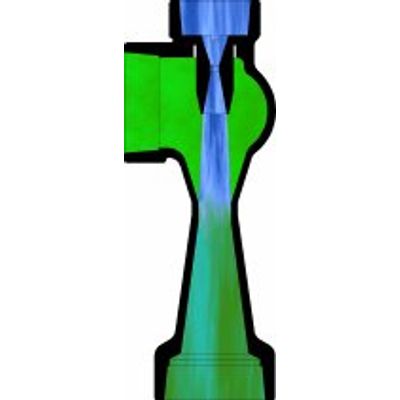
Liquid jet eductors consist of three basic components, namely a converging nozzle, a diffuser (or venturi), and a body to hold these parts in their relative positions and to provide a suction (or mixing) chamber. In addition, they can be equipped with accessories such as regulating spindles, snap valves and floats to control operation. When designing eductors experience is all-important to correctly design the nozzle, diffuser, and body and their relative positions as they are all highly critical and vary according to the physical properties of the liquids being handled.
As an example of eductor performance in a typical use, a 1.5 Inch Jet Eductor discharging against a 1 BarG back pressure will empty a 2 Cubic Meter water tank in less than 1 hour using water at only 4 BarG as the sole source of motive power.
Liquid jet eductors are manufactured in a variety of types and sizes as well as materials, our standard Type 264 and 266 ranges from 0.5 Inch to 6 Inch in size where as the Type 242 unit can range from 0.5 Inch up to and beyond 24 Inch. Variables such as pressure, temperature, density, required entrainment rates, and operating conditions must all be considered before determining the correct type and size of eductor to best suit to your requirements.